How to Clean Enameled Cast Iron Cookware
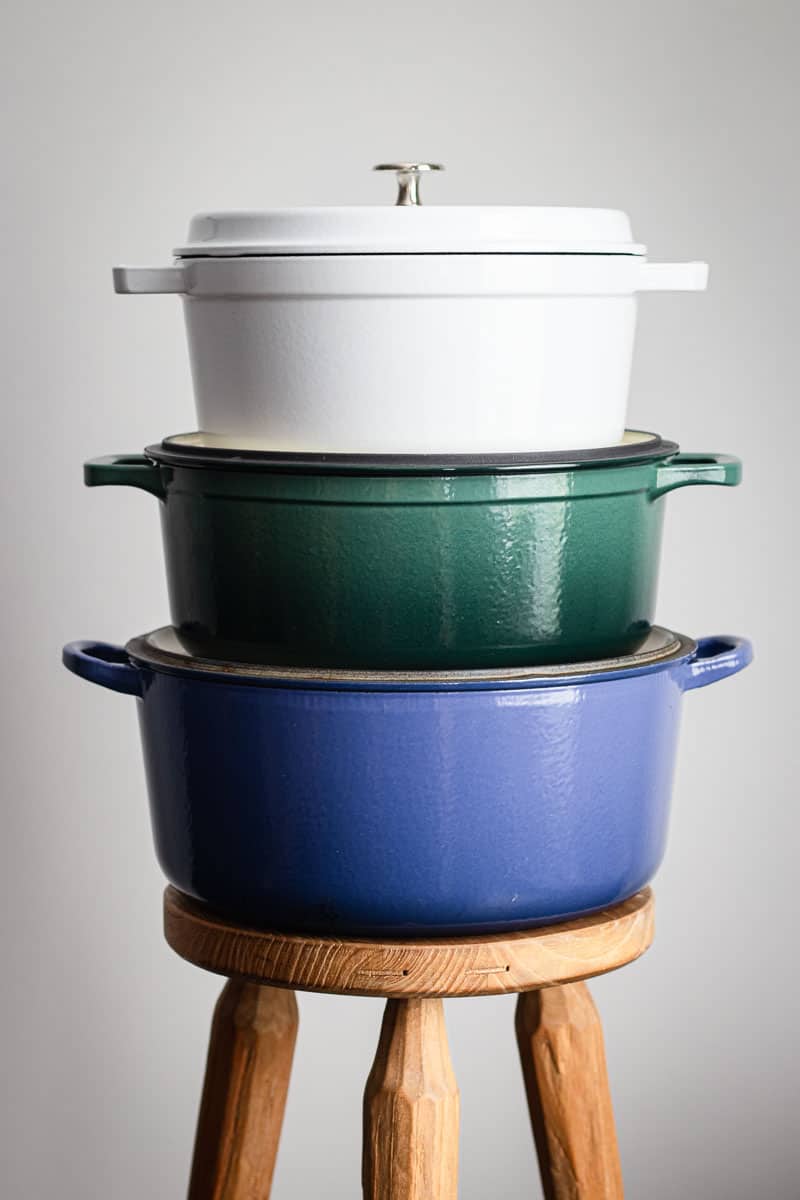
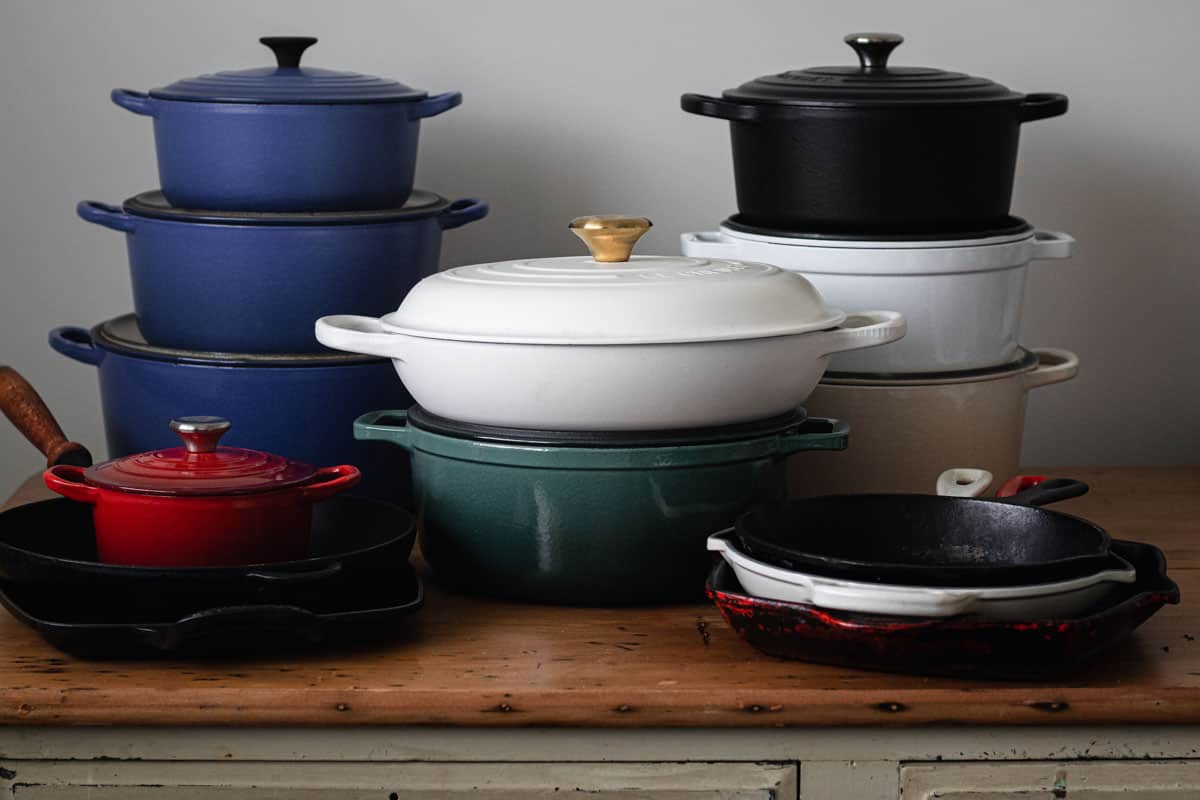
Enameled cast iron is my go-to cookware. While the vast majority of my pots are Le Creuset, I also have pieces by Lodge, Chasseur, and Staub – that’s what owning a cookware store for 15 years does! I’m a sucker for a new piece of cast iron. Anyway, I thought we’d run through how to clean enameled cast iron cookware (and how to keep it looking its best!). There is a LOT of misinformation out there (hello rock salt and lemon!), so let’s set the record straight!
The good news is, with proper care, a quality enameled cast-iron Dutch oven or skillet can last years, if not a lifetime. Some of my earliest pieces of Le Creuset are now 15+ years old, and they have quite a good bit of life still in them!
New to cooking with cast iron cookware? Start here with my guide on How to use an enamel Dutch oven.
How to clean enameled cast iron (quick answer)
To clean enameled cast iron, wash with warm soapy water and a soft sponge after each use. For burnt-on food, simmer water with baking soda to loosen residue, then clean gently. Avoid harsh abrasives to protect the enamel surface.
So, let’s break that down properly, because once you understand how enamel cast iron cookware works, cleaning it really becomes super simple.
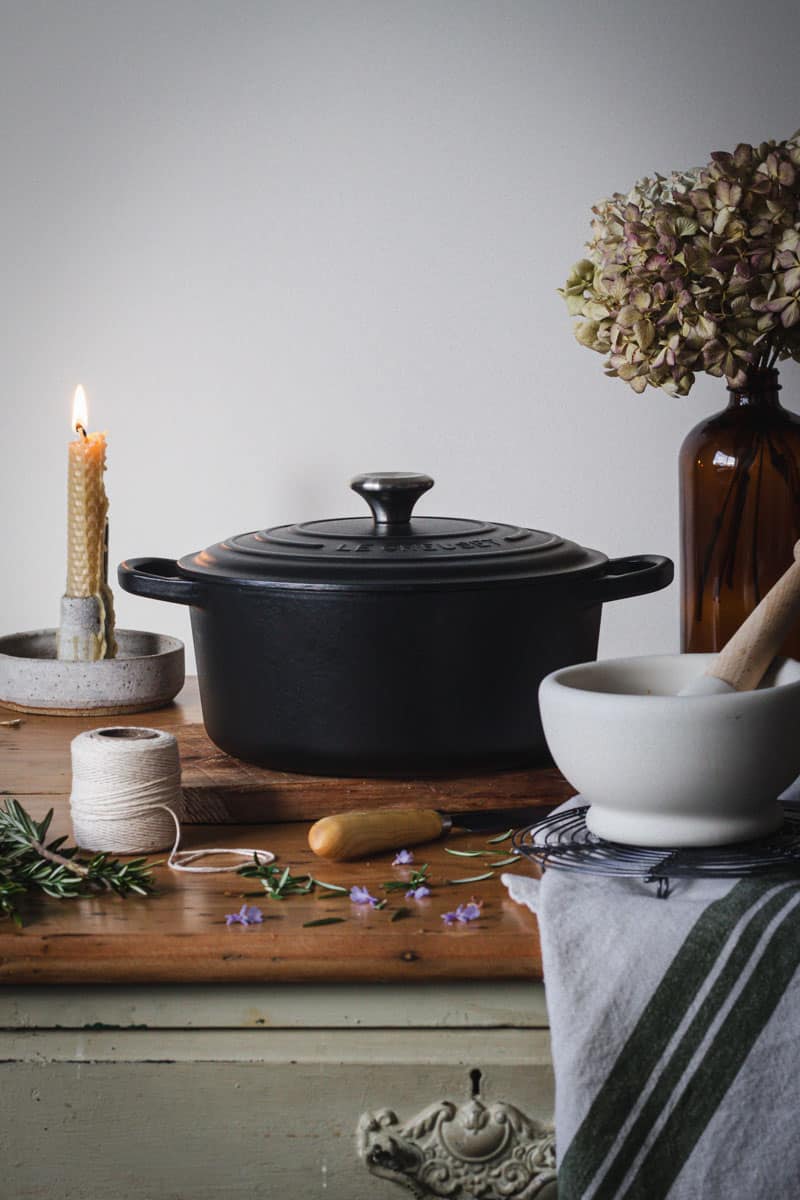
If you’re new here, you might not know I also run a small online store where I keep many of the tools I cook with every day, along with a few timeless homewares for good, slow living…
There are different types of enamel, and they need to be treated differently
Le Creuset has a different type of enamel on its cast-iron Dutch ovens and its skillets. One is cream in color, the other black. The cream enamel should always have oil in it prior to turning on the heat. While neither enameled pot is suitable for direct high temperatures, the black enamel can go to a higher heat, making it a perfect choice for steaks. Instead of oiling the pan, you’ll get a better result if you oil the foods you are cooking instead. For example, oil your steak before placing it in the pan; don’t oil the pan. Because of this, you can use a stronger pot brush to clean a black interior enamel pan than you would use with the cream finish.
How to clean enameled cast iron (step by step)
Everyday cleaning
The BEST way to clean cast iron is with warm water, dish soap, and a non-abrasive pot brush. Here’s how…
- Make sure your pot or pan has completely cooled before cleaning.
- Add a small amount of hot water along with some dish soap – If you have any stuck-on food, you may need to soak your pan for 20 minutes or so prior to cleaning. Really stuck on bits, may require the pan to be heated on low heat with a little water and detergent to help remove the baked-on food bits or soaked overnight.|
- Clean the bottom of the pot with a soft sponge or non-abrasive pot brush.
- Dry with a clean cloth or paper towel.
How to clean burnt enameled cast iron
If something’s really stuck on, don’t reach for a harsh scrubber. You’ll be surprised what a soak and a boil with a little baking soda will do. Try this…
- Add water and a tablespoon of baking soda.
- Bring it to a gentle simmer for 5–10 minutes.
- Let it cool slightly.
- Use a wooden spoon to gently lift the residue
Let the pot do all the work, as aggressive scrubbing will only damage the enamel.
Why this cleaning method works
Enameled cast iron doesn’t have a non-stick coating, so it relies on heat and surface tension rather than a non-stick finish. When you simmer water with baking soda, it helps loosen stuck-on food without damaging the enamel. That’s why it works so much better than scrubbing, as you’re lifting the residue gently, rather than forcing it off.
My cookware is stained. What do I do?
Well, this one is totally up to you. Personally, I love a good red wine stain on my enameled cast-iron pots. I take it as a sign that your pans are loved with years of use. It’s love and flavor, you might say! If stubborn stains bother you, Le Creuset has a pots and pans cleaner which can help. It’s a cream cleanser that is applied to the pot and rubbed in a circular motion to remove tough stains and maintain the enamel surface.
How to remove stains from enameled cast iron
If you prefer a cleaner look:
- Use a baking soda paste for light stains
- Simmer baking soda and water for deeper stains
- Use a gentle enamel-safe cleaner (like Le Creuset’s Pots and Pans cleaner) if needed
And honestly? A little staining is completely normal — it doesn’t affect how your cookware performs.
How to clean the outside of my enameled Dutch oven
The exterior of your Dutch oven can pick up grease and stains over time.
- Use warm, soapy water and a soft cloth
- For tougher marks, use a baking soda paste or enamel cookware cleaner.
- Avoid abrasive scrubbers that can dull the enamel
Lighter coloured, gloss enamel pots, like Le Creuset’s “Meringue” colour, can also develop grey lines from everyday use on their exterior enamel. At first, I thought “what have I done!” when mine appeared, but they are easily removed, and your pot will look like new again with a light baking soda paste or, ideally, a specific enamel cookware cleaner.
Can I pop it in the dishwasher?
It depends on the brand. All of Le Creuset & Staub’s cast iron cookware is dishwasher safe, provided it doesn’t have a timber handle. However, it is recommended you don’t dishwash skillets with black enamel as it will strip any patina that has developed with use – handwashing is always preferable. Ideally, to best maintain any enamel cast iron, handwashing is always the best option, which will keep your cookware looking better for longer. Over time, constant dishwasher use may cause enamel to dull in color and lose its durability.

WELCOME TO THE WORLD OF CAST IRON
One pot turned into three… and now you’re hooked? It happens to the best of us. Find recipes, tips, and guides in my Cast Iron Cooking Library.
Q&A’s
Can I use steel wool?
If you take anything away from this post, remember this… Steel wool belongs in the garage or laundry, NOT the kitchen. Steel wool can destroy good cookware in the blink of an eye. I’ve never used it in the kitchen, but I have seen firsthand the damage it can do. Please, please, please, throw it away, or find a new home for it. Steel and enamel do not mix. The same goes for metal utensils. Use them on your BBQ grill instead.
I’ve seen people clean burnt-on food with lemon and rock salt. Will this work?
It probably will; however, rock salt is quite abrasive, so you will damage the enamel finish in the process.
What about cleaning with bleach?
No, no, no! Please stay away from all of these “tips”. All they will do is destroy the enameled surface.
“I think my enameled Dutch oven is beyond repair. The base is black! I forgot to turn off the heat after serving up a stew and left it on for a couple of hours! What do I do?“
Have faith! I once did this and was picking burnt rice off the bottom of my enamel pot for a week. Try boiling soapy water in it for 20 minutes at a time, and while it’s boiling, try gently scraping the burnt food with a wooden spoon. If there is hope, black bits will start lifting and rising to the surface. I had to do this multiple times before my pot was usable again, so be patient. If the black bits don’t lift off, then yes, it’s probably beyond repair. My condolences.
What sort of cooking utensils should I use on my enameled cookware so I don’t ruin them?
Silicon, wooden, or nylon utensils are best for most cooking surfaces. I tend to favor nylon purely because they are heat resistant to higher temperatures than silicon, as well as being dishwasher safe.
Here’s my best tips for a new piece of cast iron cookware
Enameled cast-iron pots and pans do not need to be seasoned like raw cast iron. Simply remove all packaging and stickers, and wash in hot soapy water. Once you’ve dried it, you are good to start cooking.
Most enamel cast iron is suited to low to medium heat cooking. Take the time to heat up your cookware on a low heat (always with oil in the base of it), and your cookware will last a lifetime. While it may seem impossible to cook at that temperature, cast iron retains an immense amount of heat, so in a couple of minutes, you’ll have a cooking surface hot enough to cook in.
Never plunge your hot cookware into cold water directly after cooking. Wait a few minutes for it to cool before cleaning. While quality cast iron cookware is highly durable, misuse can cause cracking or chipping if handled incorrectly. So for best results, I leave my cookware for at least 10 minutes before cleaning.
Start slow. Cook confidently.
Cast Iron Cooking 101
From slow cooked stews to warm bread fresh from the oven, this guide will help you feel confident cooking with cast iron at home.
A bit more about cast iron cooking…
- French Oven vs Dutch Oven… Everything you need to know!
- What is the Best Dutch Oven size to buy?
- The Best Oil To Season Your Cast Iron Cookware
Any questions, drop them in the comments!
x