
Colcannon Mash – Creamy Irish Mashed Potatoes with Cabbage
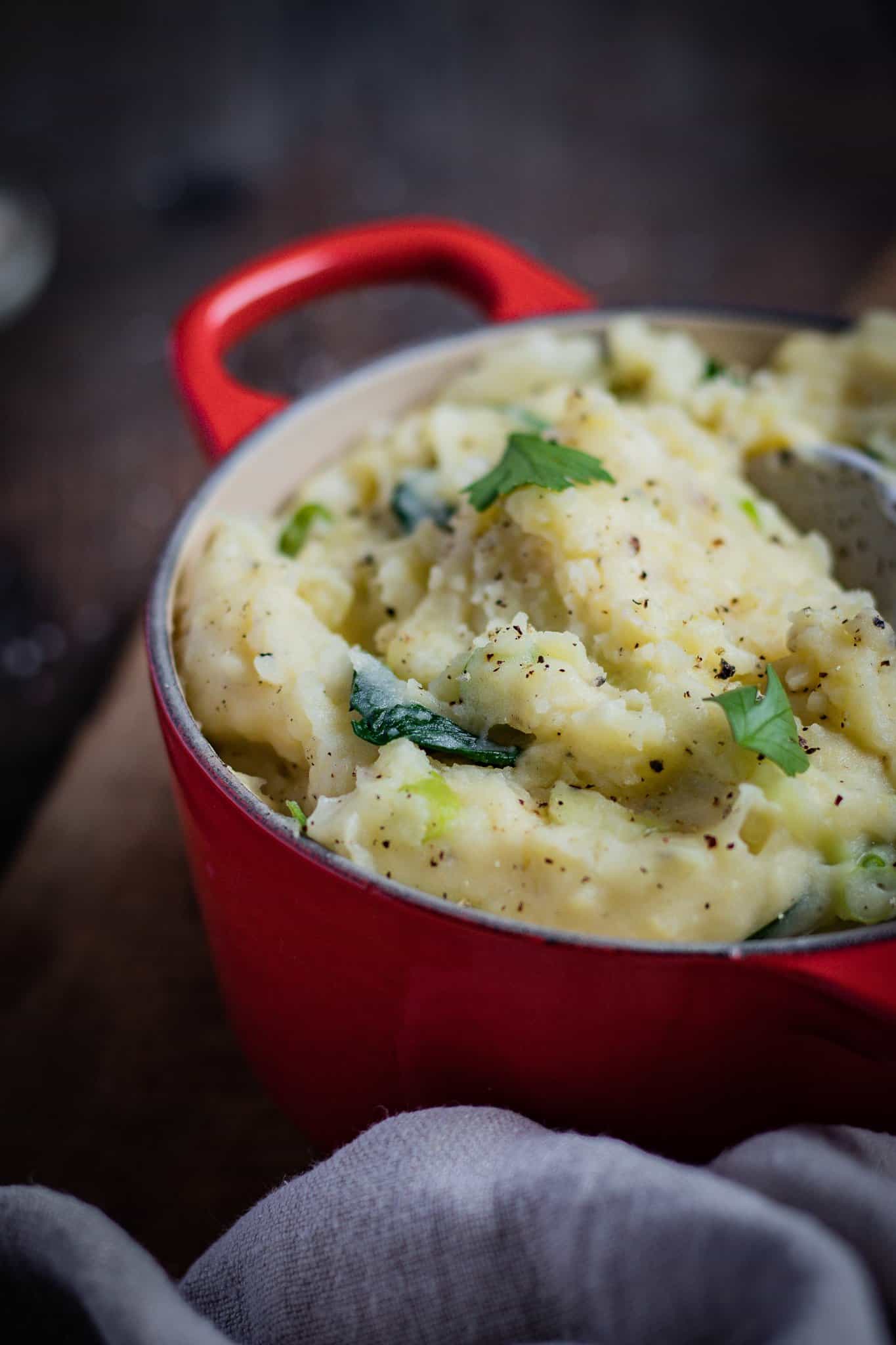
We have this saying in our family that it’s not dinner without two kilos of potatoes. I’ve been assured it’s an Irish thing. But seriously, if colcannon mash was on the menu every night, for me, that would go some way as to why we need so many potatoes. I mean, is there anything more comforting than a mashed potato dish? Especially Irish mashed potatoes with cabbage and other bits in it?
If you’re new here, you might not know I also run a small online store where I keep many of the tools I cook with every day, along with a few timeless homewares for good, slow living…
What is Colcannon?
Traditional Irish colcannon recipes are a delicious potato side dish full of simple ingredients. It’s essentially cooked potatoes that are mashed, lots of butter, and milk mixed with steamed, curly kale or green cabbage. This version includes a few extras that together make a great side dish for basically anything slow-cooked or roasted. The cabbage and English spinach is cooked in a little butter and well seasoned. (Don’t you just love English spinach? It’s the best vegetable for hiding in dishes. Because, you know, extra greens are never a bad thing.) The addition of spring onions at the end is the best part and just brings the whole thing together.
Colcannon vs Champ: What’s the Difference?
If you’ve spent any time around Irish cooking, you’ve probably come across both colcannon and champ. They’re closely related, and both start with one very important ingredient: potatoes.
The main difference is that colcannon includes cabbage or kale, while champ is made with spring onions (scallions) stirred through creamy mashed potatoes.
Both are traditional Irish side dishes that have been served for generations, particularly alongside roasts, stews, and bacon. Champ tends to be a little lighter and simpler, while colcannon is a good bit heartier thanks to the addition of some leafy greens. If I had to choose between the two, I’d always choose colcannon. Any side dish that lets me sneak extra greens into dinner is a winner with me.
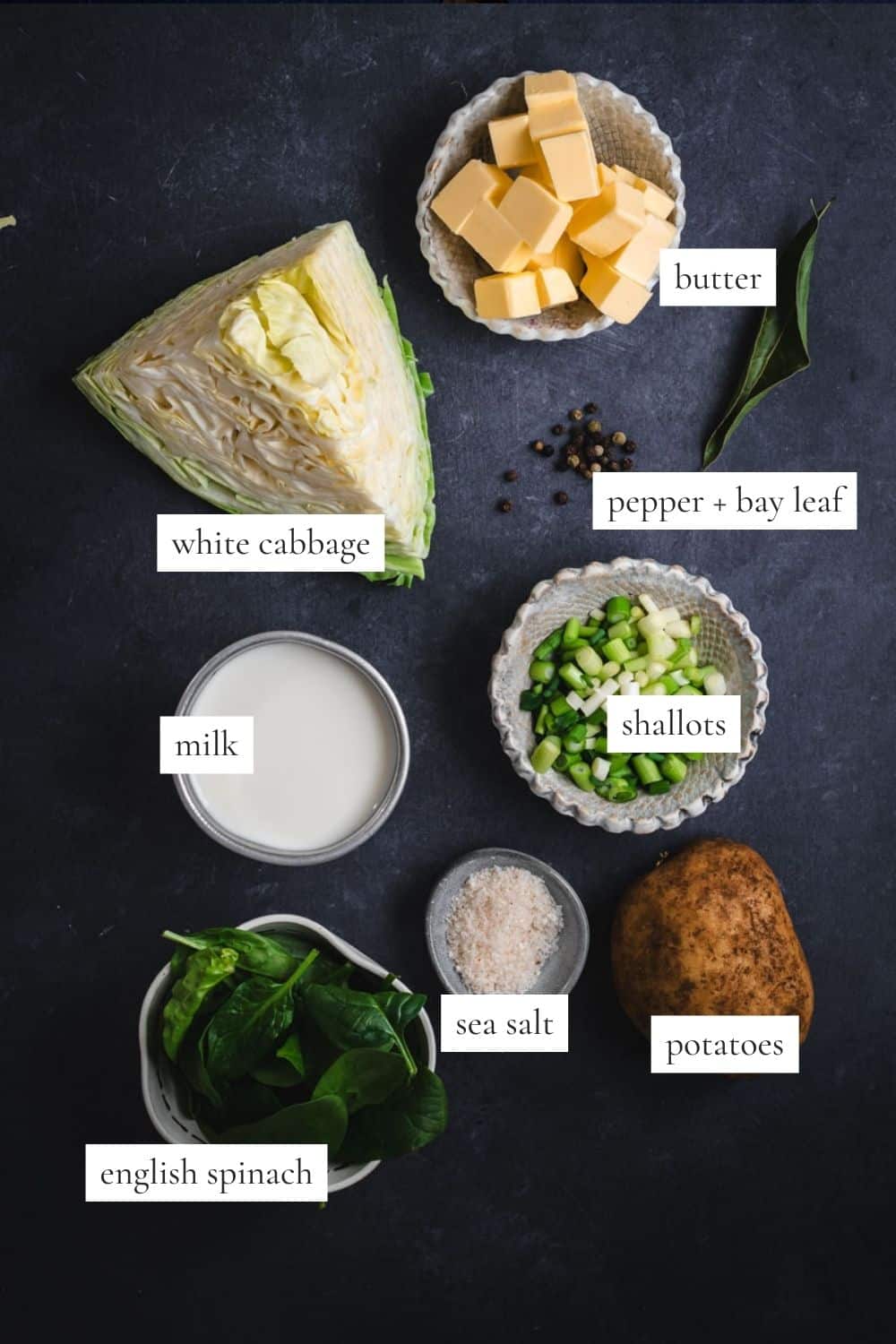
What you need for this Irish colcannon recipe
- Good mashing potatoes. In Australia, the best mashing potatoes are King Edward or Dutch creams, although they can be a little hard to find as they are not usually in the supermarkets. You most commonly find in the supermarkets, Sebago (the dirt-covered ones), Desiree (the pink skin ones), or Coliban potatoes. All of which are good all-rounder potatoes and mash well. Don’t live in Australia? Look for floury potatoes with more starch, less water, like King Edwards, Yukon Gold potatoes, or Russet potatoes – these are all cracking mashing potatoes and make the best Irish mashed potatoes.
- Full cream whole milk. While you can totally substitute lite or skim milk, I’m a full cream kinda girl.
- Butter, unsalted, always. Lurpak is my butter of choice, but any good quality butter is great. If you prefer salted butter, go for it. Because I bake a lot, I’ve always got unsalted butter on hand in the fridge. Just be sure to taste before seasoning so you don’t overdo it with the salt. Irish butter isn’t readily available in Australian grocery stores, but sometimes you get lucky! If you see Kerry Gold butter, it’s a great option for this traditional Irish colcannon
- Leafy greens – White cabbage, English spinach, and green onions (spring onions).
- Bay leaves. I have a small bay leaf tree in the garden, and it’s totally worth its weight in gold. I swear it’s saved me a small fortune in bay leaves over the years
- Sea salt flakes and freshly ground pepper for seasoning. I normally use a couple of tablespoons of salt for my creamy mashed potatoes. While this may seem like a lot, this is a big batch with 1kg of potatoes alone. In this case, correct seasoning makes all the difference.
Equipment you’ll need
A good-sized saucepan. My potato pot is a 24cm enamel cast-iron casserole pot. It’s a really good, medium pot size to use when boiling pasta or making large quantities (1kg plus) of potatoes for mash, salads, etc. Plus a large skillet (or another saucepan) for sauteing the greens.
A potato masher or potato press is essential. To get a fluffier mash, look for a potato masher that you can mash and whip the potatoes with. This one works a treat! You’ll definitely notice the difference in your homemade colcannon.
Plus all the usual utensils like a cook’s knife, chopping board, and a stirring spoon.
Dutch Oven Tip: If you’re making a large batch of colcannon, a 24cm or 28cm enamel cast iron Dutch oven is ideal. It holds heat beautifully and gives you plenty of room to mash the potatoes without wearing half of them. Just be sure to use a nylon masher, as a stainless steel masher can damage your Dutch oven’s enamel surface.
The details…
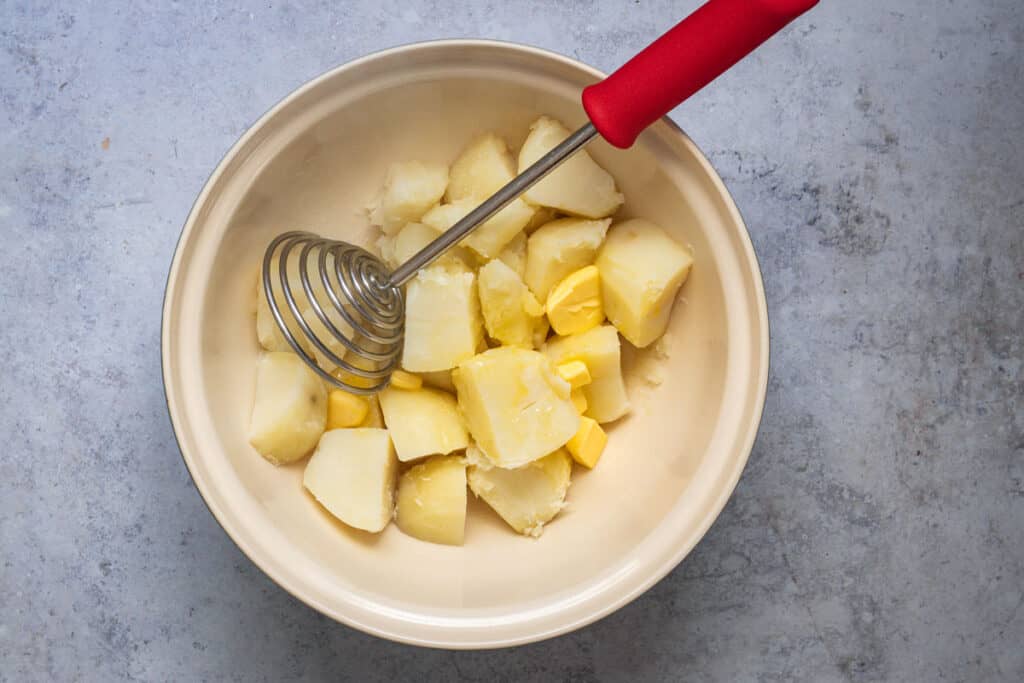
- Cut all the potatoes into roughly the same size. (I normally aim for a 4cm square rough chop.) In a large pot, place the potatoes and enough cold water to cover them. Pop on the stove and bring to a boil. Continue to boil until potatoes are fork-tender, cooked through
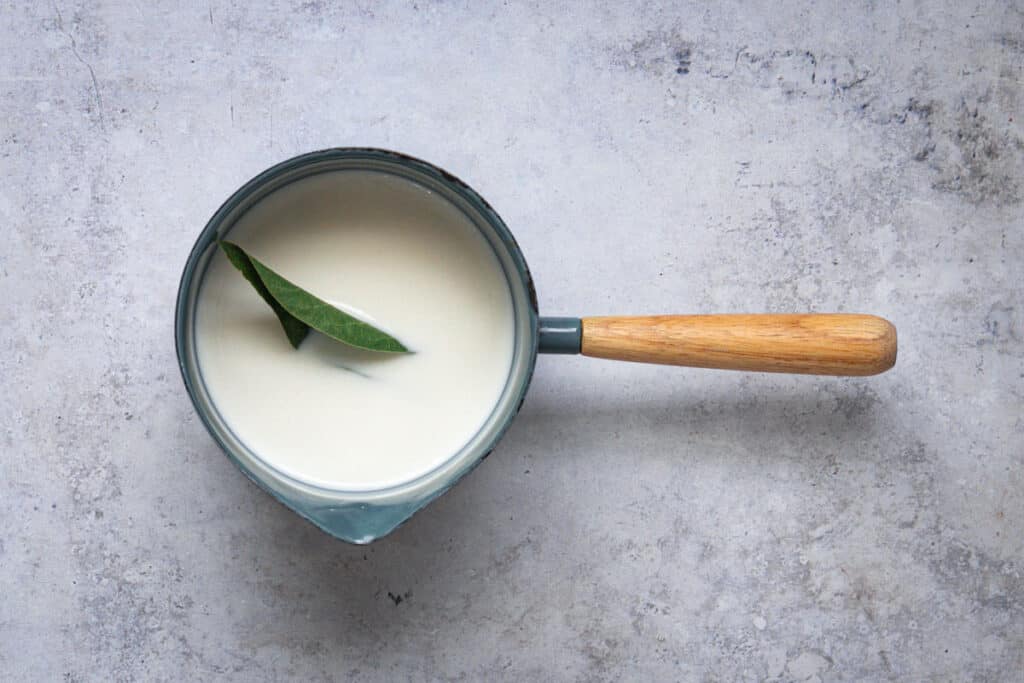
- In a small saucepan, over medium heat, warm the milk and the bay leaf til hot, but not boiling. Discard the bay leaf and pop it aside.
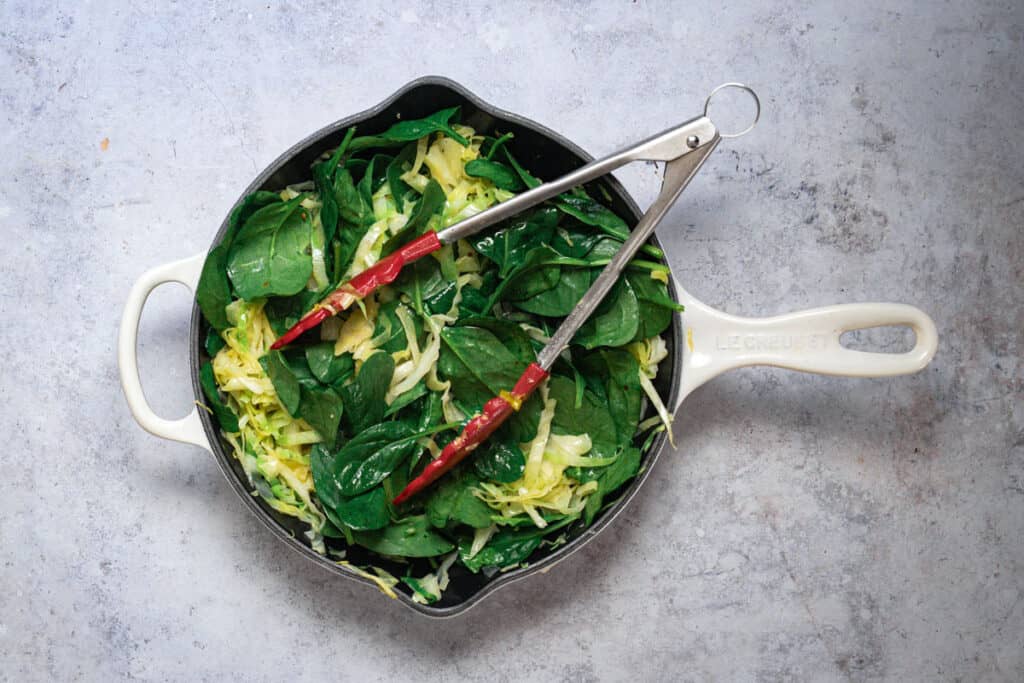
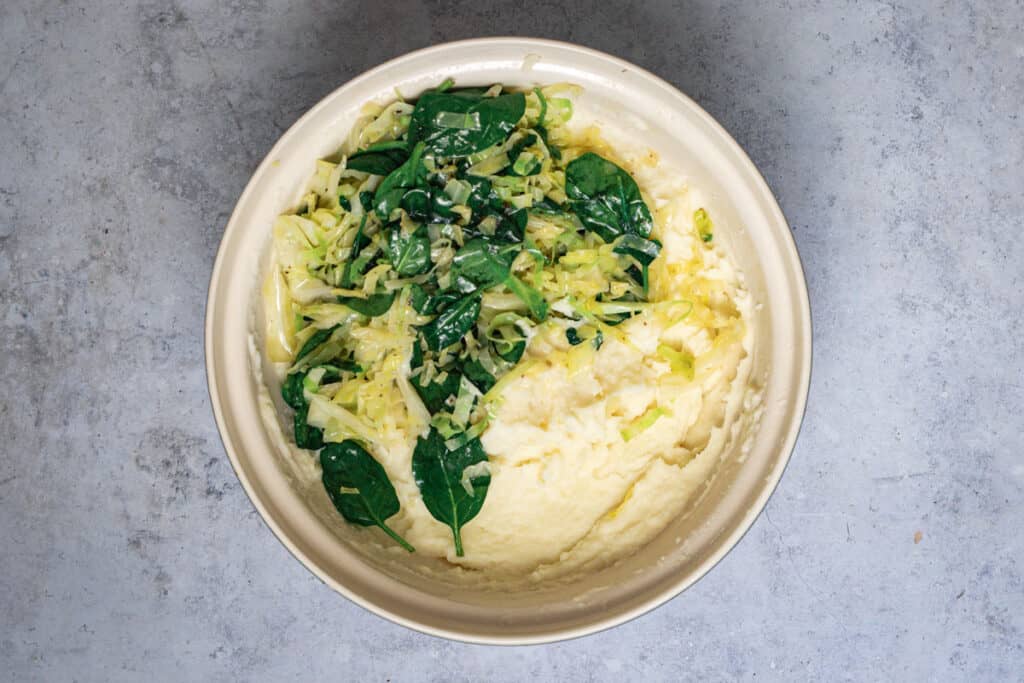
- To cook the greens… In a frypan, sweat the cabbage in half of the butter. When the cabbage has softened, add the spinach and season with salt and pepper. Don’t overcook the spinach. It will wilt quite quickly once it hits the heat. I find that any excess moisture quickly disappears from the pan. Remove from the heat and pop aside.
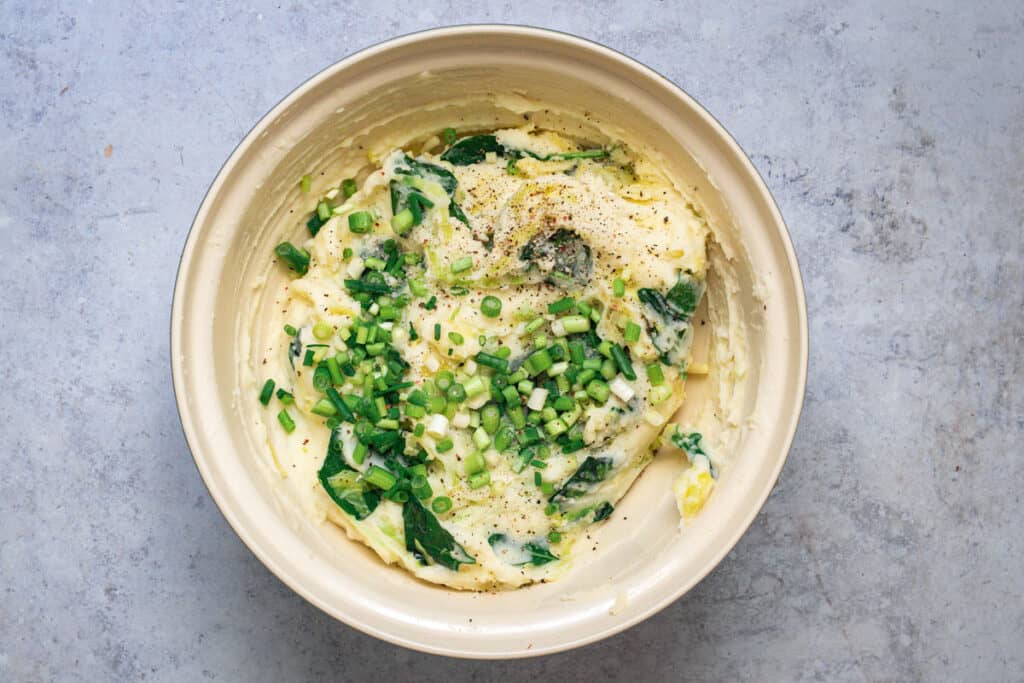
- Remove the potatoes from the stove and drain off water. Mash the potatoes and add the remaining knob of butter. Stir it through till melted and incorporate it into the potato along with the hot milk. Stir until the potato has absorbed the milk. Add cabbage mix and spring onions to the potato mixture. Combine. Season the colcannon mash with salt and freshly ground black pepper to your taste.

Colcannon Variations
Like many traditional recipes, every family seems to have their own version of colcannon. While the classic recipe combines mashed potatoes with cabbage or kale, there are plenty of regional and family variations around. Here are the popular ones to try…
Traditional Cabbage Colcannon
This is the version many people grew up with. Soft green cabbage is gently cooked in butter before being folded through creamy mashed potatoes. It’s simple, economical, and exactly the sort of food that has fed families for generations.
Kale Colcannon
In some parts, curly kale is the preferred green. Kale adds a slightly earthier flavour and a little more texture than cabbage. If you’re looking for the most traditional version, kale is often considered the classic choice.
Spring Onion Colcannon
This is the version I make most often. Along with cabbage and spinach, I stir through plenty of sliced spring onions right at the end. They add freshness and a mild onion flavour that works beautifully with buttery mashed potatoes.
Bacon Colcannon
Many Irish pubs (and my Mum!) serve colcannon with crispy bacon folded through the mash. The salty bacon just works with the creamy potatoes and greens just works.
Creamy Colcannon
Some people add cream instead of milk for an even richer mash – I’m all for it! It’s particularly lovely served alongside roast lamb, corned beef, or a slow-cooked beef stew on a cold winter’s night.
My Favourite Version
After years of cooking for my The Irishman, I’ve found my favourite version sits somewhere between traditional and practical. I use cabbage for sweetness, English spinach for extra greens, plenty of butter, and a generous handful of spring onions stirred through at the end. In my book, it’s still colcannon, but it’s the version that disappears fastest from our dinner table.
Why I Love Serving Colcannon with Dutch Oven Dinners
– Can be made ahead
– Holds heat well
– Feeds a crowd
– Perfect alongside braised meats
– Easy to keep warm in an enamel Dutch oven
What do I serve with Colcannon Irish Mash?
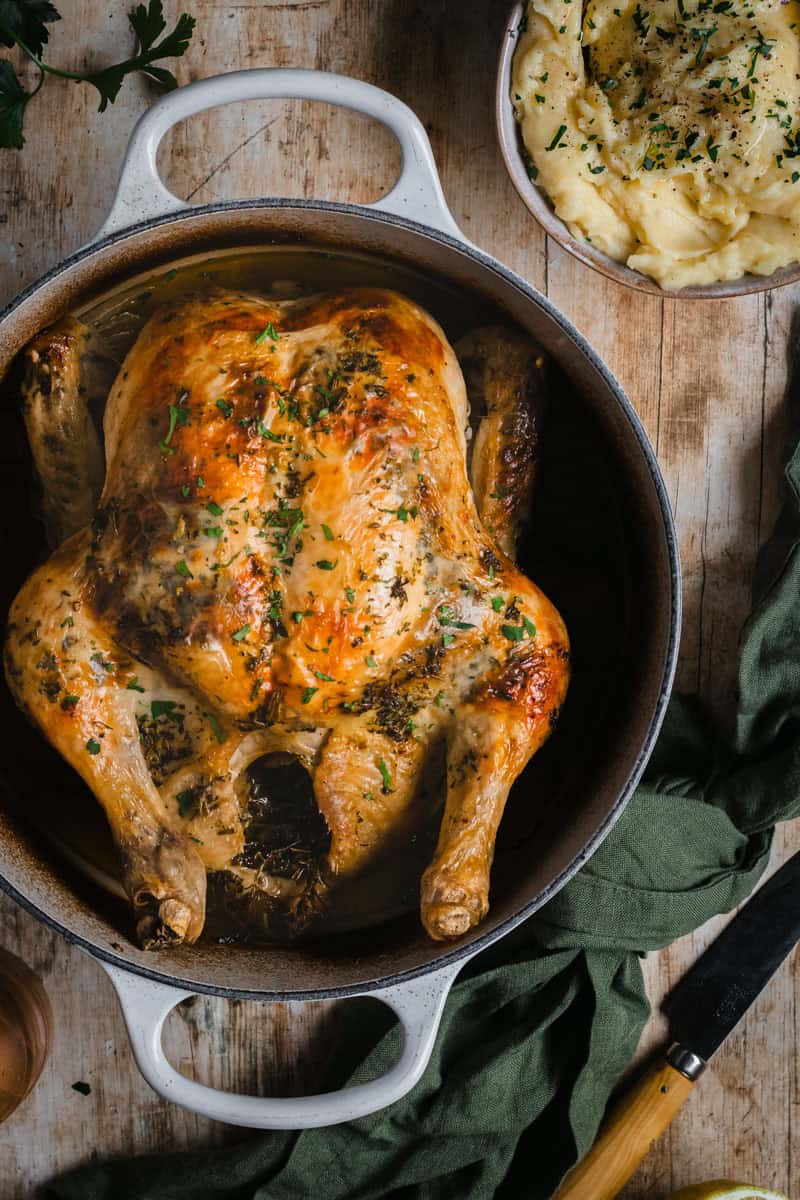
Pork belly and meat roasts like this Herbs de Provence Roast Chicken, all work a treat with this Irish staple.
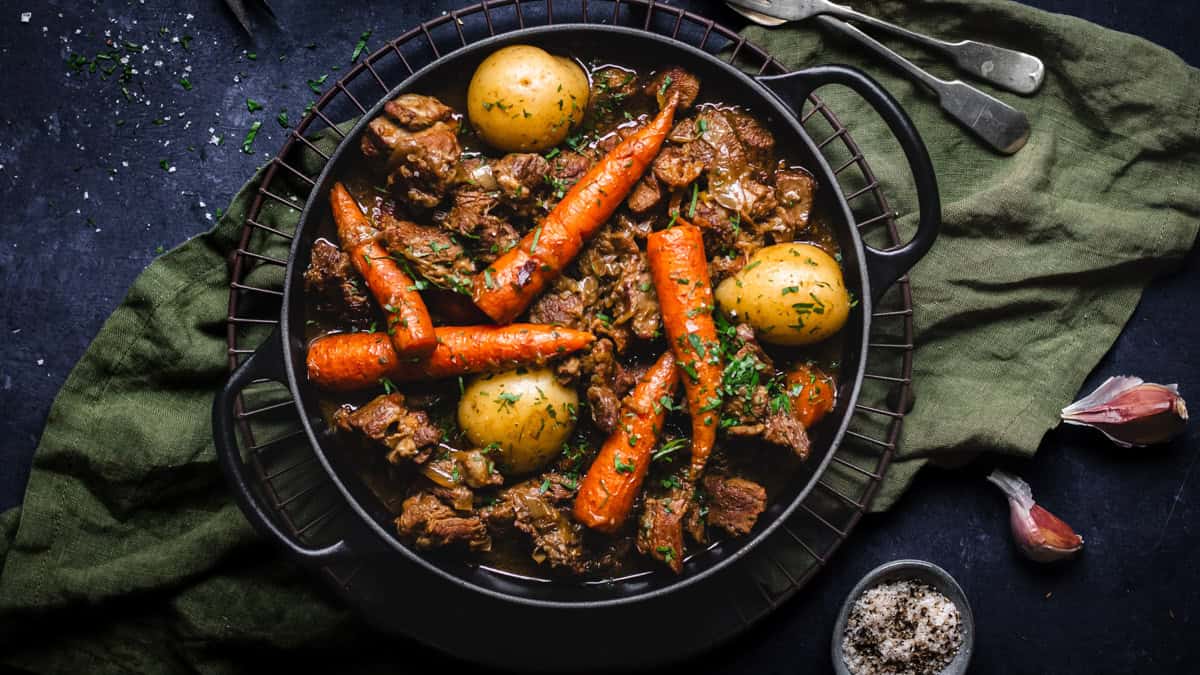
Given that colcannon is a traditional Irish dish, pair it with a good Irish Stew. Dreamy comfort food on a cool day.
Slow-cooked beef cheeks in red wine with colcannon mashed potatoes are a favorite in our house!
Here’s a post on what to serve with colcannon. It’s full of good dinner ideas if you’re stuck!
Traditionally, Irish colcannon mash is served on Halloween or St. Patrick’s Day alongside corned beef, baked ham, bacon, or lamb chops. But go nuts, it pretty much lends itself as a tasty side dish, every day of the year!
Cook’s notes
If you wanted to take it to a whole new level, make a bit extra when you serve it with corned beef. The next day, you can add the leftover beef (shred or cut it finely) to the leftover mashed potatoes and shape it into a pancake-shaped disc. Panfry the potato pancake in a hot pan in a little butter. It’s freaking good for breakfast!
Storage
Given how delicious colcannon potatoes are, I sometimes cook a little extra for the next day. Once cool, store leftover colcannon in an airtight container and pop it into the fridge. It will last for up to 2 days. To reheat, pop it back into a small pot with a little milk or cream and cook gently on a low heat, stirring occasionally so it doesn’t stick to the bottom.
New to Cast Iron Cooking?
Fallen down the cast-iron rabbit hole? You’re in good company. Start with my Cast Iron Cooking Hub.
FAQ’s
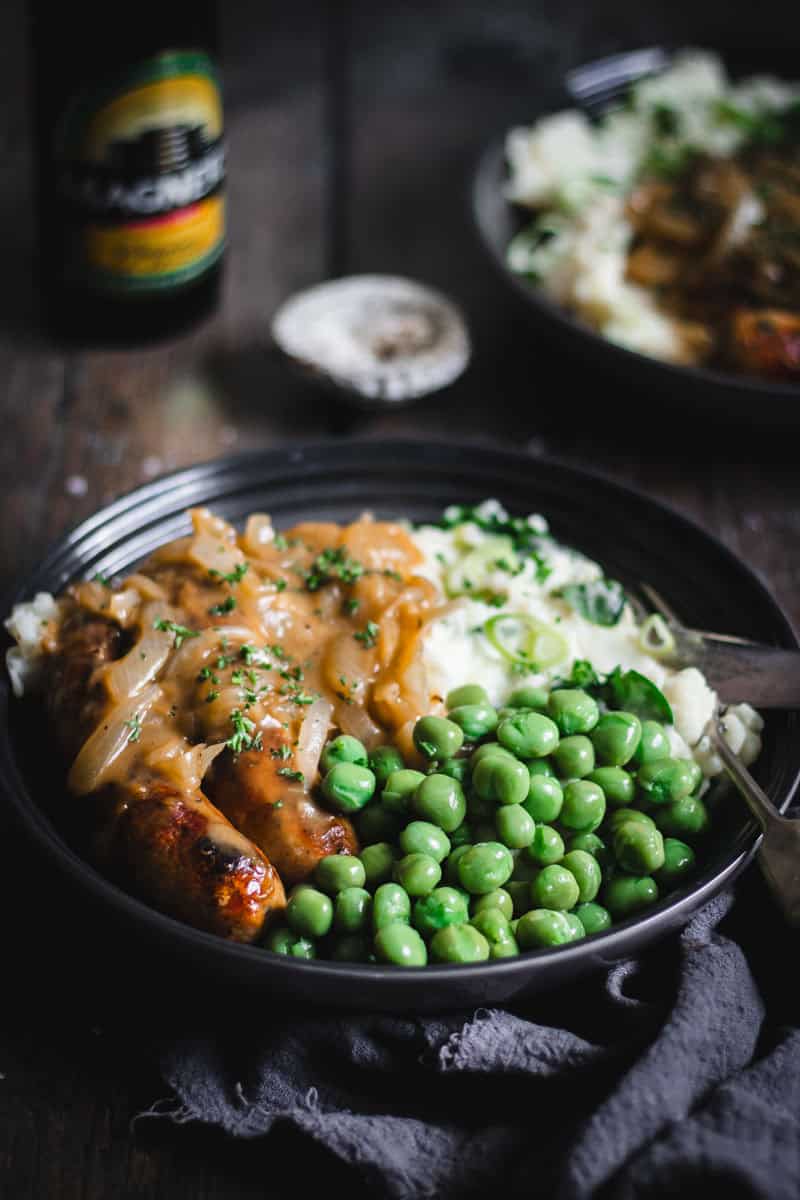
A few more hearty recipes to serve alongside this colcannon mash recipe
- Roast Topside of Beef with Red Wine
- Slow-Cooked Beef Pot Roast
- Persian Lentil Sweet Potato Soup
- Beef and Red Wine Ragu
- Slow-Cooked Lamb Shoulder with Herbs de Provence
Let me know in the comments your favourite dish to serve Colcannon Irish potatoes with
x
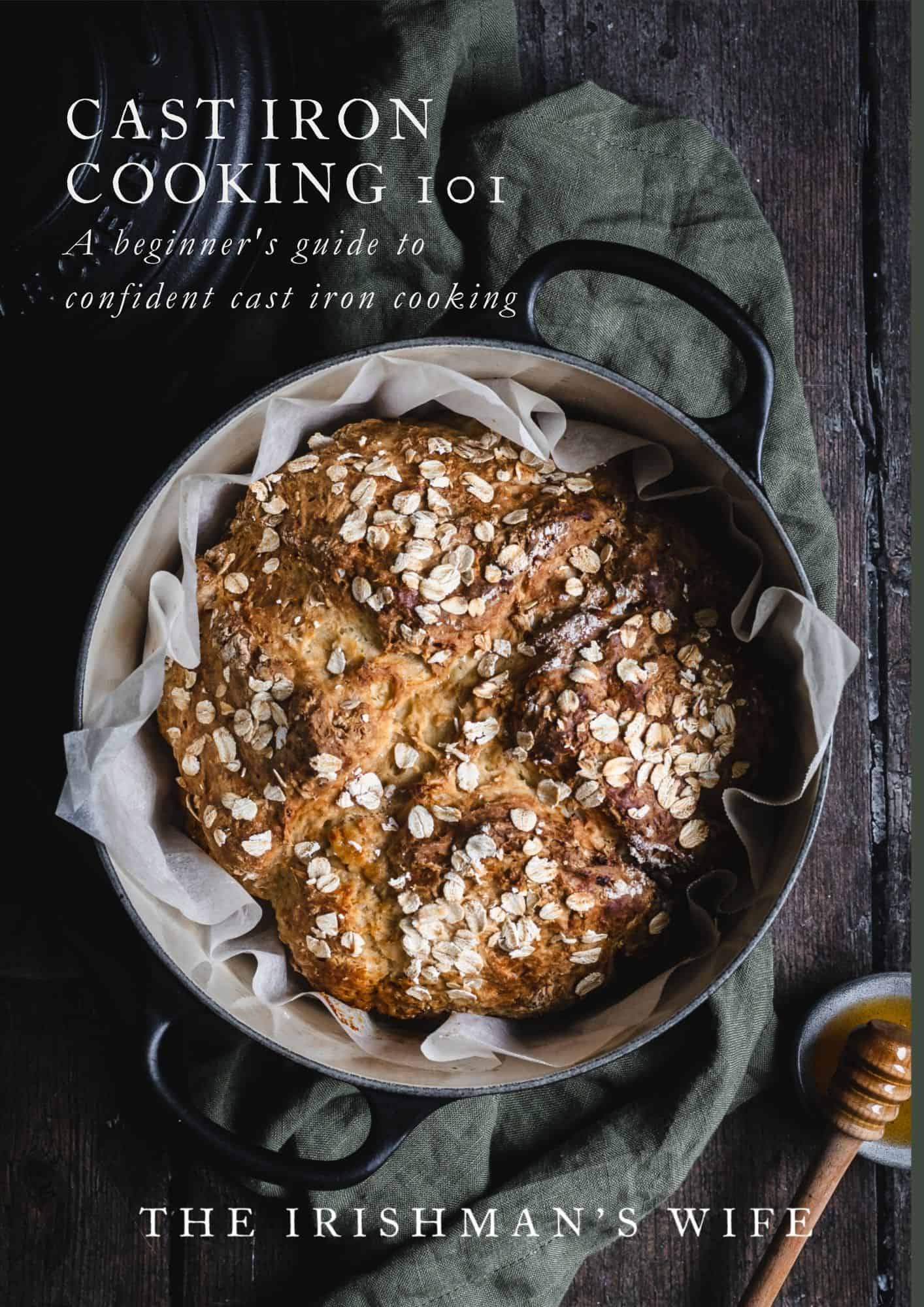
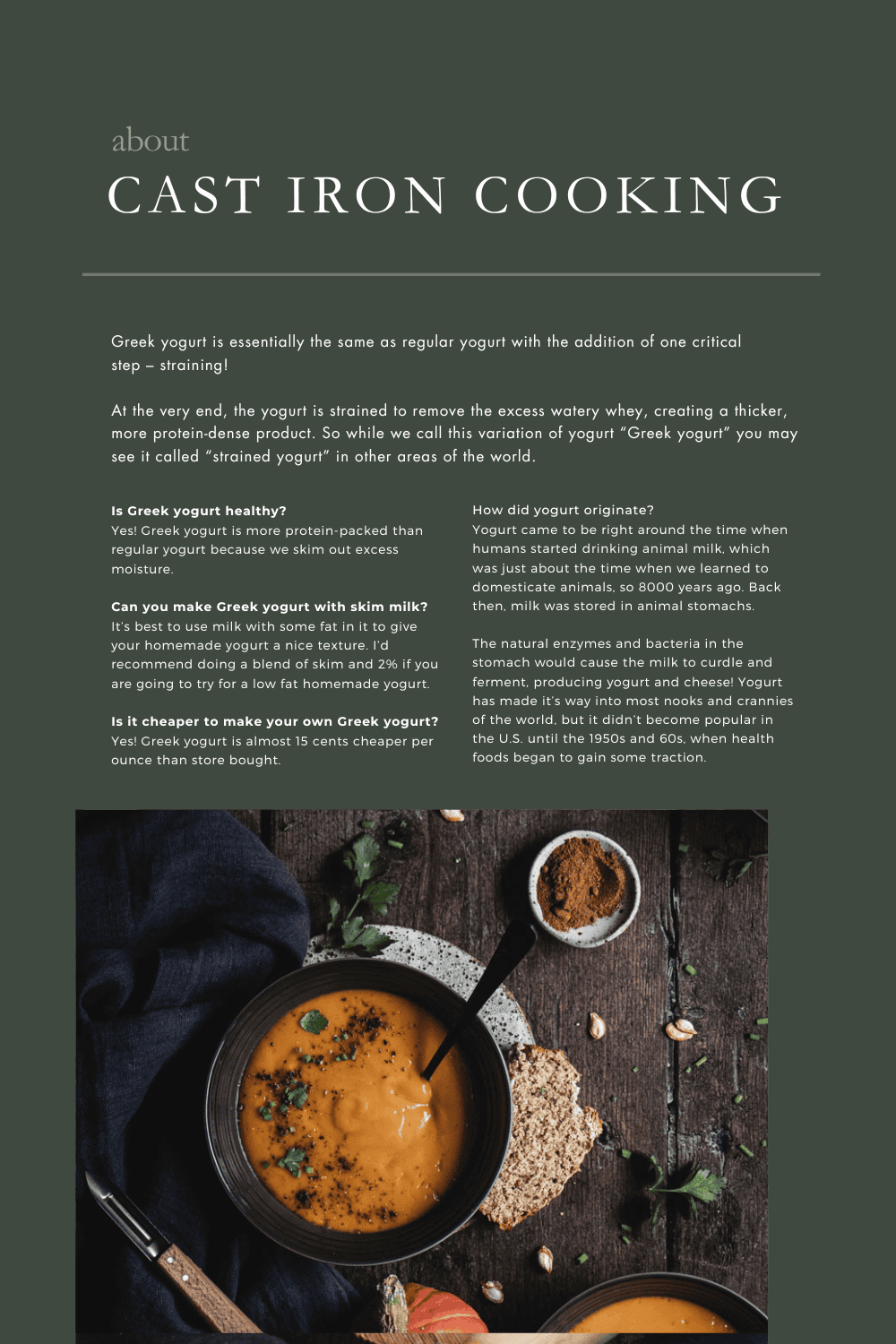
Start slow. Cook confidently.
Cast Iron Cooking 101
From slow cooked stews to warm bread fresh from the oven, this guide will help you feel confident cooking with cast iron at home.
Colcannon Mash – Irish Mashed Potatoes
- Total Time: 50 minutes
- Yield: 6 people 1x
Description
Is there anything more comforting than mashed potato? Especially creamy mash with other bits in it? For me, Colcannon is king when it comes to Irish potato dishes.
Ingredients
- 1 kg peeled potatoes (suitable for mashing)
- 1 cup milk
- 1 bay leaf
- 100g butter (unsalted)
- 400g green cabbage (finely shredded)
- 50 g English spinach
- 30 g spring onions (finely sliced)
- sea salt
- pepper (freshly ground)
Instructions
- Cut all the potatoes into roughly the same size. (I normally aim for a 4cm square rough chop.) In a pot, place the potatoes and enough water to cover them. Pop on the stove and bring to the boil. Continue to boil until potatoes are cooked through and soft.
- In a saucepan, warm the milk and the bay leaf til hot, but not boiling. Discard the bay leaf and pop aside.
- In a frypan, sweat of the cabbage in half of the butter. When the cabbage has softened, add the spinach and season with salt and pepper. Don’t overcook the spinach. It will wilt quite quickly once it hits the heat. Remove from heat and pop aside.
- Remove potatoes from the stove and drain of water. Mash the potatoes and add the remaining butter. Stir it through till melted and incorporate it into the potato along with the hot milk. Stir until the potato has absorbed the milk. Add cabbage mix and spring onions. Combine. Season with salt and pepper to your taste.
Notes
If you wanted to take it to a whole new level, make a bit extra when you serve it with corned beef. The next day, you can add the leftover beef (shred or cut it finely) to the colcannon, and shape into a pancake shaped disc. Panfry in a hot pan, the potato pancake on both sides in a little butter. It’s freaking good for breakfast!
This recipe was cooked in my 20cm enamel cast iron Dutch oven and my 23cm enamel skillet.
Please note all recipes on this website are in US measurements. Eg, 1 cup / 240ml, 1 tablespoon/15mls. Oven temperatures refer to a fan-forced oven.
- Prep Time: 20 minutes
- Cook Time: 30 minutes
- Category: Side Dish
- Method: Stovetop
- Cuisine: Irish
Nutrition
- Serving Size:
- Calories: 270
- Sugar: 6.3 g
- Sodium: 452.7 mg
- Fat: 13.8 g
- Carbohydrates: 33.1 g
- Protein: 5.5 g
- Cholesterol: 36.7 mg



The ULTIMATE mashed potato!!!
please what does one cup equal in say grams/litres etc? I really want to try your recipe but I have no clue waht one cup means as I have many cups of different sizes! Thank you x
Hi Lyndsey. All of my recipes are in US measurements where 1 cup = 240ml. Hope this helps 🙂 Emma x
Can I substitute the white cabbage for other cabbages? In the description you wrote curly kale but in the recipe itself you’ve used white cabbage. I have wombok so was thinking of using that.
I haven’t tried it, so I can’t say it will definitely work, but it’s always worth a try (and it will of course have different texture/flavour). Enjoy x
Hi Emma,
I’ve recently become dairy intolerant. Could I make this with soya milk and non dairy butter d’you think? 🤔 Many thanks, Gerry
Hi Gerry! I would love to give you some help on this but my experience converting recipes to DF is very limited. Personally, I would halve the mashed potato recipe part and give it a shot with the mash and see how you go with your substitutions. Another option would be to use extra virgin olive oil instead of butter in the mash. Just use a little and ad more if needed to bring to together. When it comes to sweating the greens in butter, you could just steam them in a steamer, or even give them a quick microwave to cook them down and soften them a bit before adding. Obviously any changes are going to be an experiment, but life without mash isn’t worth living 😉 so i’d give it a shot! Let me know how you go! Emma x
Hi Gerard, I have a lactose sensitivity and have made plenty of mash without dairy. I simply leave the milk out usually (I like the texture of potatoes and think it doesn’t NEED to be more creamy), but when I do add a milk, I’ve had success with any type of non dairy milk I happen to have in the house. Non dairy butter will work fine if you have it, as will olive oil as Emma suggested, or I would use refined coconut oil since I have that in the house. Refined coconut oil has a neutral (not coconut) flavor, and is solid at room temp like butter, and is healthier than vegetable shortening, so I use it wherever a butter substitute is needed. Some stores sell refined coconut oil with non-dairy butter flavor added.
All of your photos are amazing. I want to try the Colcannon for Sunday dinner tomorrow along with the corned beef recipe. Thank you for posting your recipes and photos with an upbeat attitude! Looking forward to cooking tomorrow!
Thanks so much Danielle. Colcannon AND Corned Beef is my idea of the perfect Sunday supper. Enjoy! Emma x