
Slow-Cooked Roast Lamb Shoulder with Herbs de Provence
We’re a roast night kinda family. While I class myself as a pretty experienced cook, and will happily try any good recipe, nothing excites my family as much as when I say there is a roast on the table. Seriously, eyes just light up! Because who doesn’t drool over a good roast dinner? So here’s my really easy slow-cooked, fall-apart, roast lamb shoulder recipe. It’s a handful of simple ingredients and flavors, roasted at a lower temperature in the oven for a few hours until it’s melt-in-your-mouth tender!

If you’re new here, you might not know I also run a small online store where I keep many of the tools I cook with every day, along with a few timeless homewares for good, slow living…
Here’s why you are going to love this slow-cooked lamb shoulder recipe
Never cooked with a lamb shoulder before? You are in for a treat! While many of us grew up on the roast night leg of lamb (farmer’s daughter here!), lamb shoulder was not nearly as common, as the lamb meat was taken off the bone for a slow-cooked casserole. However, trust me, it’s just as good! And it’s a super easy roast night dinner. The catch is, is that for a lamb shoulder’s meat to fall off the bone, it requires slow cooking at a low temperature for a couple of hours. Hands-on time though… Under 30 minutes with minimal effort.
Once you’ve cooked this lamb shoulder roast low and slow for a few hours, the hard work is pretty much done. It works so well as a roast dinner for roast nights or on special occasions like Easter or Thanksgiving. Or try it rehashed with a salad or made into homemade gyros alongside salad vegetables and tzatziki. Personally, I love using leftover slow-roast lamb as a pizza topping, so I’ll always pop a little aside and freeze it for our next pizza night!
Why is lamb shoulder perfect for slow cooking
Lamb shoulder is made for slow cooking. Compared to a leg of lamb, it has more fat, more connective tissue, and a richer flavor, which means after a few hours cooking low and slow, you’re rewarded with incredibly tender, pull-apart lamb that literally falls off the bone.
It’s also one of the more forgiving cuts of lamb to cook. The long roasting time allows all that connective tissue and marbling to slowly break down, keeping the meat juicy and full of flavor.
Roast lamb nights have always been pretty standard in our family, but lamb shoulder was often overlooked in favour of a classic leg roast. Honestly though? For slow roasting in a Dutch oven, I think lamb shoulder is hard to beat.
What you need to get started
- Lamb Shoulder (bone-in). I use roughly a 2.4kg lamb shoulder for this recipe. While you can also use boneless lamb shoulder (cooking time may vary slightly), I prefer bone-in for slow roasting as it stays beautifully juicy and tender. Be sure to remove the lamb from the fridge about an hour before cooking so it can come up to room temperature before roasting.
- Herbs de Provence is a mixture of herbs typical of the Provence region in the south of France. It’s a pantry staple for a slow cook. As well as a great marinade for a lamb roast, it is also delicious as a roast chicken dry rub. Also, try sprinkling this all-purpose seasoning blend over roast vegetables and adding it to soups, casseroles, and stews. Try it sprinkled over chicken breasts and grill on the BBQ. It’s a quick and easy chicken dish for dinner alongside a side salad.
- Sea salt flakes, freshly ground Black Pepper, Olive Oil, Water
- Sprigs of fresh rosemary – I used 5 x 10cm sprigs for this recipe
- Brown onions, fresh garlic bulbs, and garlic cloves
- White Wine. No need to use your favorite pinot gris for this one. Cheaper wines are great for slow cooking and I swear no one will be able to tell whether you cooked with a $45 chardonnay or an $8 sav blanc!
The Details
- Preheat the oven to 220°C/425°F.
- Add the bulb of garlic, cut in half horizontally, and the onion halves to the base of the cast iron pot.
- Place the lamb shoulder on a chopping board, meaty side up.
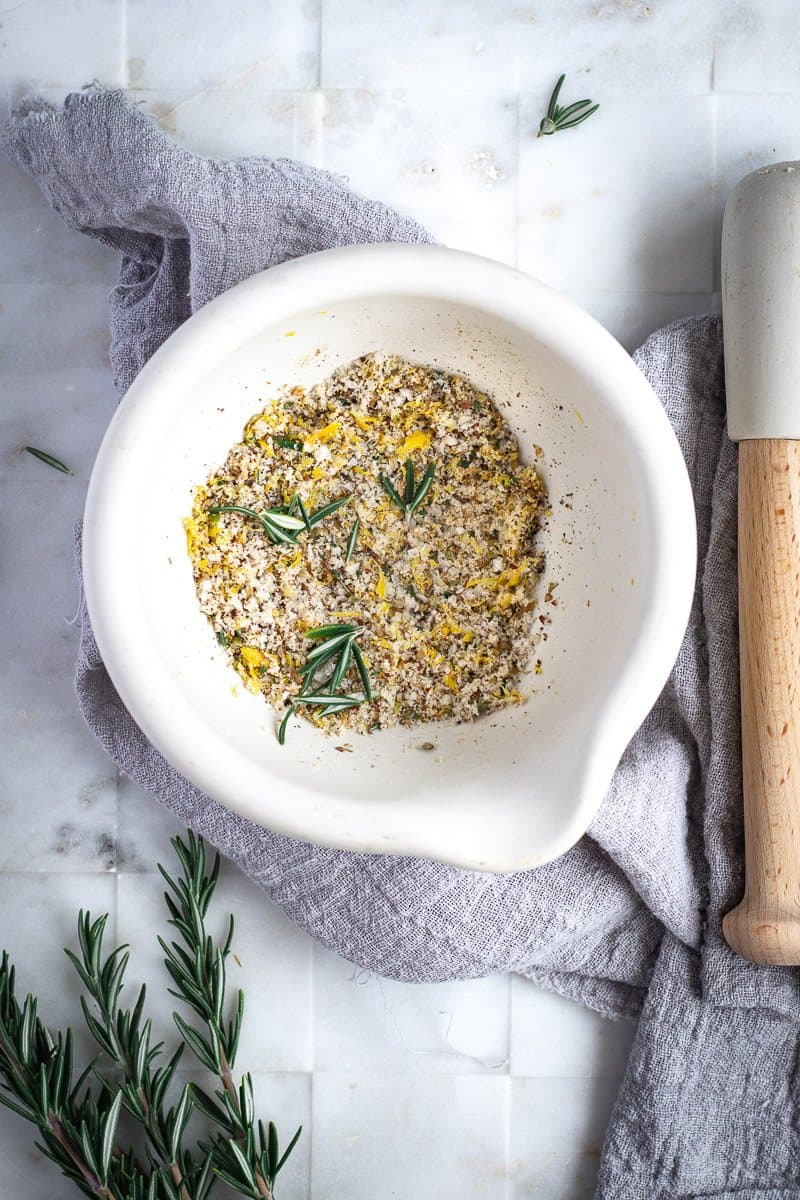
- In a small bowl, combine the herbs de Provence, sea salt flakes, and black pepper. Rub the whole lamb shoulder all over with olive oil, and then the sea salt rub.
- Using a small, sharp paring knife, make 6-ish incisions approx. 1-2cm deep over the top of the roast. In each incision, push in a garlic clove slice and a 3cm sprig of rosemary. Place the lamb shoulder on top of the garlic and onions.
- Add the water and wine to the base of the pan, along with the remaining rosemary sprigs.
- Drizzle the roast with the remaining tablespoon of olive oil.
- Cover with a lid or double layer of foil. Pop the lamb roast into the oven and reduce the temperature to 170°C/340°F. Cook for 3.5 hours or until the meat can be pulled apart with two forks
- Remove from the oven and take the lid (or foil) off the pan. Increase the oven temperature to 200°C/390°F and pop everything back into the oven for another 30 minutes. Remove from the oven and let the meat rest before serving to help the juices settle back into the meat, so the lamb is super succulent and tender.
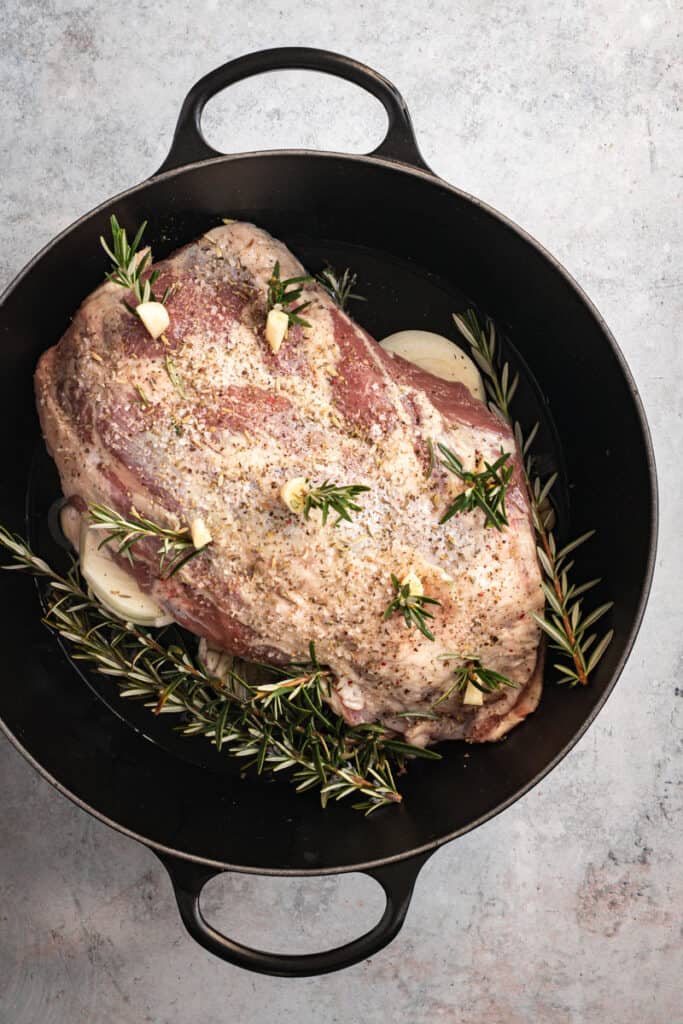
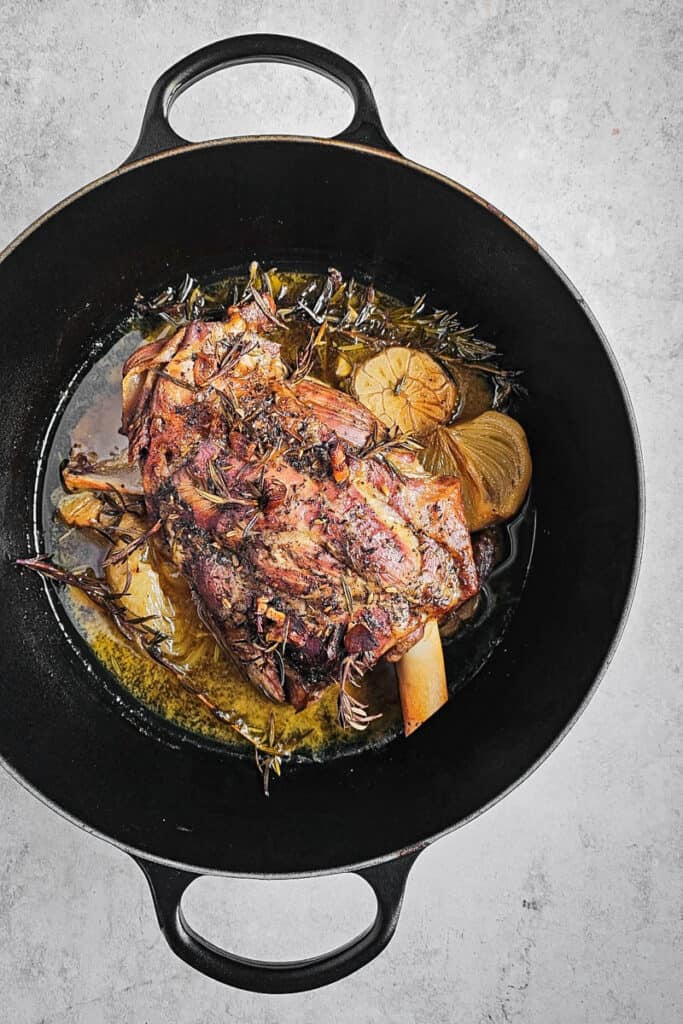
Equipment
This recipe was cooked in my Le Creuset 32cm Marmite (rounded bottom French oven); however, any large Dutch oven will do the job! I’ve also cooked this in my 30cm shallow brasier. I’m always going to recommend a cast-iron casserole for slow roasting, as I feel they give you the ultimate cooking environment; however, you can also try an oven-safe casserole with a tight-fitting lid, crock pot, slow cooker, or roasting pan that you can cover with tin foil. Just be aware that cooking times may vary depending on the cooking vessel used.
A small, sharp paring knife is also perfect for making incisions in the lamb shoulder as well as cutting the garlic. You’ll also need a small bowl and a chopping board.

My Le Creuset 28cm Casserole
This is the pot I reach for when cooking for a crowd — or batch cooking for the week ahead. Heavy, steady, and utterly dependable!
Why I slow roast lamb in a Dutch oven
When it comes to slow roasting lamb shoulder, I’ll choose a cooking in a Dutch oven every single time. A heavy enamel cast iron pot creates the perfect low-and-slow cooking environment, holding heat perfectly while it traps the moisture with its tight-fitting lid. As the lamb cooks, all those juices, garlic, herbs, and wine gently bubble away underneath, creating beautifully tender, pull-apart lamb without drying the meat out. It’s the kind of cooking enamel cast iron was made for.
I also love that once the lid comes off for the final blast in the oven, the lamb develops those delicious golden edges while still staying juicy underneath. And all those pan juices left behind? Absolute gold for homemade gravy.
If you’re new to cooking with enamel cast iron, my guide on cast iron cooking walks you through everything from choosing the right Dutch oven to caring for your cookware properly.
Cook’s notes
This recipe is based on a 2.4kg lamb shoulder. I’ve also cooked this slow roast lamb shoulder with smaller pieces of meat, depending on availability. A 1.5 kg shoulder will need a shorter cooking time (approx 3 hours), while anything bigger than 2.4kg may require a little longer. My advice is, if you are unsure, check your lamb shoulder roast at 3 hours. Put a fork in it to see if the meat gives way, or if it resists, it simply needs more cooking time. So pop the lid back on and pop it back into the oven for another hour. The best part of this recipe is that providing you keep an eye on your roast lamb, it’s very hard to overcook it!
Here’s what to serve with slow-cooked lamb shoulder
Lamb roast is my favorite kind of roast dinner. As a kid, we lived on lamb as we had a sheep and cattle farm, and we had our own meat. Every couple of months, we’d get boxes and boxes full of butchered meat that had to be portioned out and wrapped for freezing. The first few weeks after the delivery were always a treat, kind of like having your own butcher shop in the mudroom! A good-sized lamb shoulder roast will also be big enough to eat for numerous days. In our house, I serve my lamb roasts with roast potatoes, carrots, pumpkin, and sweet potato as side dishes. Always roast honey carrots, Mushy peas or some form of greens like steamed broccoli or green beans are a must, as is a homemade lamb gravy made from the cooking juices in the roasting tray. Mint sauce is always on the table, too.
Some other sides that I cook alongside my slow-roast lamb shoulder are black garlic potato gratin or colcannon. If it’s Summer and I’m looking to lighten things up a bit, I like to serve up lamb with this Freekeh and fava bean salad, and homemade hummus, or even this delicious roasted beetroot and labneh salad works a treat too.
When in doubt, here’s a roundup of potato recipes. You can never go wrong with potatoes!
Want to make some homemade gravy from the drippings?
To make a sauce from the roast lamb drippings…
Remove the meat from the pan and leave it to rest. Strain the remaining contents of the pot through a strainer or, preferably a gravy separator. Leave the liquid to settle for a few minutes so the oil and water separate. In the roasting dish, combine 3 tbsp liquid with 1 tbsp plain, all-purpose flour. Whisk on a low heat until it is combined. Stirring continuously, continue adding the liquid (with as little of the separated oil as possible) a little at a time while the sauce thickens. Cook gently for approx. 15 minutes, stirring until you have the desired consistency and flavor. If you need more liquid, you can add a little water. Season with salt and pepper if needed.
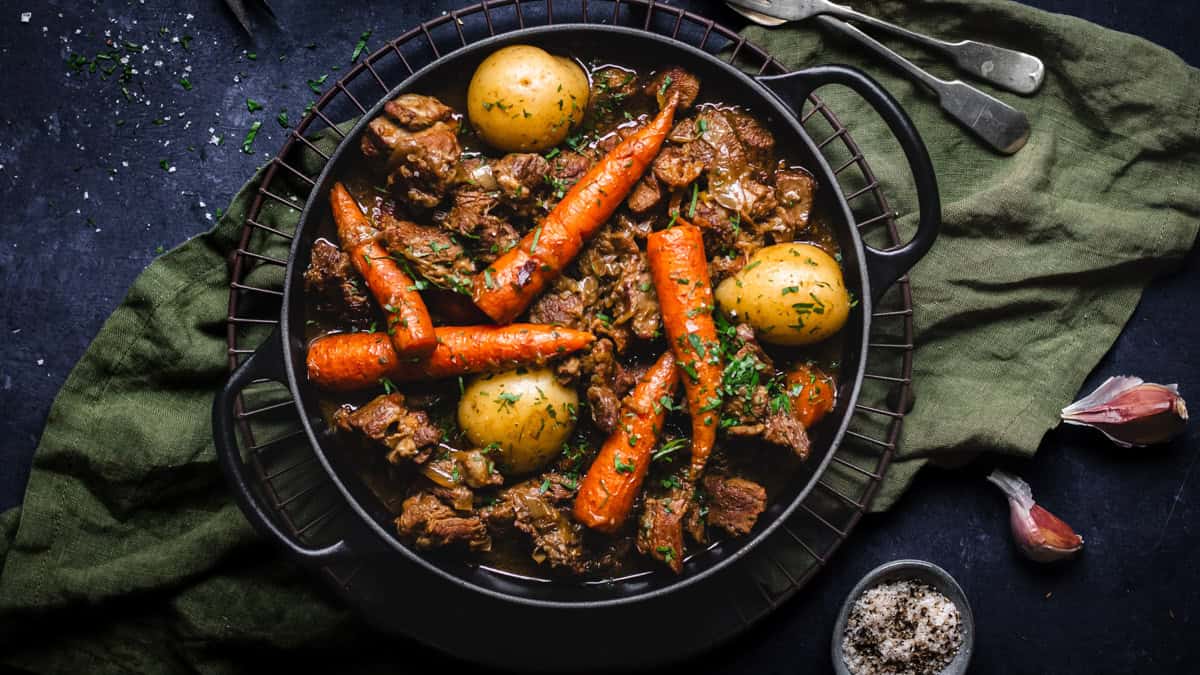
WELCOME TO THE WORLD OF CAST IRON
One pot turned into three… and now you’re hooked? It happens to the best of us. Find recipes, tips, and guides in my Cast Iron Cooking Library.
So you have leftovers!
Great news! Leftover slow roast shoulder of lamb is stuff my dreams are made of. Lamb sandwiches for days I say! We always opt for homemade gyros the next day. It makes an easy DIY dinner as everyone can make their own. All you need is some warm pitta bread, grated cheddar cheese, salad fillings like lettuce, tomato, Spanish onion, cucumber, and a sauce. Hummus and a hot chili sauce are the fave combo in our house!
A Friday Night grilled Lamb quesadilla is another goody as is a little shredded lamb over a pizza or thrown in a tomato-based pasta sauce.
FAQ’s
Storage
Once cooled, leftover lamb can be stored in an airtight container in the fridge for 3 days.
You can also freeze leftover cooked lamb shoulder. I like to portion up leftovers and freeze for up to 3 months. To defrost, simply remove it from the freezer and pop it into the fridge overnight. Reheat either in the microwave or by placing it into a roasting pan with a little water. cover with foil and pop into a 150-degree C oven for 30 minutes or until warmed through.
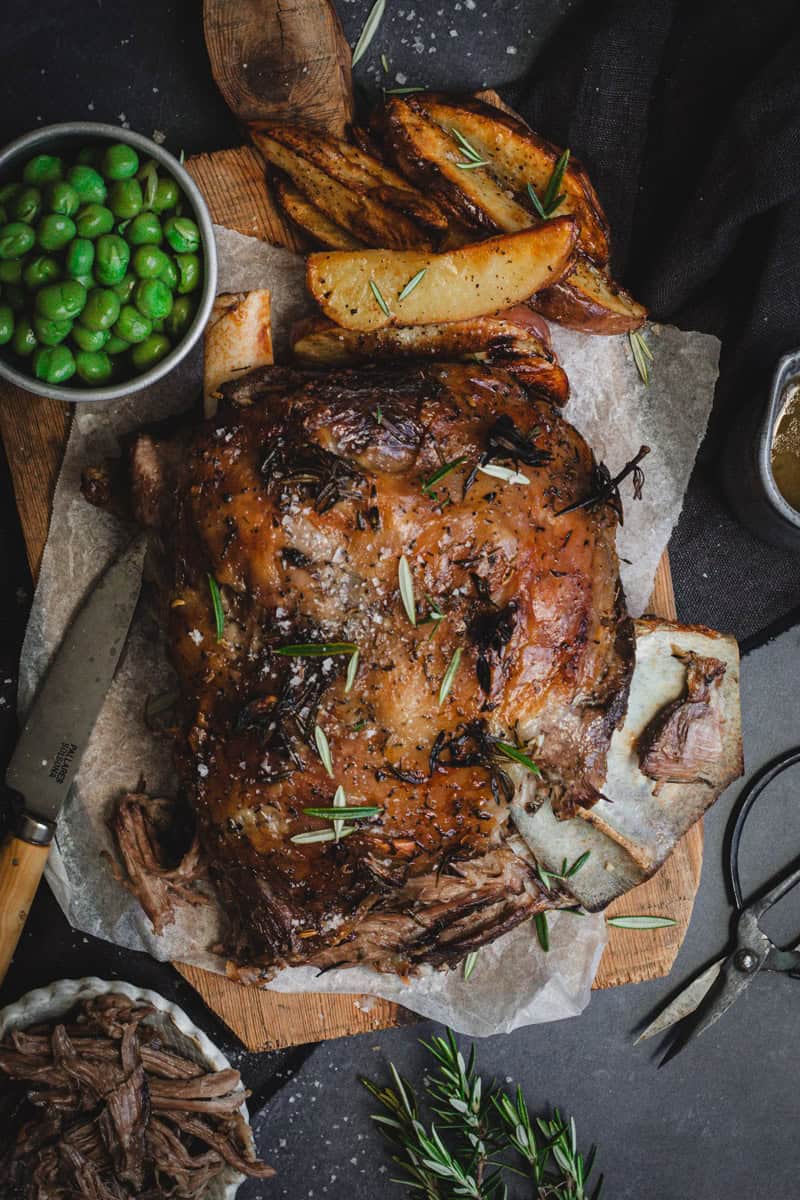
Love a roast dinner? Here’s a few more you might like to try
- Dutch Oven Roast Chicken
- Dutch oven corned silverside
- Greek roast chicken
- Cheesy Potato Bake with Caramelised Onions
- Roast Beef Topside with Red Wine
Happy roast night!
x
Start slow. Cook confidently.
Cast Iron Cooking 101
From slow cooked stews to warm bread fresh from the oven, this guide will help you feel confident cooking with cast iron at home.
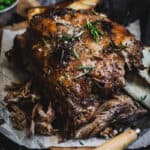
Slow-Cooked Roast Lamb Shoulder
- Total Time: 4 hours 30 minutes
- Yield: 8 servings 1x
Description
So here’s my really easy slow-cooked lamb shoulder. It’s a handful of simple ingredients and flavors, roasted at a lower temperature in the oven for a few hours until it’s melt-in-your-mouth tender!
Ingredients
- 1 whole bulb of garlic, sliced in half horizontally + 3 cloves
- 2 brown onions, cut in half
- 2.4kg approx. lamb shoulder (bone-in)
- 2 tsp herbs de Provence
- 2 tbsp sea salt flakes
- 1/4 tsp freshly ground black pepper
- 2 + 1 tbsp olive oil
- 5 sprigs rosemary approx, 10cm long
- 375ml cups water
- 1 cup white wine
Instructions
- Preheat the oven to 220°C/425°F.
- Add the bulb of garlic, cut in half horizontally, and the onion halves to the cast iron pot.
- Place the lamb shoulder on a chopping board, meaty side up.
- In a small bowl, combine the herbs de Provence, sea salt flakes, and black pepper. Rub the whole lamb shoulder all over with olive oil and then the sea salt rub.
- Using a small, sharp, paring knife, make 6-ish incisions approx. 1-2cm deep over the top of the roast. In each incision, push in a garlic clove slice and a 3cm sprig of rosemary. Place the lamb shoulder on top of the garlic and onions.
- Add the water and wine to the base of the pan, along with the remaining rosemary sprigs.
- Drizzle the roast with the remaining tablespoon of olive oil.
- Cover with a lid or double layer of foil. Pop the lamb roast into the oven and reduce the temperature to 170°C/340°F. Cook for 3.5 hours or until the meat can be pulled apart with two forks
- Remove from the oven and take the lid (or foil) off the pan. Increase the oven temperature to 200°C/390°F and pop everything back into the oven for another 30 minutes. Remove from the oven and let the meat rest before serving.
Notes
This recipe is based on a 2.4kg lamb shoulder. I’ve also cooked this slow roast lamb shoulder with smaller pieces of meat depending on availability. A 1.5 kg shoulder will need a shorter cooking time (approx, 3 hours), while anything bigger than 2.4kg, may require a little longer. My advice is if you are unsure, check your lamb shoulder roast at 3 hours. Put a fork in it to see if the meat gives way, or if it resists, it simply needs more cooking time. So pop the lid back on and pop it back into the oven for another hour. The best part of this recipe is that, as long as you keep an eye on your roast lamb, it’s very hard to overcook it!
I cook this lamb roast recipe in my 32cm Le Creuset Marmite cast iron Dutch oven; however, any large Dutch oven big enough for your lamb shoulder will work perfectly!
Please note all recipes on this website are in US measurements. Eg, 1 cup / 240ml, 1 tablespoon/15mls. Oven temperatures refer to a fan-forced oven.
- Prep Time: 30 minutes
- Cook Time: 4 hours
- Category: Dinner
- Method: slow cook
- Cuisine: French
Nutrition
- Serving Size:
- Calories: 831
- Sugar: 1.9 g
- Sodium: 1939.4 mg
- Fat: 60.6 g
- Carbohydrates: 10.9 g
- Protein: 52.9 g
- Cholesterol: 213 mg




It was so easy! My family loved it.
Excellent! So happy to hear xx
Have you tried this in a crockpot? I am always looking for more crockpot recipes.
No I’m sorry I haven’t tried this in a crockpot. While I’m sure you could cook it in a slow cooker, you would get a totally different result given that you won’t get a roast effect like cooking in the oven.
Great roast recipe – will be making on repeat for winter.
Thanks Carl great winter staple! x
Do you put the lamb shank meat side down in the pan or meat side up?
Meat side up 🙂
Hello, Emma! I’m using Faharenheit and want to run this by you. The conversion tells me to cook at 428 F. Will this heat make the lamb tough? I’ve never cooked lamb roast, only beef roast (and have learned through trial and error to cook beef low and slow. 🫣). Is lamb more forgiving than beef regarding high heat?
Hi Hollie. We’re are only getting the oven to 220C/428F to pop it in the oven. Once it’s in, the temperature is immediately reduced to 170C/338F. The higher temp is just to start the caramelization and breakdown of the fat before slower cooking. While I wouldn’t say that lamb is more forgiving than beef, it’s more that it’s a fattier and juicier meat than a say, a lamb leg, or a beef topside roast, therefore we have to cook it slightly different to make the most out of it. Hope this helps! x
I cooked it the other night and it fell off the bone. Delicious! Thank you!
That’s wonderful. So happy you liked it! x
Can I use a lamb leg for this recipe? Will it still turn out just as tender?
Hi Juliette.
No you can’t however I do have a roast lamb leg recipe. You could easily swap the herbs de Provence rub . You can find it here https://www.theirishmanswife.com/dutch-oven-leg-of-lamb/
Hope this helps! Emma x
Amazing recipe, cooked it for a fab new years dinner.
Thank you!
Thanks so much James! x