
Help! How Do I Remove Stains from My Enameled Cast Iron
Ok, so picture this… You’ve spent hours slow-cooking – maybe a Dutch oven roast chicken, a slow-cooked curry, or a beef and red wine stew. The house smells like heaven. You pull your enamel Dutch oven out of the oven, serve up dinner, and think, omg will that clean off?
There’s a stubborn dark-brown ring of caramelized juices cooked onto the pot. You pop some water in it to soak, and hope and pray it will be fine in the morning.
The next morning rolls around. You wash up from last night, and your beautiful enamel now sports a deep red ring from the wine, a yellow, curry shadow that refuses to budge, or those stubborn brown, cooked-on marks from your roast, and you think, have I ruined it forever?

If you’re new here, you might not know I also run a small online store where I keep many of the tools I cook with every day, along with a few timeless homewares for good, slow living…
First things first… let’s not panic. Stains in enamel cast iron are completely normal, and most of the time, they’re nothing more than a superficial mark. I like to think of it as love and flavour. Proof that your pot is used and loved. Every stain tells a story. You get the drift. But if you’d prefer that cream interior looking like new again, most of the time, there are simple, enamel-safe ways to fix it.
So let’s talk about exactly how to remove stains from enameled cast iron — gently, safely, and without harsh scrubbing. So your Dutch oven can keep looking (and cooking) the goods for years (and years) to come.
New
Why Enameled Cast Iron Gets Stained
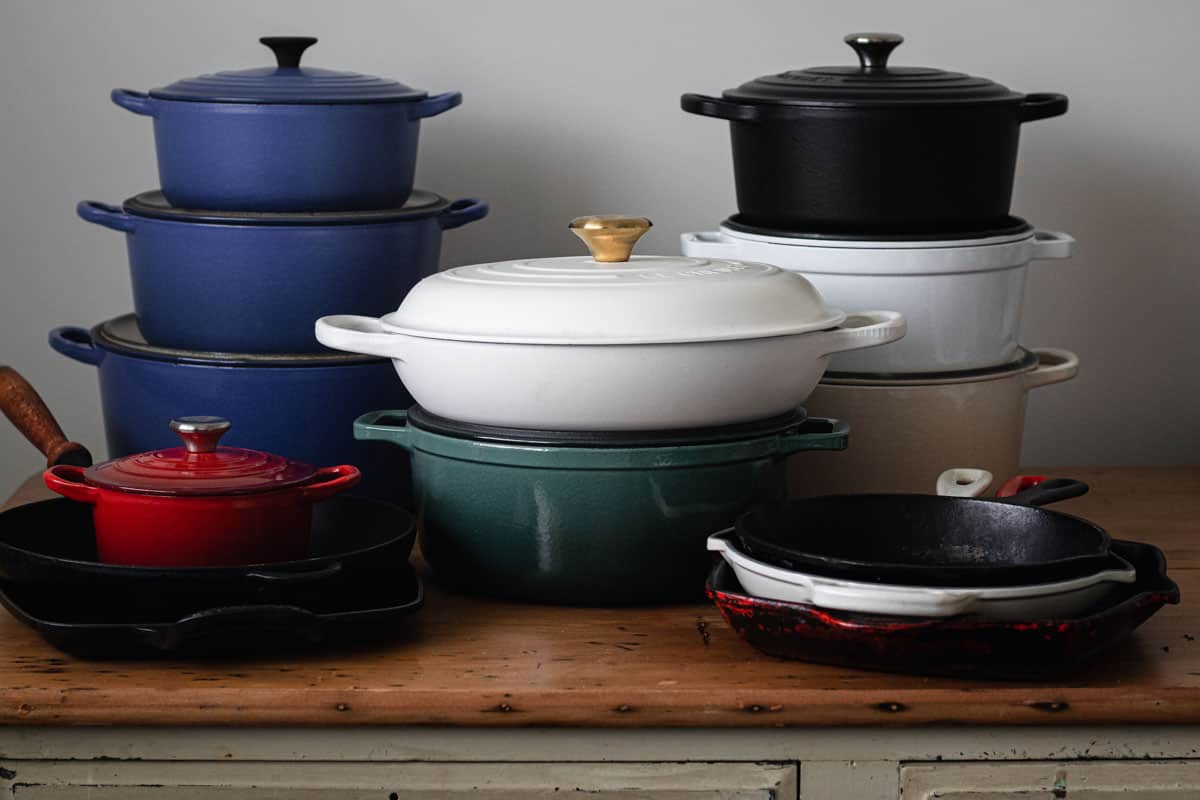
While enamel cast-iron pots are tougher than they look, they are not completely impenetrable. Yes, they come in pretty colours that are designed to look good ALL the time. With their glossy, almost glass-like interiors, you’ve likely seen all the cooking channels cooking absolutely everything in them, making it look like they’ll be perfect forever. However, over time, food pigments cling to the enamel surface, especially on lighter interiors like Le Creuset or Chasseur’s cream enamel.
The main culprits!
- Tomato sauces and curries – tannins and spices leave behind deep colours – I’m looking at you, turmeric!
- Red wine and dark stocks – those beautiful reductions tend to leave their mark.
- Caramelised sugars – burnt-on sauces or rice can weld themselves onto the enamel (yep, I’ve been there – rice and I have a history!)
- High heat mishaps – when food burns, it can discolour the pot.
So here is the good news? Most stains are only cosmetic and can easily be removed. They don’t affect flavour, safety, or performance. My oldest Dutch oven has been cooking for 20 years, and while it’s picked up more than a few curry and wine stains along the way, it still makes the best Dutch oven roast chicken out there.
If you’re still finding your feet with enamel cast iron, I’ve put together a simple start here guide to cast iron cooking that walks you through everything from cooking to care.
So now that we know why enamel stains, let’s talk about how to lift them safely without damaging your cookware.
How to Remove Stains from Enameled Cast Iron: 5 Enamel-Safe Methods
These methods are enamel-friendly, easy to try at home, and don’t require anything harsher than a gentle cleaner.
1. The Overnight Soak (For Everyday Stains)
This is the first method I always recommend for slight stains with everyday cooking — simple, gentle, and surprisingly effective.
How to do it:
- Fill your Dutch oven with warm water and a good squirt of washing-up detergent. warm soapy water
- Leave it to soak overnight.
- Rinse in the morning with a light scrub with a non-abrasive scrubber.
2. The Baking Soda Soak (Everyday Stains)
When it’s a little past soaking in dishwashing detergent, it’s still gentle and works a treat!
How to do it:
- Fill your Dutch oven with warm water.
- Stir in 2 tablespoons of baking soda.
- Leave it to soak overnight.
- Rinse in the morning with a soft, non-abrasive scrubber.
For slightly tougher spots, make a baking soda paste, spread it over the stain, leave for 10–15 minutes, then wipe gently.
3. A Dedicated Cast Iron Cookware Cleaner
For really stubborn marks, I use Le Creuset’s Pots and Pans Cleaner; however, most quality cast iron cookware brands will have their own. I’ve used it on all my cookware with an enamel coating for years, and it cleans like an absolute dream. As well as the inside of the pot, you can also use it on the outside to remove any superficial marks caused by grills on your stovetop – mainly those ugly grey lines that mysteriously appear and look like cracks (spoiler, they’re not, and they can be removed with a little graft!). I routinely clean my enameled cast-iron cookware every few months to maintain its surfaces.
How to do it safely:
- Wet the interior of the pot.
- Rub on a little of the cream cleanser.
- Rub gently with a damp, soft sponge in small circles.
- Rinse thoroughly and dry.
Another option is Bar Keeper’s Friend, but it must be used carefully, as it’s a bit stronger than Pots and Pans. Use only on the cream interiors, not the colourful enamel exteriors. And always be gentle — let the cleaner do the work.
Below is a before & after of my Chasseur 26cm enamel casserole, which is normally reserved for baking sourdough in, hence the baked-on oil around the sides. This was cleaned with Le Creuset’s Pots and Pans cleaner.


4. Burnt-On Food Rescue (When Dinner Goes Horribly Wrong)
We’ve all been there — rice welded to the bottom (yep!), roast dinner burnt onto the pot (yep!!), tomato sauce cooked on like glue after you put a pot back on the heat (after bottling tomato sauce), then went outside to garden for a couple of hours (yep!!!)
How to do it:
- Let it soak overnight.
- The next day, bring it to a gentle simmer.
- Use a wooden spoon to nudge softened baked-on food away.
Whatever you do, don’t grab a knife or metal scraper — enamel and sharp metal are not friends. Using this method is a lesson is patience. It may take more than one overnight soak and simmer for your burnt remnants to remove themselves from your pot. It once took me a week to remove all the burnt-on rice from the bottom of my Le Creuset 20cm casserole.
What NOT to Do When Cleaning Enamel
There’s a lot of misinformation out there! Here’s what not to do if you want your enamel to last…
- No steel wool or scouring pads. Steel wool belongs in your garage, not in the kitchen! They’ll scratch the enamel glaze permanently.
- No rock salt + lemon hacks – they’ll just damage your enamel beyond repair.
- No bleach or harsh chemicals – they can weaken enamel.
- No thermal shock – never pour cold water into a screaming-hot pot.
I know a lot of people recommend Hydrogen Peroxide; however, after selling quality enamel cast iron cookware (Le Creuset, Staub, Chasseur) for over 15 years (and taking part in regular training of their products), I’ve never come across a brand that endorses this.
If you want to safely remove stains from enameled cast iron, being gentle with your pot is the name of the game.
Are Stains Really a Problem?
The truth? No, not in the slightest! Most stains are harmless. They don’t affect cooking, flavor, or safety. In fact, as I mentioned earlier, I like to think of them as love and flavor. Each one tells a story of a good meal shared.
So yes, you can lift them with the methods above. But if your enamel pot has a few permanent shadows? That just means it’s well-used and well-loved. And honestly, that’s the best kind of cookware.
FAQ’s

HELLO DUTCH OVEN PEOPLE!
You know you’re hooked when you start cooking just for the leftovers. We’re your people. Explore the kitchen in the Cast Iron Home Base.
Ok, Let’s Wrap This Up
A stained enamel pot doesn’t mean a ruined enamel pot. With a little baking soda, some patience, and the right enamel-safe tricks, you can lift most stains and keep your Dutch oven looking gorgeous for decades.
But also? Don’t stress if a few shadows remain. Every curry stain, every wine ring — they’re part of your pot’s story. They’re a sign that it’s been loved, used, and fed the people around your table.
So now you know how to remove stains from enameled cast iron when you want to. But don’t be afraid to wear a few with pride.
Tell me — what’s the worst stain saga your Dutch oven’s been through? Drop it in the comments — I’ll bet I’ve been there too.
x

Start slow. Cook confidently.
Cast Iron Cooking 101
From slow cooked stews to warm bread fresh from the oven, this guide will help you feel confident cooking with cast iron at home.


A slightly counterintuitive but extremely effective magic for stuck-on / staining stuff is (drumroll please) powdered Oxy-Clean (yes, the laundry detergent!)
1. Put grungy pan in the sink
2. Put one scoop of Oxy-Clean powder in the pan
3. Run very hot water into the pan until it reaches the rim.
4. Leave to soak overnight.
I have used this method on pyrex casserole dishes that had baked-on / burnt lasagna cheese, and the next morning I WIPED IT OFF WITH A WET PAPER TOWEL. That is how well this works! Zero scrubbing. Just pour the water out (helps to remove grease from your kitchen sink pipes, as well!) and wash normally with dish soap. You will not believe how easy and effective this is.
Hi Heide.
I get the appeal — that “wipe it clean” moment sounds amazing. But I’d actually recommend not doing this on enamelled cast iron (like Le Creuset).
Oxy-clean is quite a strong oxidising cleaner, and over time it can dull or damage the enamel surface. These pots are built to last, so it’s worth sticking to gentler methods like a baking soda soak instead.
It’s a perfect trick for things like Pyrex, but I’d keep it away from your Dutch oven.
Have a lovely weekend, Emma x