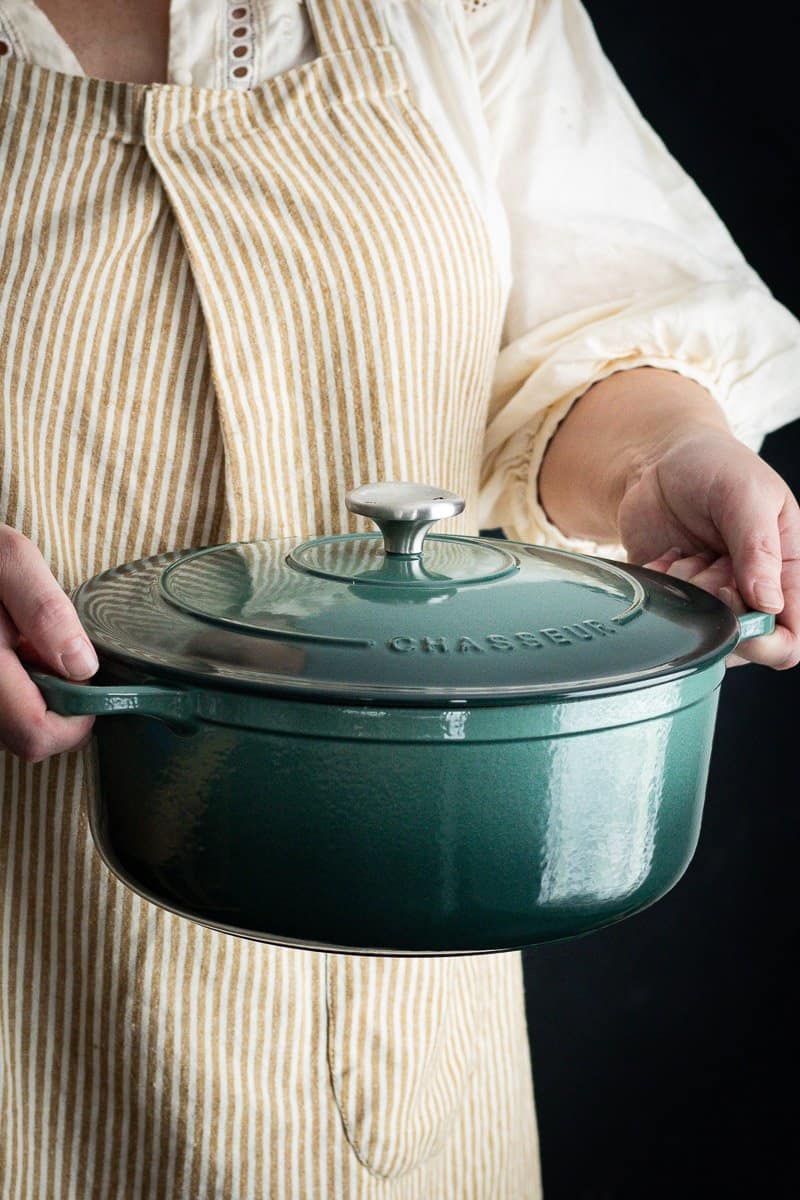
Le Creuset vs Staub: The Slow-Cook Showdown!
Le Creuset vs Staub… When we are talking about the BEST cast iron enamel Dutch ovens, as far as I’m concerned, there are only two French brands to mention. I feel like I should be a walking advertisement for them — “Forget the rest, buy only the best!” Okay, that was a little cheesy, but you get the idea!
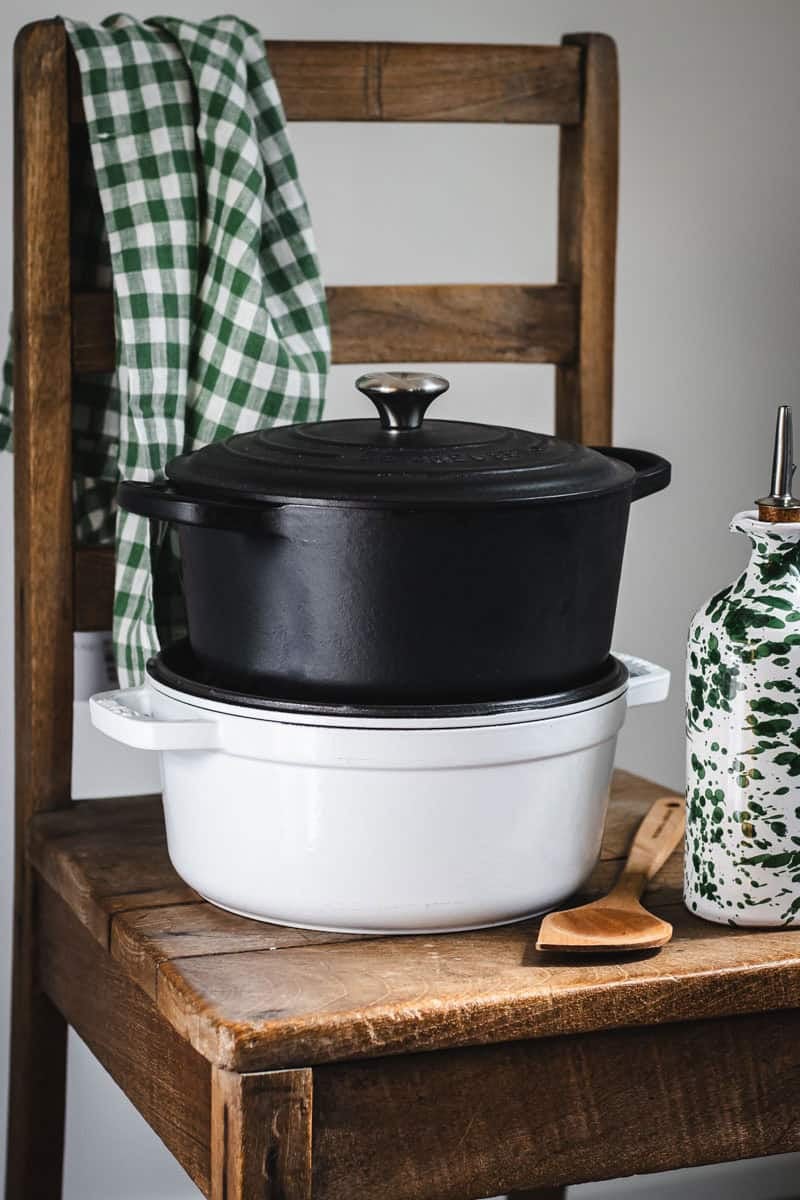
If you’re new here, you might not know I also run a small online store where I keep many of the tools I cook with every day, along with a few timeless homewares for good, slow living…
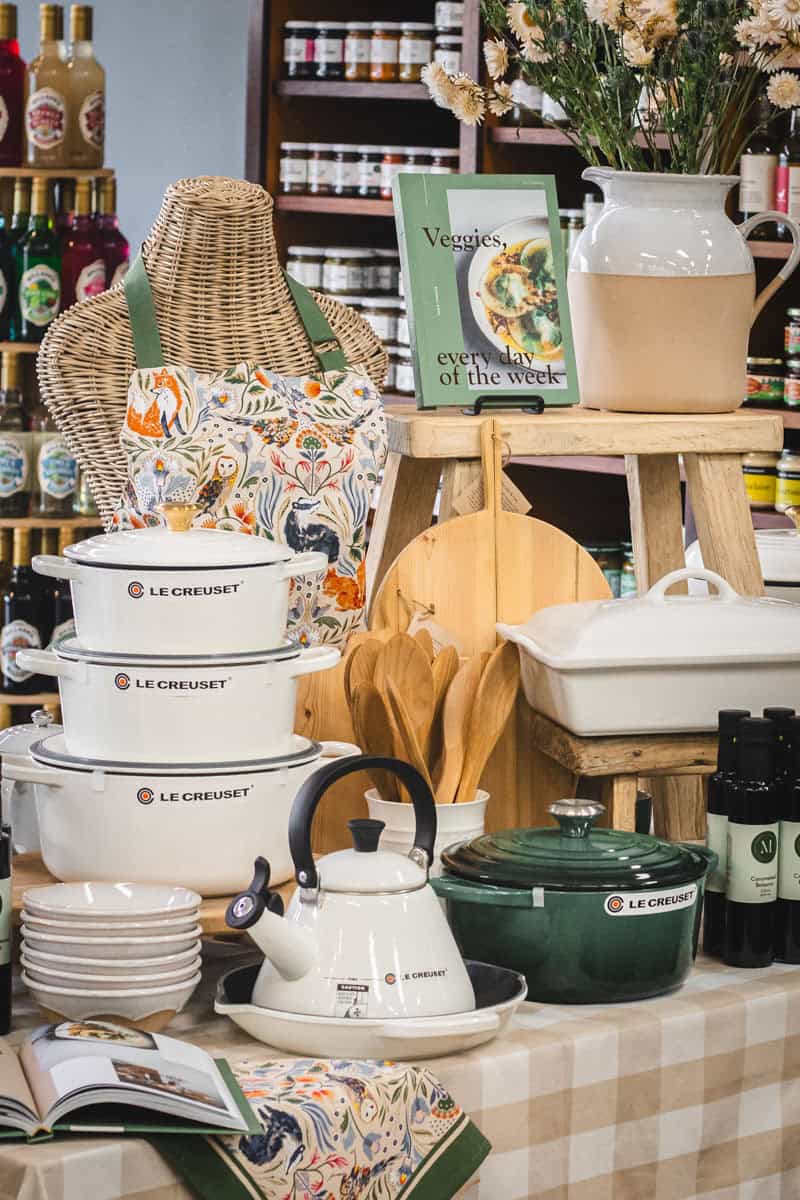
Picture this. You’re standing in a store, surrounded by the kind of cookware dreams are made of. To your left, a whole rainbow table of beautiful Le Creuset French ovens — Meringue, Cerise, Chambray, and even a soft matte Shell Pink that makes you want to go home and slow-cook, well, everything! To your right, Staub cocottes sit quietly in deep grenadine, forest green, graphite, and matte black.
And now here you are. Going back and forth like you’re sitting in the stands watching the final at Wimbledon. Carefully lifting lids, picking up pots, and wondering what on earth to do. Asking the question… Le Creuset vs Staub — which one is my forever pot?
I see this play out at Martha’s (our food & home store) at least twice a week. And here’s the thing: everyone thinks there’s a “right” answer. But there isn’t. There’s only what’s right for you and your family at this moment in your life. And as I tell my customers, however much I can offer advice, there is only one person who can really make that decision. Spoiler alert! It’s not me — it’s you!
Le Creuset vs Staub: Which Is Better?
If you’re looking for a quick answer, both Le Creuset and Staub make exceptional enamel cast-iron Dutch ovens that can last a lifetime. Le Creuset is lighter, comes in a wider range of colours, and has a light enamel interior that’s easier to monitor while cooking. Staub is slightly heavier, features a black enamel interior and self-basting lid, and is often preferred by serious home cooks and professional chefs. Neither is objectively better. The best choice comes down to how you cook, what features matter most to you, and which pot feels right at home in your kitchen.
What I Actually Use in My Own Kitchen
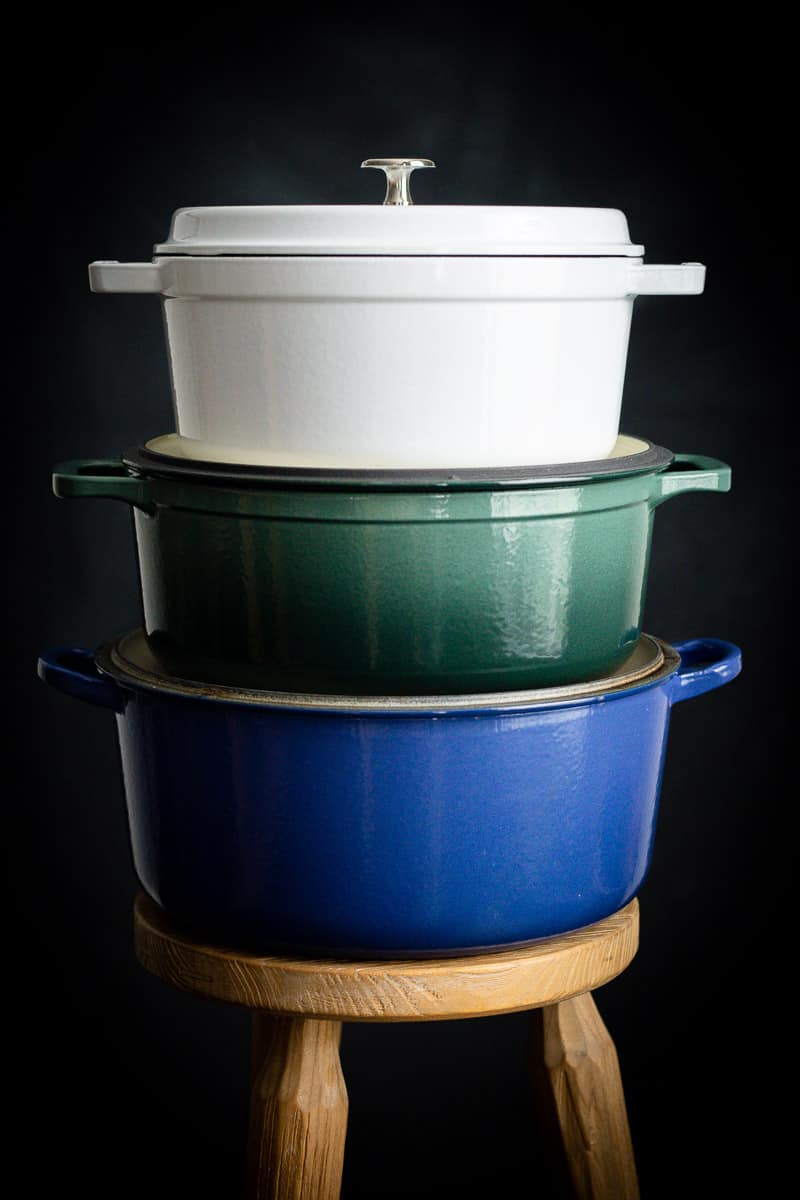
As someone who owns and cooks with both brands, I can honestly say there isn’t a bad choice here. My collection includes Le Creuset Dutch ovens in 14cm, 20cm, 22cm, 24cm, 26cm, 28cm, 29cm (oval) and 32cm sizes, along with Staub Dutch ovens in both 24cm and 28cm.
For everyday cooking, I tend to reach for my 24cm Le Creuset most often. It’s slightly lighter to handle, I love being able to see the browning on the light enamel interior, and it’s the size I use for everything from weeknight curries to a loaf of Dutch oven bread.
That said, when I’m baking bread or cooking darker dishes like beef & red wine stew or Irish stew, I often find myself reaching for a Staub. The black interior hides staining beautifully, and the heavier construction feels made for long, slow braises. Sometimes, it just comes down to whatever isn’t in the dishwasher!
If I’m being honest? The brand matters far less than choosing the right size and buying a pot you’ll actually use every week. A Dutch oven sitting in the cupboard (while super pretty!) isn’t much use to anyone.
This Shopkeeper’s Take
After years of chatting with customers about enamel cast iron, you start noticing patterns.
Le Creuset lovers are dreamers. They’re here for the long haul. Already picturing Sunday lunch with friends, and how they dream about a Marseille Blue pot bubbling away in the oven. They match salt and pepper mills, roasting pans, utensil pots, and the butter dish. They fall for colour first, cooking performance second.
Staub people? Well, they’re pragmatists. They want a classic-looking pot that’ll hold up to a lifetime of slow braises, that can go from stovetop to oven without a fuss. For them, it’s more practical, and they love the idea of those clever little self-basting spikes under the lid!
It’s a little like choosing between linen curtains and velvet drapes. Neither is wrong; in fact, both are absolutely stunning! It really just depends on the look you want in your kitchen and how you cook.
A Bit of a Brand Backstory…
Both brands come from France – the land of butter, beautiful wine, long lunches, and cookware built to last generations. But the brands themselves couldn’t be more different!
Le Creuset has been around since 1925. In fact, they’ve recently celebrated their 100th birthday! It came about when two men figured out how to fuse enamel with cast iron. Their first pot was a bold, fiery orange they called Flame, and to this day, they still make a variation of this, their signature colour, in the village of Fresnoy-le-Grand. They built their reputation on cheerful colours, quality craftsmanship, and a design aesthetic that’s as beautiful cooking in the oven as it is full of Irish stew on top of your kitchen table.
Staub is the younger sibling, born in Alsace – a region famous for hearty, slow-cooked dishes like coq au vin. Staub comes at things from a professional chef’s angle, focusing on cooking performance first and very much advertising that they’re built for home and commercial kitchens. Their colours are moodier (a bit like me!), the pots are a little heavier, but they optimise French cooking. Pick up any French cookbook, and you’ll see Staub.
Both cast iron ranges are still handcrafted in France. Both make pots you can hand down to your kids. But their personalities? Chalk and cheese.
Colours & Style: Joyful vs Moody
I’m convinced that for at least half my customers in-store, this is where the decision is made. They walk in wanting to talk about cooking do’s and don’ts, and really it ends up all about the colour and whether it matches the kitchen backsplash.
Le Creuset
- The colour spectrum on Le Creuset cookware is enormous — bright oranges, sunny yellows, soft pastels, deep ocean blues — and varies depending on the country you are in. There’s truly a shade for everyone. However, be warned: Le Creuset have a “core” range of colours (these will run for years and years) and “fashion” colours, which have a colour lifespan of roughly 2–5 years depending on their popularity.
- So, if you’re a matchy-matchy person (like me!) and plan to collect multiple pieces over a few years, it may be worth asking what colours look like being around for a while. I’ve been collecting for 20 years, so I gave up on one colour long ago. I now like to think of it as a “colourway” – a collection of colours that work well and complement each other!
- They release limited-edition pieces all the time, which collectors snap up. Think Star Wars, Hello Kitty, and even Mickey Mouse. My sister has a Beauty and the Beast French oven, while I have Harry Potter one-off pieces.
- Their pots tend to look “lighter” and more polished, making them perfect if you want your cookware to double as tableware and add accessories to match.
- Le Creuset’s lighter gloss colours can mark on the exterior with movement (it happens to my Meringue-coloured pot when moving it around). You’ll find grey lines pop up on the enamel. While at first it looks like a problem, they are easily removed with Le Creuset’s Pots and Pans Cleaner. Think of it as enamel Dutch oven maintenance!
Staub
- Their palette is smaller, darker, moodier, and more earthy — grenadine, dark blue, graphite, forest green, matte black. While Staub does pretty colours too for their enamelled cast iron Dutch ovens, I find their core range of these five colours are by far the most popular and the ones you see everywhere.
- Even the glossier finishes have a depth to them that feels sophisticated without shouting for attention. Think classic, traditional colours that you, your mum, and your grandma would all be happy with!
- Because of that, they work beautifully in rustic kitchens, mid-century stunners, or modern minimal ones.
Shopkeeper’s Notes
It’s personal. I think of myself as “dark and moody” 100% of the time. I love cold, rainy days, dark moody interiors, and yes, my favourite colour is black, so it makes sense that my collection consists mainly of black, greys, meringues, and white pieces. However, I have a friend who lives by the beach and just radiates sunshine. I can never imagine her with a black pot. She leans towards the light blues, greens, and yellows.
What’s your colour palette?
Cooking Performance
Now for the part that matters… when the stew is slow-cooking in the pot! Both are safe on all heat sources (including induction) but not for outdoor, open-flame cooking. And neither of these is meant for high heat. Low and slow is the way to go!
Le Creuset Dutch Ovens…
- Weight: Slightly lighter (it’s one of the lightest cast irons), which makes a big difference when you’re manoeuvring a beef pot roast out of the oven.
- Interior: A smooth, light-coloured enamel interior that’s perfect for checking browning. If you love caramelising onions or deglazing fond, you’ll love being able to see what’s happening.
- Lid Design: Lids fit snugly but aren’t self-basting as they don’t have any spikes on the lid for the condensation to drip evenly back into the food. Has it ever bothered me? No, because of their tight-fitting, concave lids, they trap the heat, and the condensation runs down the rim and sides of the pot into the food. Works like a dream!
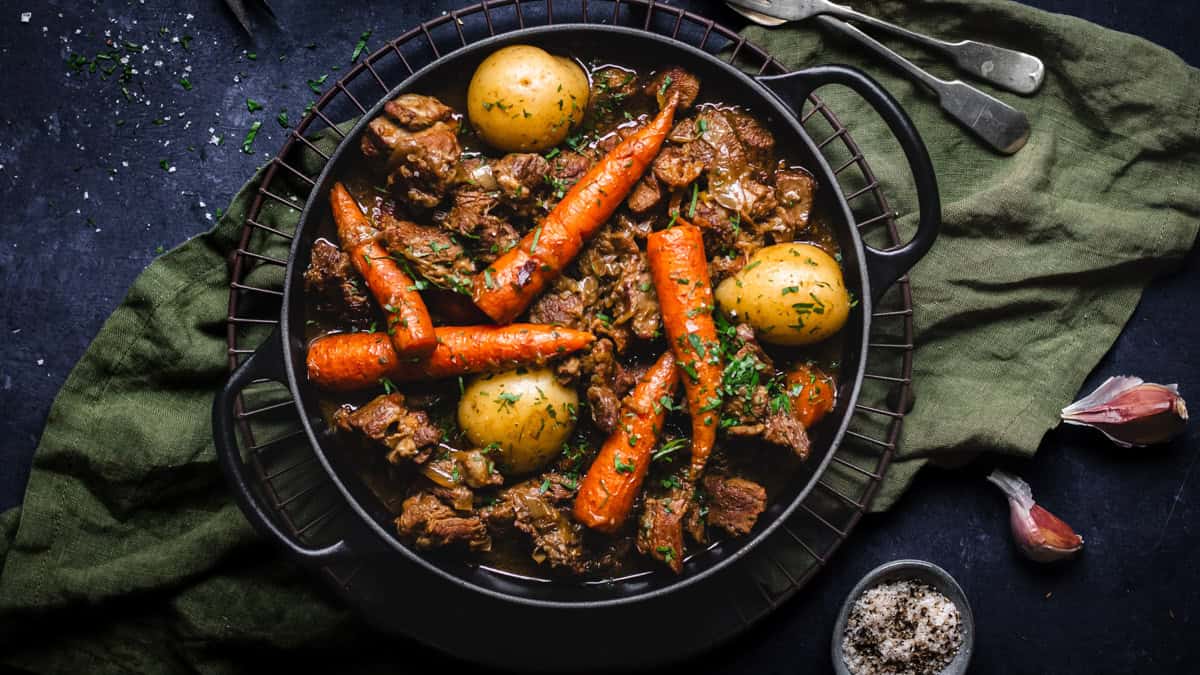
CAST IRON ENABLER Here!
You started with one pot. Now you’re comparing colours and sizes online at midnight. Continue the obsession in my Cast Iron Kitchen HQ.
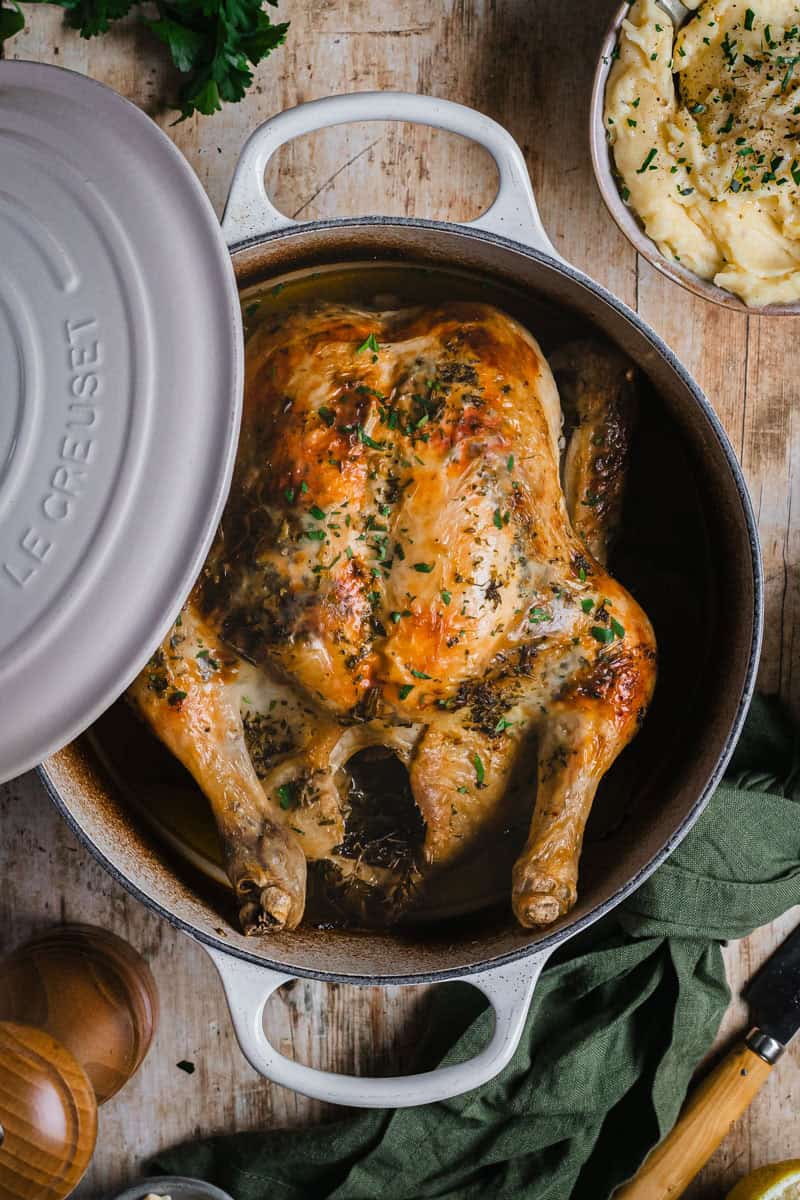
Staub Dutch Ovens…
- Weight: Heavier and sturdier. That extra weight holds heat beautifully, making it perfect for slow-braising.
- Interior: The biggest difference between the two is in the pot interior. Staub’s interior has a textured, matte black enamel that’s ultra-durable and hides stains like magic. You can also brown at a slightly higher temperature with the Staub enamel as opposed to the cream-coloured Le Creuset interior. It can make it harder to see browning at a glance; however, not so much that it’s ever bothered me. Because of Staub’s black interior, it’s also my go-to pot for baking bread in a Dutch oven.
- Lid Design: The shape of the lid is Staub’s party trick — those little self-basting spikes under the lid. As the steam rises, it condenses and drips back evenly across your food, keeping it moist without you lifting a finger.
Shopkeeper’s notes
I do find that Staub slow-cooks a little faster than Le Creuset — just an observation and by no means a defining factor! For ease of use, they’re both flipping fantastic at what they do!
Which Dutch Oven Is Better for Bread Baking?
This might surprise you, but if your main goal is baking bread, I’d give Staub a slight edge.
Both Le Creuset and Staub make excellent Dutch ovens for bread baking. They retain heat beautifully, create plenty of steam, and produce beautiful, crusty artisan-style loaves of bread. I’ve baked countless loaves in both and would totally recommend either.
The reason I often reach for my Staub is the black enamel interior. Bread baking can leave behind flour marks, baked-on oil residue, and the occasional scorch mark around the base of the pot. Staub’s dark interior hides these beautifully, making it a little more forgiving if you’re baking bread regularly.
Le Creuset’s light enamel interior performs just as well, but it does tend to show staining more easily over time. Especially since, when you’re baking bread in your Le Creuset, you should oil it first, and the oil can bake onto the pot. For some people, that’s a deal breaker. For others, it’s simply a sign of a well-loved pot.
If you already own a Le Creuset, don’t rush out and buy a Staub just for bread. Both brands produce fantastic results. But if bread baking is your primary focus and you’re deciding between the two, I’d lean slightly towards Staub. Speaking of bread, if you want to give Dutch oven bread a go, check out my no-knead farmhouse loaf recipe.
Everyday Use & Care
Because let’s be honest, the dreamiest enamelled cast iron pots in the world are useless if they’re a nightmare to clean or handle.
- Stain Visibility: Le Creuset’s light interior will show stains more quickly, but it also means you can see what’s happening while you cook. Staub hides marks better, both inside and out, thanks to its hardy enamels.
- Cleaning: Both wash up beautifully with a good soak. As someone who has, at some time or another, burnt the bottom of nearly every cast-iron pot they own, a good soak with detergent and a hand wash with a non-abrasive pot brush works wonders. For stubborn bits, I keep Le Creuset’s Pots and Pans Cleaner on hand. The cookware cleaner from Bar Keepers Friend is another great option. It cleans up like a dream!
- Weight: If lifting a heavy pot full of soup from the stove to the table sounds like a wrestling match, Le Creuset’s slightly lighter weight wins. Staub’s extra heft does give it better heat retention, though.
- Durability: Both are heirloom pieces. I’ve had customers bring in pots from the ’80s that have the old Le Creuset branding on them, yet they are still going strong — a chip here, a scratch there, but nothing that stops them cooking like a dream.
Shopkeeper’s Notes
It all comes down to whether you can handle your cookware staining over time. I call every red wine, curry, and stew stain on the interior enamel of my Le Creuset “love and flavour.” It’s showing how much you love and use the piece. If you want it to look the same year after year, then maybe a Staub cocotte is more your jam.
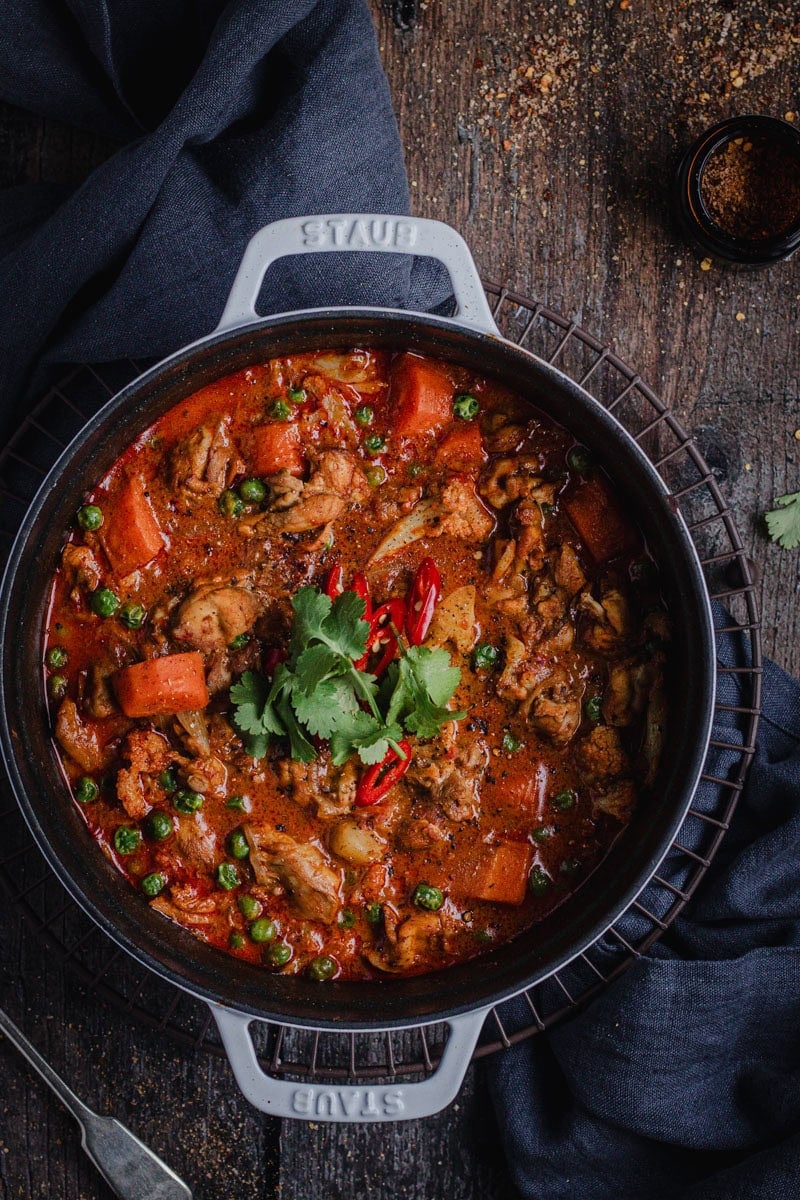
Let’s Talk $$$
I won’t sugarcoat it: neither brand is cheap. But nor are they designed to be. We’re talking about high-quality cast iron pots that you will pass on to your kids. It’s for life! How many things can you say that about?!
- Le Creuset usually sits at a slightly higher price point, especially for their bigger pieces and signature colours. You’re paying for heritage, craftsmanship, and the fact that their brand has become known worldwide as an essential part of every luxury kitchen.
- Staub tends to be a little cheaper — though not by much. You’re getting exceptional performance, especially if slow-braising is your jam.
Shopkeeper’s Notes
Here’s what I tell customers: Think cost per use, not RRP. A pot you pull out three times a week for the next 30 years? That’s value.
Which One’s Right for You?
Still stuck? Let’s nut this out.
- You want bright colours, easy browning, and a lighter feel → Go Le Creuset.
- You want moody elegance, a classic look, and a self-basting lid → Go Staub.
- You want something that’ll make your heart skip every time you pull it from the cupboard? Pick the one that makes you smile!
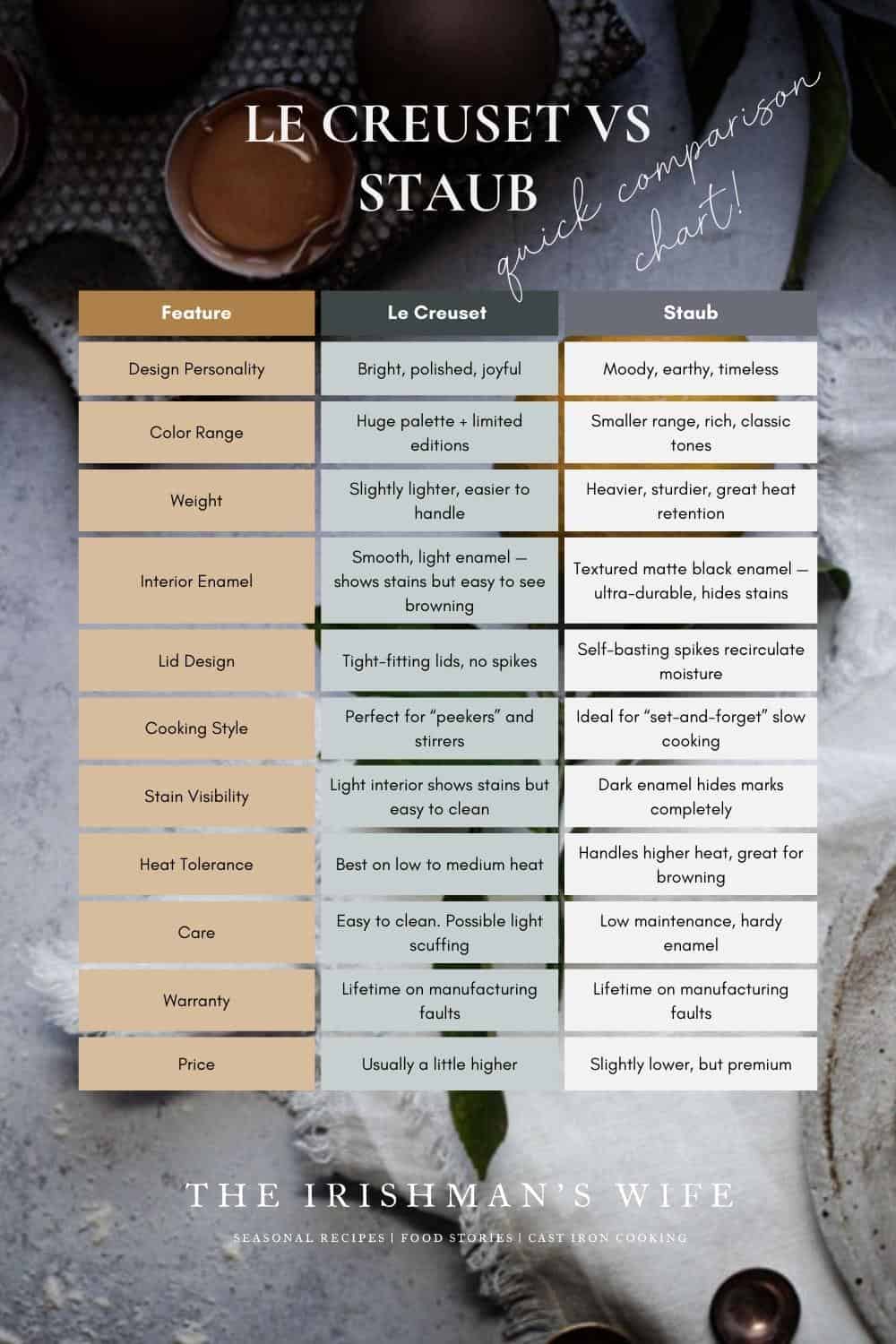
Honestly, there’s no wrong answer here. But if it helps, go back to the cheat sheet above.
Choosing the Right Size (and Why It Matters)
Once you’ve picked your brand, size is the next big decision. The 24cm is the most popular size for couples or small families, while the 28cm is ideal for batch cookers, big families, or entertaining.
I’ve put together a full guide to help you choose the perfect one: Best Dutch Oven Size to Buy.
If you’re still deciding, try reading this:
Cooking Tips
- For Le Creuset: Use low-to-medium heat always! They have excellent heat retention and will hold heat better than stainless steel. Before you start cooking, add your oil and then warm up your Dutch oven for 5 minutes on low heat before you start cooking.
- For Staub: Trust the self-basting lid. Don’t lift it too often, or you lose the magic. With the black enamel, I recommend cooking with a higher-heat oil than olive oil. Try avocado oil instead.
- Always let pots cool before handwashing to avoid thermal shock.
Start slow. Cook confidently.
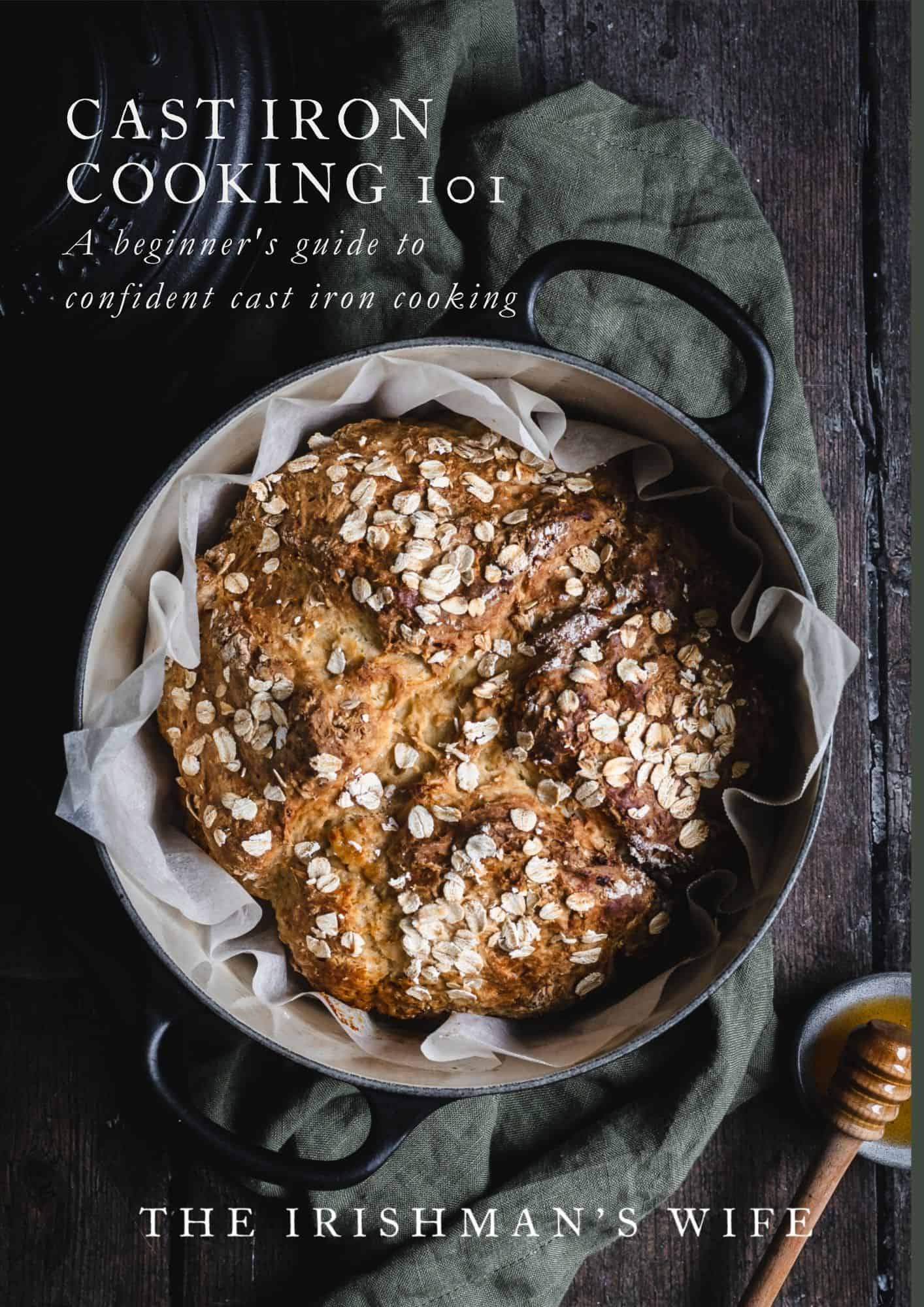
Cast Iron Cooking 101
Cooking with cast iron doesn’t need to feel intimidating.
In this guide, I’ll share the techniques, habits, and everyday recipes that helped me fall in love with slow cooking — from caring for your cookware to creating comforting meals at home.
Commonly asked questions
New to Dutch Oven Cooking?
If you’re still deciding whether a Dutch oven is right for you, or you’ve just bought your first piece of enamel cast iron, head over to my Start Here: Cast Iron Cooking page. I’ve gathered together my favourite beginner guides, care tips, Dutch oven recipes, and everything I wish I’d known when I bought my first pot.
Let’s Wrap This Up
Okay, back to that moment in the store. You’re standing between two shelves, one eyeing a sunny Nectar Le Creuset, the other drawn to a brooding Graphite Staub.
You pick one up, then the other. One feels cheerful, light, and perfect for summer pasta dishes. The other feels hardy but beautiful, built for long, cold winters and slow Sunday suppers by the fire.
As someone who owns both brands of enamel cast iron cookware, that’s really it. It isn’t about which is “better.” Both have a manufacturing lifetime guarantee, both are the highest-quality enamel cast iron around, and both cook like an absolute dream. To me, it’s about which one feels like home and more like you in your kitchen.
Because whichever you choose, you’re not just buying a pot. You’re buying decades of slow-cooked dinners, lazy lunches, and late-night curries. A lifetime of “remember when we made that?” moments.
That’s what makes these pots so damn special and why I love them so much.
If you have any questions, drop them in the comments!
x