Classic Dutch Oven Beef Stew
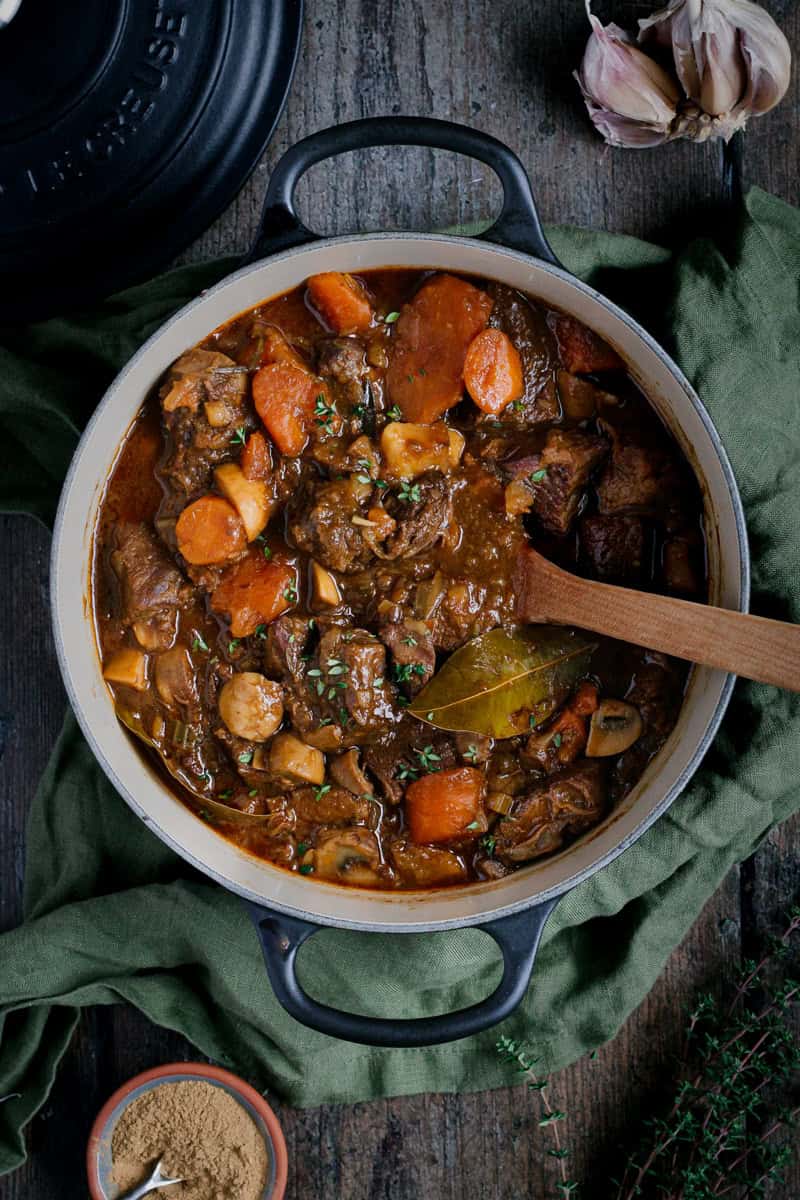
It doesn’t get much easier than a classic Dutch oven beef stew. Just how the Irishman likes it – melt-in-your-mouth beef, loads of vegetables and a hearty, rich gravy. Be sure to serve it with a big scoop of creamy mashed potato (or colcannon mash if you really want to go hard) and a thick slice of crusty, farmhouse bread, preferably still warm from the oven, to mop up every last bit.
If you’re new here, you might not know I also run a small online store where I keep many of the tools I cook with every day, along with a few timeless homewares for good, slow living…
Why you’ll love this easy Dutch oven beef stew recipe
There’s nothing fancy going on here. This is a proper, hearty beef stew, slowly cooked in the oven until it’s packed full of flavor and the beef melts in your mouth.
It’s mostly hands-off cooking. Once everything is browned and bubbling away, the Dutch oven goes into the oven for a couple of hours to do its thing.
It’s loaded with vegetables. Carrots, parsnips, celery, onions, and mushrooms make this one hearty beef stew!
This recipe is made for mashed potatoes. There are no potatoes in the stew itself (much to the horror of the Irishman!), which leaves plenty of room for a generous scoop of mash alongside.
It’s even better the next day. Like most slow-cooked stews, the flavors only get better after a night in the fridge. Cook it a day before, and you’ll taste the difference!
Ingredients
- Beef chuck steak – Chuck is my go-to for beef stew. It needs a long, slow cook, but given enough time it becomes perfectly pull-apart tender. Trim off any large pieces of excess fat, and roughly cut the beef into 4cm large chunks. Alternatively, you can cut up a whole chuck roast.
- Plain flour (all-purpose flour).
- Olive oil – I’ve suggested 2 tbsp, but if you need more, feel free to add more if needed.
- Onions and garlic
- Carrots, parsnips and celery – Keep the vegetables fairly chunky, so they hold their shape during the long cooking time. For reference, I generally cut each carrot into 4-5 chunks.
- Button mushrooms – These go in for the final hour rather than at the beginning so they don’t completely disappear into the stew. White button or brown mushrooms will both work. I cut mine in half or eack half into thirds depending on their size.
- Beef stock
- Tomato paste
- Porcini powder – This stuff is a flavor bomb! Porcini powder adds so much depth to a dish, so you’ll see that it’s an essential ingredient around here.
- Worcestershire sauce
- Herbs – Bay leaves, fresh rosemary and dried thyme (all the stew classics)
- Sea salt flakes and freshly ground black pepper – Season to taste at the end. Depending on your beef stock and Worcestershire sauce, you may find you don’t need much additional salt.
Why cook beef stew in a Dutch oven?
If ever there was a recipe made for a Dutch oven, then beef stew is it.
An enamel cast iron Dutch oven lets you brown the beef, cook the vegetables, and slowly braise the stew all in the same pot. The combination of the heavy cast iron (which holds the heat) with the tight-fitting lid helps everything gently cook in the oven without drying out. It’s basically magic!
Starting the stew on the stovetop also means none of those browned bits (the fond) from searing the beef go to waste. Once the stock goes in, gently scrape them all up from the bottom of the pot. It’s all flavor, and it goes a long way to making a cracking stew.
And while you can certainly make beef stew in other pots, I’m pretty convinced that a cast iron Dutch oven does it best! I always say, good cast iron cookware makes you a better cook!
What size Dutch oven do I need?
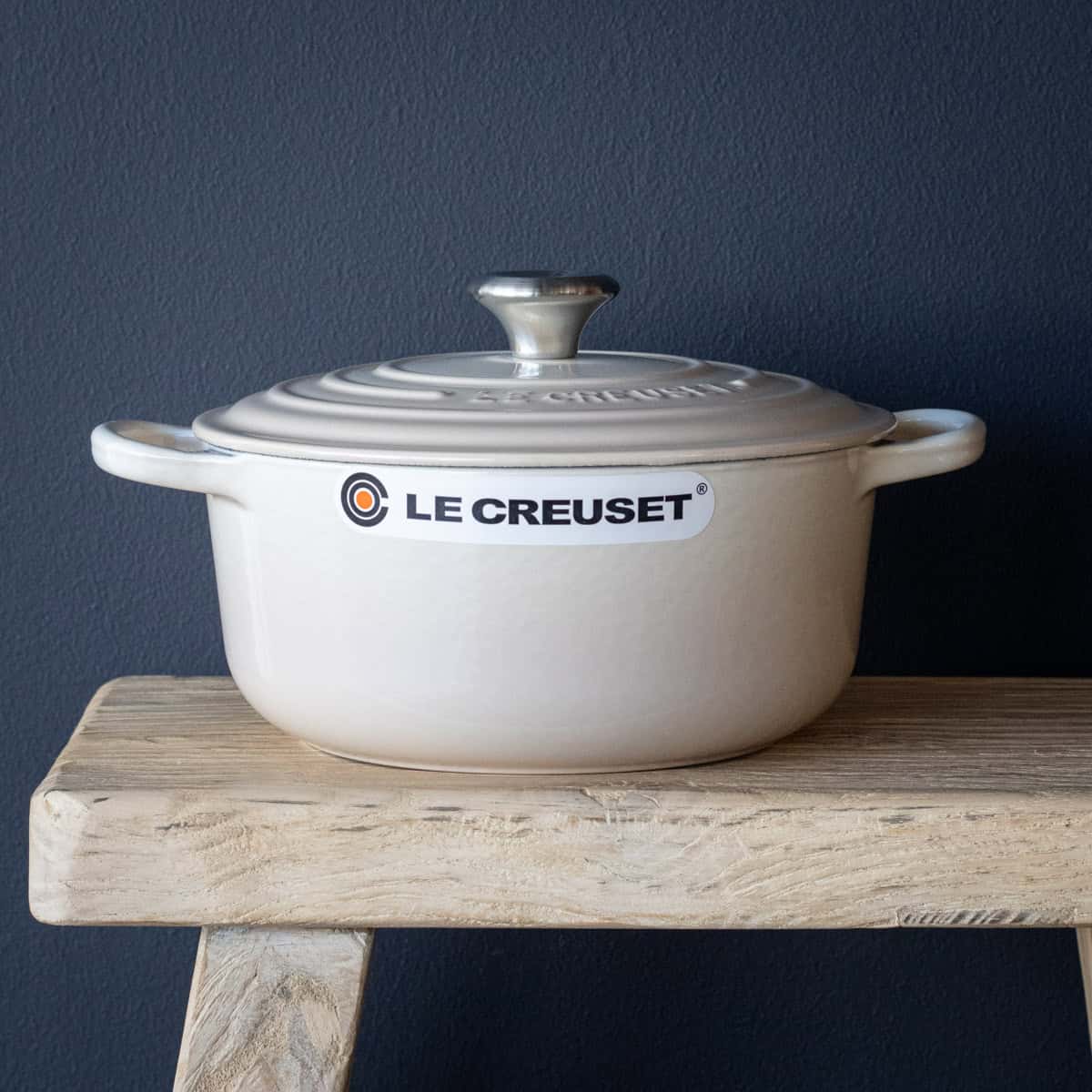
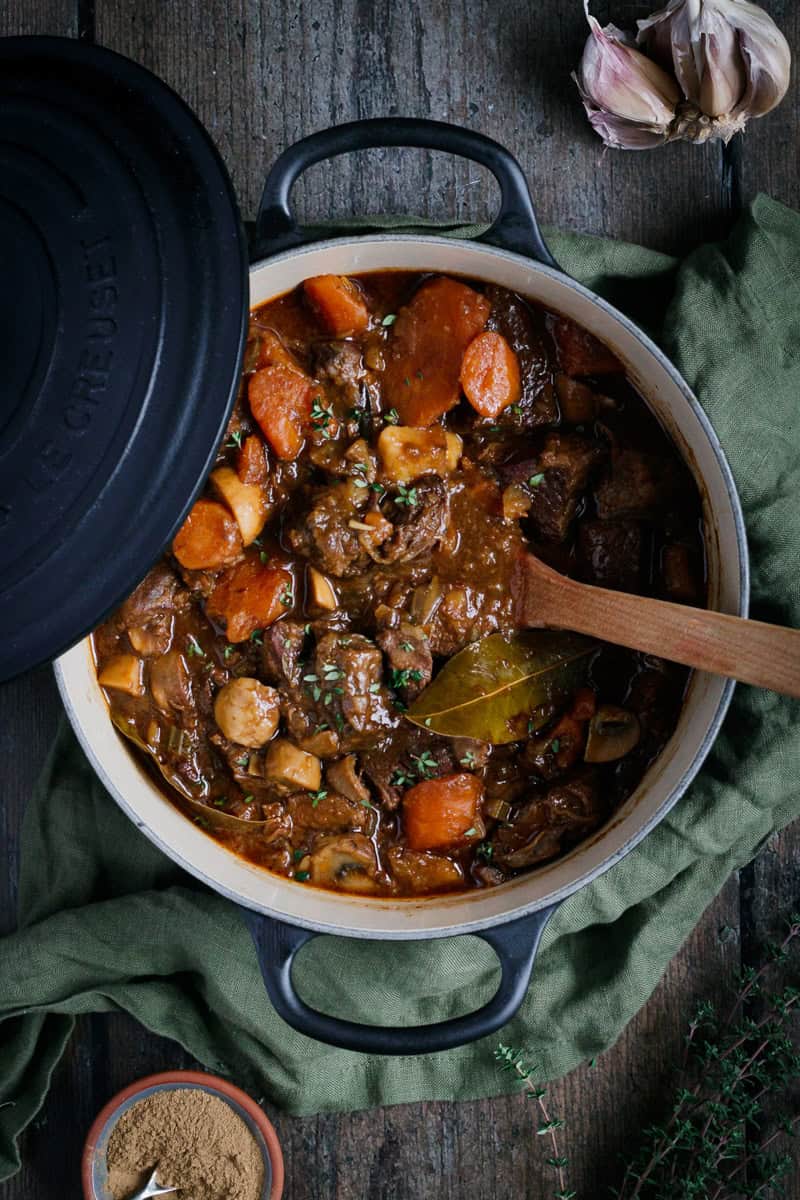
I make this beef stew in my 24cm Le Creuset enamel cast iron Dutch oven. It’s a great everyday size for a family stew and gives you enough room for 1.4kg of beef plus all those vegetables and stock. A 26cm pot would also work. If you’re using a different brand, don’t worry too much about matching the exact diameter. A Dutch oven of around 4–5 litres capacity should work perfectly for this recipe.
My Go-To Cast Iron Pot
If there’s one piece of kitchen equipment I couldn’t live without, it’s my 24cm Le Creuset enamel Dutch oven. Steady heat, beautiful cooking and it goes from the stovetop straight to the table.
Step-by-step instructions
1. Flour the beef. Preheat the oven to 150°C/300°F. Place the flour in a large bowl, add the beef and toss until the pieces are lightly coated.
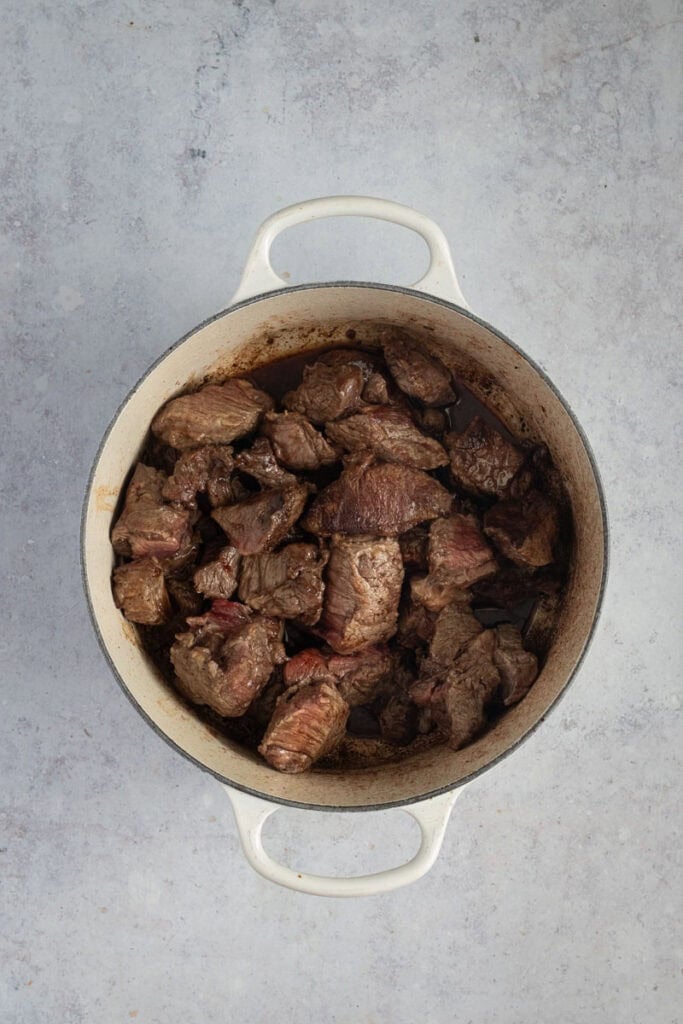
2. Brown the beef. Heat the olive oil in a large Dutch oven over low to medium heat. Brown the beef in batches, turning the pieces so you get plenty of lovely colour on the outside. Don’t rush this bit and don’t crowd the pot. Browning the beef is where we start building all that flavour. Transfer each batch to a plate as it’s done.
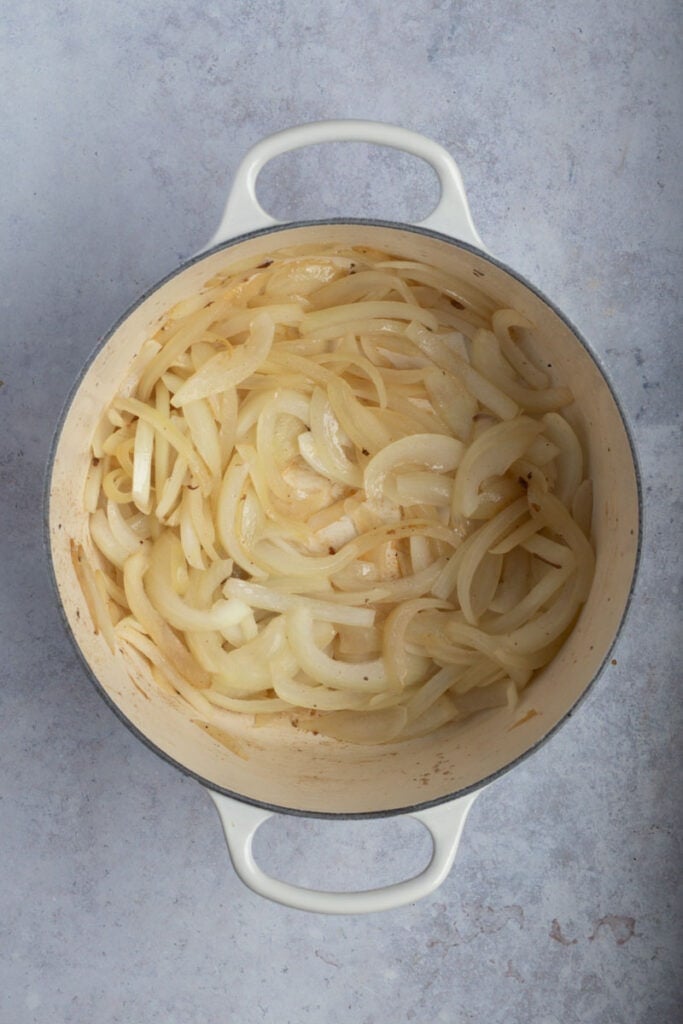
3. Sweat off the onions. Add the sliced onions to the Dutch oven and cook for 6–8 minutes, stirring occasionally, until softened.
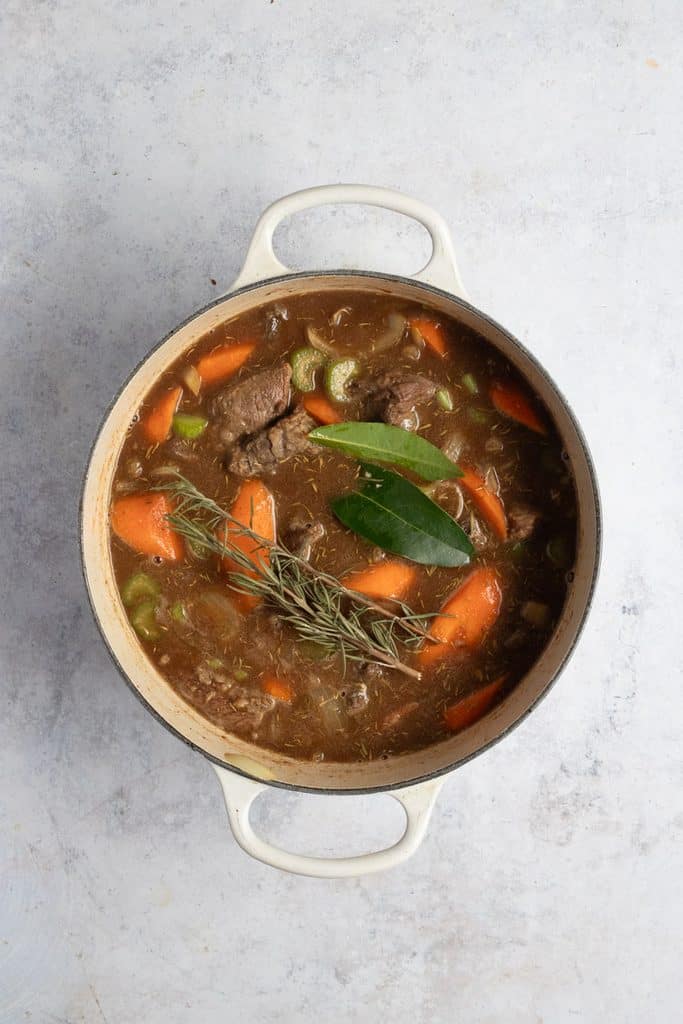
4. Add the vegetables. Add the garlic, carrot, parsnip and celery and cook for another minute.
5. Build the gravy. Gradually pour in the beef stock, gently scraping your spoon along the bottom of the Dutch oven to loosen all the brown bits (the fond) left behind from the beef. Add the tomato paste, porcini powder, bay leaves, rosemary, and thyme and stir everything together.
6. Return the beef to the Dutch oven. Return the browned beef to the pot, along with any juices that have collected on the plate. Bring everything to a gentle simmer on the stovetop before popping on the lid and transferring the Dutch oven to the oven.
7. Slow cook. Cook, covered, at 150°C/300°F for 2 hours. Low and slow is what we’re after here. Chuck steak needs time for all that connective tissue to break down and turn into tender, melt-in-your-mouth beef.
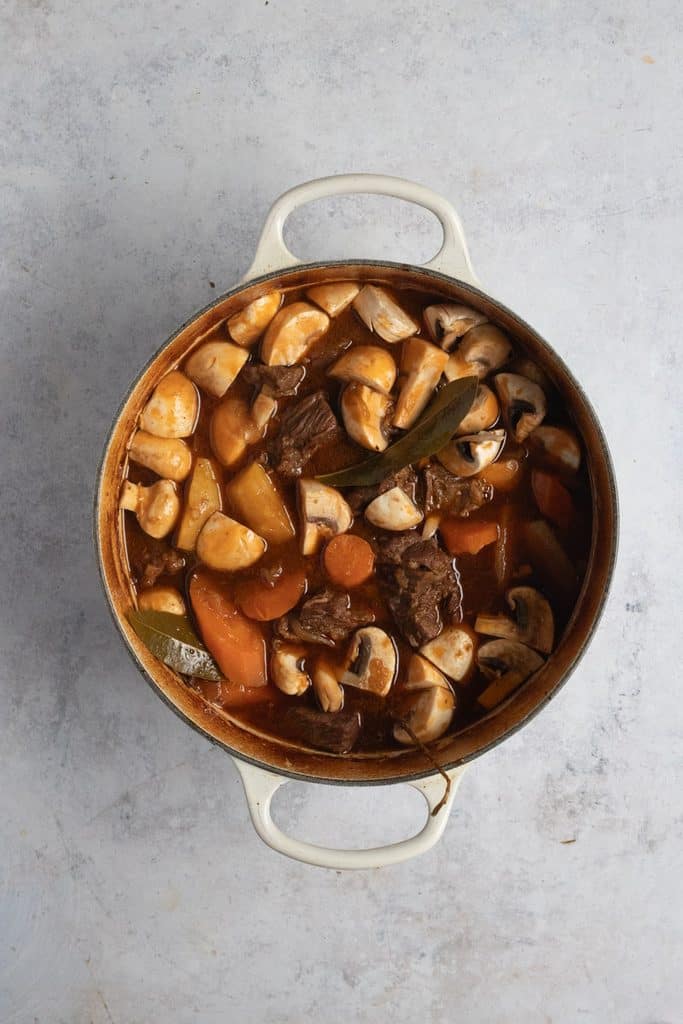
8. Add the mushrooms. After 2 hours, remove the Dutch oven from the oven and stir through the Worcestershire sauce and button mushrooms. Return the stew to the oven without the lid for another hour. This gives the mushrooms enough time to cook while allowing the gravy to reduce and become beautifully rich.
9. Season and serve. Remove the bay leaves and rosemary sprigs, then taste the gravy and season with sea salt flakes and freshly ground black pepper. Spoon into bowls over a generous dollop of creamy mashed potato.
Additions & Subsitutions
Sub out a little beef stock for red wine for an even richer beef stew.
Add some steamed frozen peas at the very end and stir through for some simple greens. The Irishman likes to add steamed baby potatoes (because there are never too many potatoes!); however, I much prefer keeping them for the mash.
Cooks notes
For me, a good beef stew comes down to three things: the right cut of beef, properly browning it, and giving it enough time (but not too much) to cook.
Chuck steak is my go-to for slow cooking because it contains plenty of connective tissue. It can seem tough earlier in the cook, but given enough time at a low temperature, that connective tissue breaks down and the meat will literally melt in your mouth.
Don’t skip browning the beef. Yes, it’s the part that takes a little extra time, but those browned edges and all the bits left behind in the Dutch oven are what start building the flavour of your gravy.
Lastly, don’t try to hurry it along with a hotter oven. Enamel cast iron holds heat incredibly well, and 150°C is plenty. A gentle three-hour cook gives the beef time to tenderise without boiling the life out of everything else.
Ok, let’s serve it up! Here’s what to serve with this beef stew
I’m firmly in the beef stew with mashed potato camp. Because this recipe doesn’t contain potatoes, you can pile a generous spoonful of creamy mashed potato into your bowl and ladle the stew over the top.
For something a little more Irish, serve it with colcannon mash instead. Plus, think of all those added greens! And there should absolutely be bread involved. A thick slice of homemade farmhouse bread is perfect for mopping up the last of the gravy. My no-knead bread recipe is my go-to at the moment.
You could also serve it with:
- buttery boiled potatoes
- soda bread
- soda farls
- steamed greens
- green beans
- Marrowfat or green peas.
Tips for the best Dutch oven beef stew
Keep the beef chunky. I cut chuck steak into roughly 4cm pieces. Small pieces can dry out and fall apart during a three-hour cook.
Brown in batches. The important part is not trying to brown all that beef at once. Work in batches and leave some space between the pieces. Overcrowd the Dutch oven and the beef releases moisture and begins to steam rather than brown.
Keep the heat under control. There’s no need to crank the stovetop up to high when cooking with enamel cast iron. Give your Dutch oven time to heat gradually and use low to medium heat for browning.
Cut the vegetables into large pieces. They’re going to be cooking for a long time, so chunky is good here.
Don’t add the mushrooms too early. Adding them for the final hour keeps some texture rather than having them cook for the entire three hours.
Leave the lid off for the final hour. This allows some of the liquid to evaporate and concentrates the gravy.
Give the beef time. If you check your stew and the beef still feels tough, it usually needs longer rather than more heat.
Can I make beef stew ahead of time?
Absolutely. Beef stew, and most slow-cooked stews, always taste better the next day. Let the stew cool, then refrigerate it in an airtight container. Reheat gently until piping hot before serving.
If you’ve cooked the stew in enamel cast iron, I will generally leave it in my Dutch oven in the fridge overnight. Do remember, though, that before reheating, you need to bring the pot to room temperature before heating. I find that 30-60 minutes is generally enough time to take the chill off the pot, as putting a cold enamel Dutch oven on the heat can cause damage to the enamel
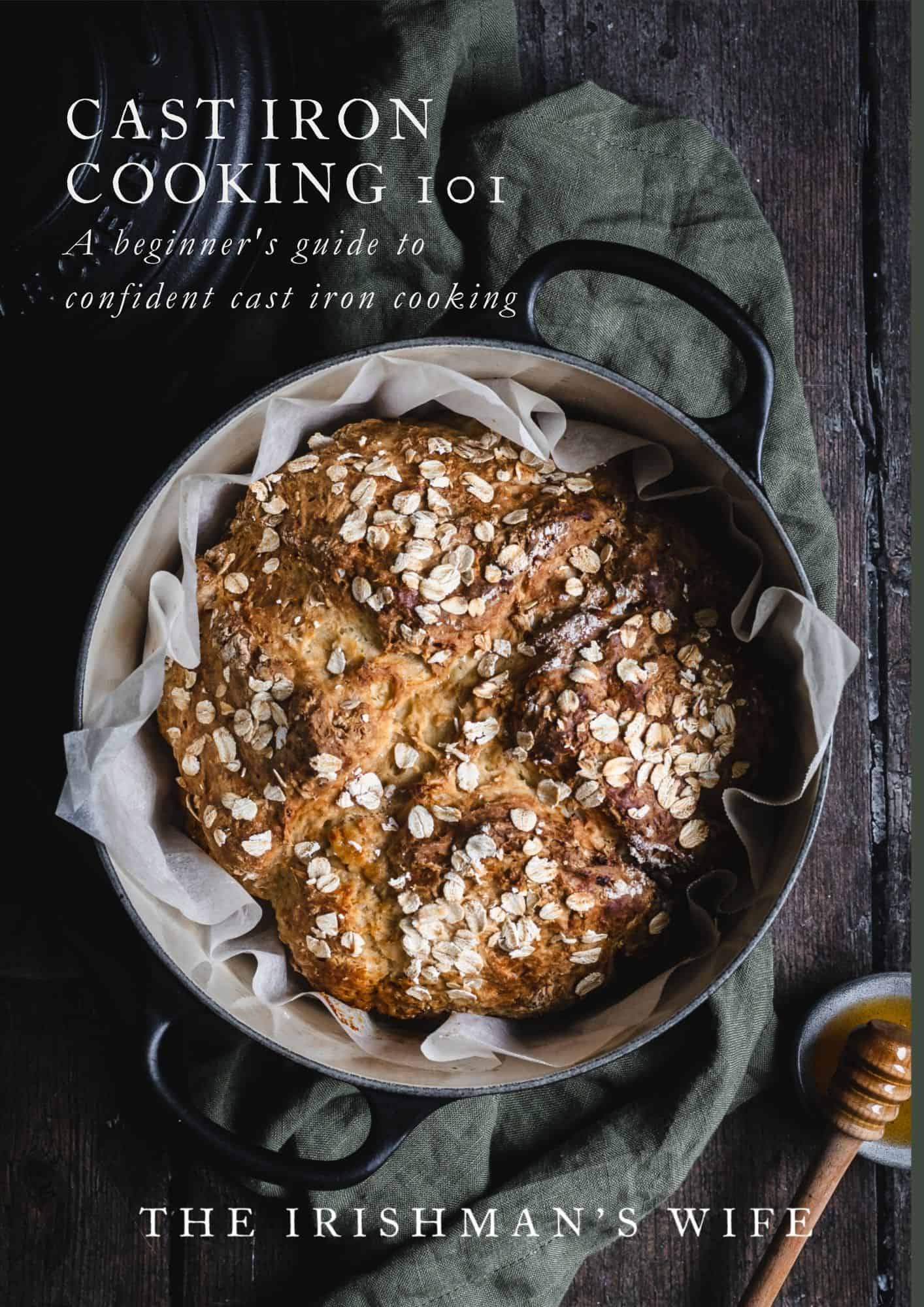
WELCOME TO THE WORLD OF CAST IRON
One pot turned into three… and now you’re hooked? It happens to the best of us. Find recipes, tips, and guides in my Cast Iron Cooking HQ.
Can you freeze beef stew?
Yes. Let the stew cool completely before portioning it into freezer-safe containers. Because this version doesn’t contain potatoes, it freezes particularly well – there’s no need to worry about potatoes changing texture once they’ve been frozen and reheated.
To reheat another day, defrost overnight in the fridge and reheat gently on the stovetop until piping hot. If the gravy has thickened up, add a couple of tablespoons of water to the pot and stir through.
FAQ’s


Start slow. Cook confidently.
Cast Iron Cooking 101
From slow cooked stews to warm bread fresh from the oven, this guide will help you feel confident cooking with cast iron at home.

Classic Beef Stew
- Total Time: 3 hours 45 minutes
- Yield: 6 serves 1x
Description
It doesn’t get much easier than a classic Dutch oven beef stew. Just how the Irishman likes it – melt-in-your-mouth beef, loads of vegetables, and a hearty, rich gravy.
Ingredients
- 1/4 c plain (all purpose) flour
- 2 tbsp olive oil
- 1.4kg beef chuck steak, trimmed of excess fat and cut into 4cm sq chunks
- 2 onions, sliced
- 4 cloves garlic, crushed
- 3 large carrots, cut into 3cm chunks
- 2 parsnips (small-medium), cut into 3cm chunks
- 1 stick of celery, roughly chopped
- 800ml beef stock
- 2 tbsp tomato paste
- 1 tbsp porcini powder
- 2 bay leaves
- 2 x 10cm sprigs of rosemary
- 1/2 tsp dried thyme leaves
- 2 tbsp Worcestershire sauce
- 200g button mushrooms
- sea salt flakes and freshly ground black pepper to taste.
Instructions
- Preheat the oven to 150°C/300°F. Place the flour in a large bowl. Add the beef and toss until lightly coated in the flour.
- Heat 2 tablespoons of the olive oil in a large Dutch oven over low to medium heat. Working in batches, brown the beef on all sides, adding more olive oil if needed. Don’t overcrowd the pot – you want the beef to brown rather than steam. Transfer the browned beef to a plate and set aside.
- Add the onions and cook for 6–8 minutes, stirring occasionally, until softened.
- Add the garlic, carrot, parsnip and celery and cook for another minute.
- Gradually pour in the beef stock, stirring and scraping up all those lovely browned bits from the bottom of the pot. Add the tomato paste, porcini powder, bay leaves, rosemary and thyme and stir to combine.
- Return the beef to the pot, along with any juices that have collected on the plate. Stir everything together and bring the stew to a gentle simmer on the stovetop.
- Cover the Dutch oven with the lid and transfer to the preheated oven. Cook for 2 hours.
- Remove the Dutch oven from the oven and stir through the Worcestershire sauce and button mushrooms. Return to the oven, uncovered, for a further 1 hour, or until the beef is beautifully tender and the vegetables are cooked through.
- Remove and discard the bay leaves and rosemary sprigs. Taste and season with sea salt flakes and freshly ground black pepper as needed.
Serve the beef stew hot with creamy mashed potatoes and a good hunk of crusty bread for mopping up all that rich gravy.
Notes
To reheat the next day, pop it on the stovetop on low heat and gently heat until piping hot. If the gravy has thickened up, add a couple of tablespoons of water to the pot and stir through.
This beef stew recipe was cooked in my 24cm Le Creuset enamel Dutch oven.
Please note all recipes on this website are in US measurements. Eg, 1 cup / 240ml, 1 tablespoon/15mls. Oven temperatures refer to a fan-forced oven.
- Prep Time: 45 minutes
- Cook Time: 3 hours
- Category: Dinner
- Method: Slow Cooking
- Cuisine: British
Nutrition
- Serving Size:
- Calories: 679
- Sugar: 8.5 g
- Sodium: 928 mg
- Fat: 28.4 g
- Carbohydrates: 29.1 g
- Protein: 80.1 g
- Cholesterol: 251.9 mg