What Is Enameled Cast Iron & Why Cooks Like Me Love It
Spoiler alert… if you love cooking the kind of food that warms you to your soul and makes people do a mad dash to the table, there’s a very good chance you’ll end up falling head over heels for enameled cast iron too.
If you’ve ever wondered what enameled cast iron cookware actually is, how it differs from traditional cast iron, and whether it’s worth the investment, you’re in the right place. I’ll also share why it’s become the cookware I reach for almost every day, along with a few things I’ve learnt (sometimes the hard way!) after years of cooking with it.
Ready to get into the nitty-gritty? Let’s get started!
If you’re new here, you might not know I also run a small online store where I keep many of the tools I cook with every day, along with a few timeless homewares for good, slow living…
Quick Answer
Enameled cast iron is traditional cast iron cookware coated with a layer of vitreous enamel – a durable, glass-based coating that’s fused onto the iron at extremely high temperatures. The enamel then creates a non-reactive cooking surface that doesn’t require seasoning, is much easier to clean than bare cast iron, and helps protect the iron from rust. It combines the phenomenal heat retention of cast iron with the convenience of low-maintenance cookware, making it ideal for everything from slow-cooked stews and soups to bread baking, roasting, and everyday family meals.
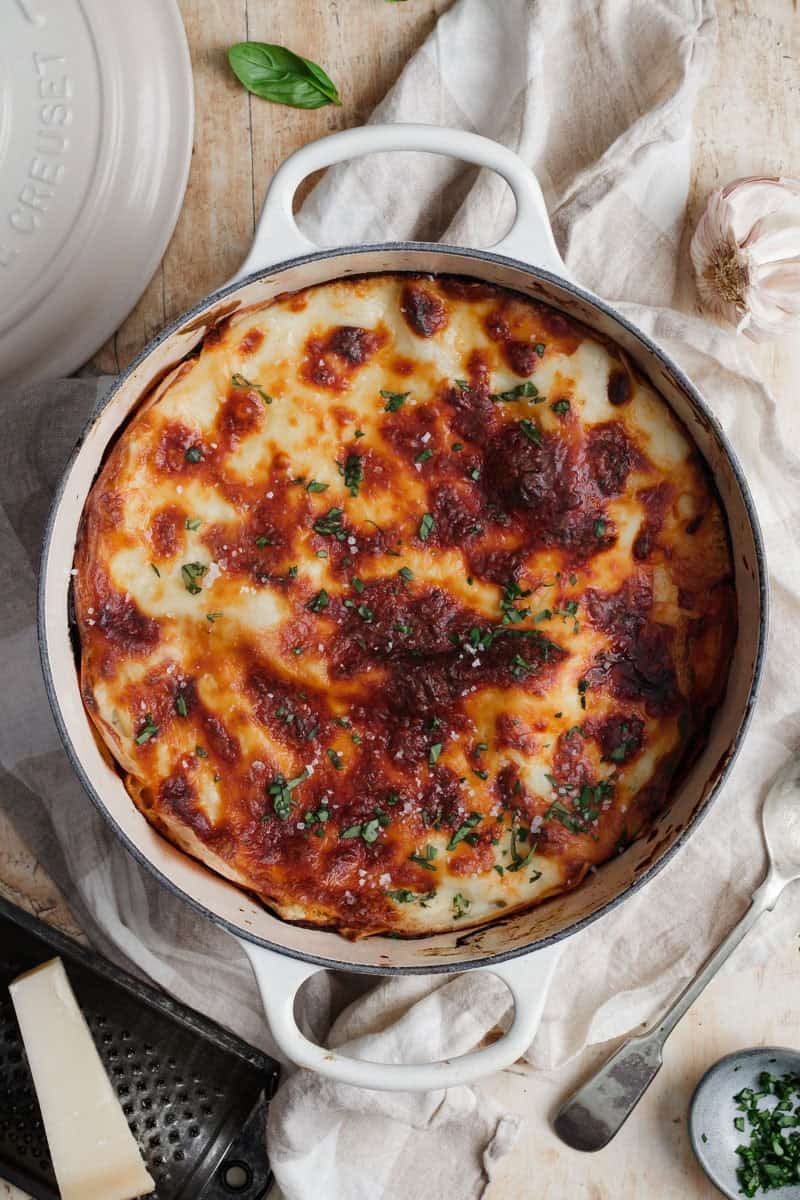
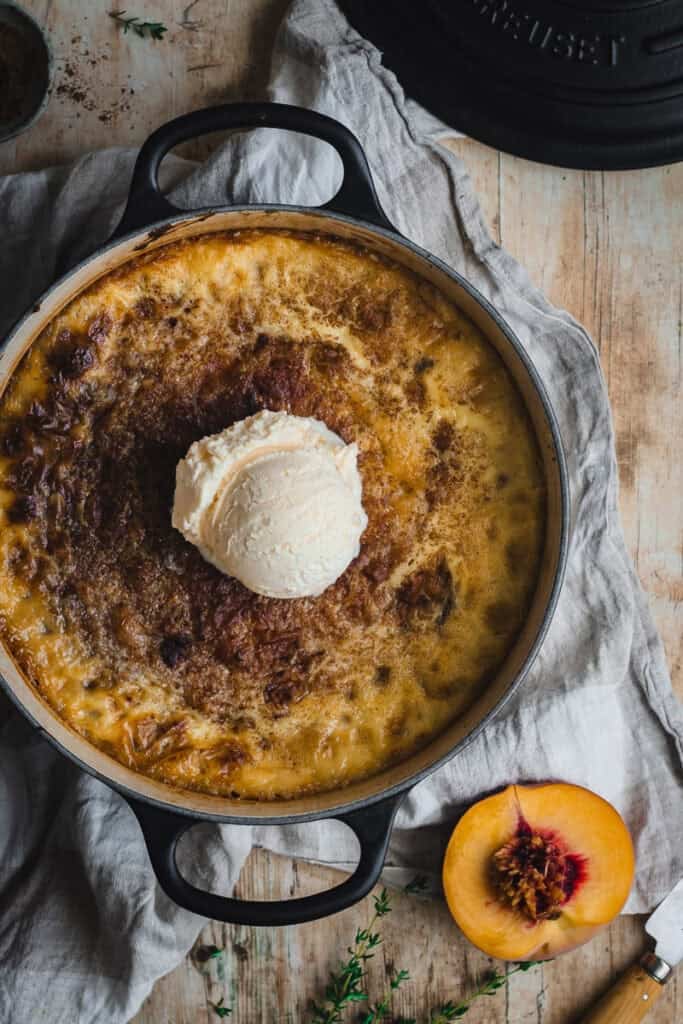
It’s also the cookware I reach for most often. My 24cm Le Creuset Dutch oven has cooked everything from boiled potatoes and bolognese to crusty bread, deep-frying seafood, and even a potato bake – and if I could only keep one piece of cookware, that would definitely be it.
If you’ve ever wandered into a cookware store and picked up a Le Creuset Dutch oven, you’ve probably had the same reaction as many of the customers who walk through the doors at Martha’s. You notice how beautiful it is. Then you pick it up and realize it’s surprisingly heavy. And then you look at the price tag. At which point, one of three things happens. Firstly, they decide that Le Creuset isn’t for them at this time. And that’s ok. There isn’t one piece of cookware for everyone. And not everyone wants to spend that amount of money on a pot. I get it.
Second, it’s the person who already has one, or has lusted after one for years. They know all the ins and outs and are just locking in a color before they buy.
And third, there is the person who wants one but knows nothing about Le Creuset. They usually ask something along the lines of: “What exactly makes this pot so special?”
It’s a fair question. After all, cookware is cookware, right?
Well, not quite.
Enamel cast iron has a reputation for a reason. It’s honestly one of the most versatile pieces of cookware you can own and has been a staple in my kitchen for years. From slow-cooked Irish stew and crusty loaves of bread to roast chickens and cheesy pasta bakes, it’s the piece I reach for more than almost anything else.
What Is Enamel Cast Iron Made Of?
Enameled cast iron starts life exactly the same way as traditional cast iron cookware. Molten iron is poured into moulds and allowed to cool, creating the heavy cast iron body that’s famous for its durability and excellent heat retention.
Then come the differences and what makes it so damn good.
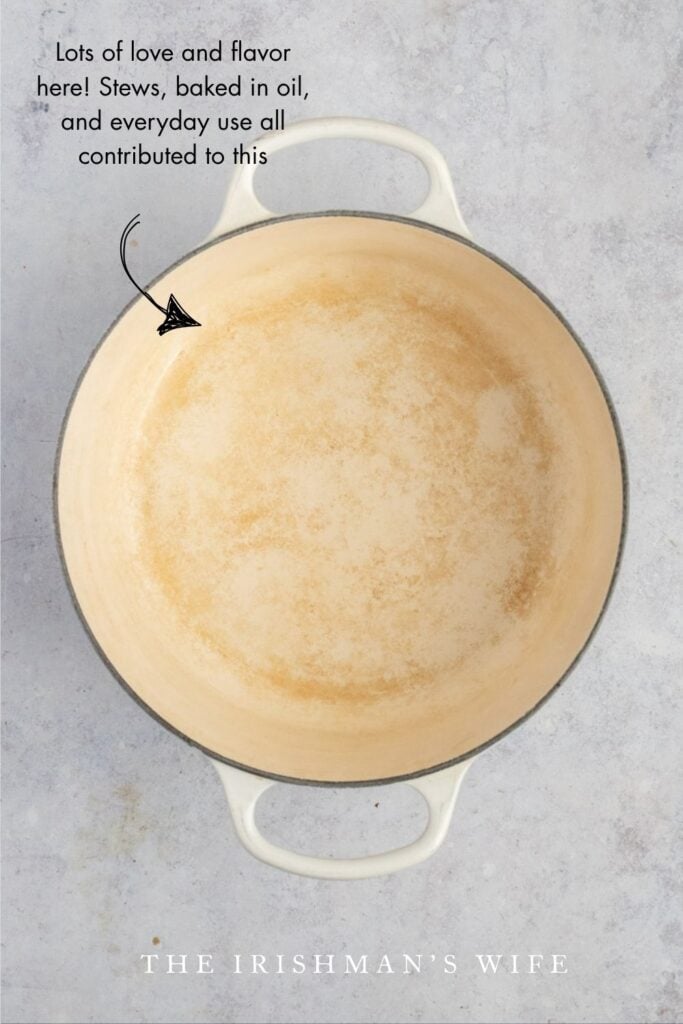
Instead of leaving the iron bare, manufacturers coat it with one or more layers of vitreous enamel. Despite what many people assume, enamel isn’t paint. It’s a glass-based coating that’s fused to the cast iron at extremely high temperatures, creating that easy-to-use, smooth surface enameled cast iron is known for.
The colour isn’t painted on afterwards either. It’s built into the enamel itself during the manufacturing process, which is why brands like Le Creuset and Staub come in such a wide range of beautiful colours.
That leaves us with cookware that combines the cooking performance of raw cast iron with a smooth, easy-to-care-for cooking surface that doesn’t require seasoning. Sounds good, doesn’t it?
New to Cast Iron Cooking?
Fallen down the cast-iron rabbit hole? You’re in good company. Start with my Cast Iron Cooking Hub.
How Is Enamel Cast Iron Different From Traditional Raw Cast Iron?
This is where many people get confused. Both types of cookware are made from cast iron, but they behave a bit like chalk and cheese in the kitchen.
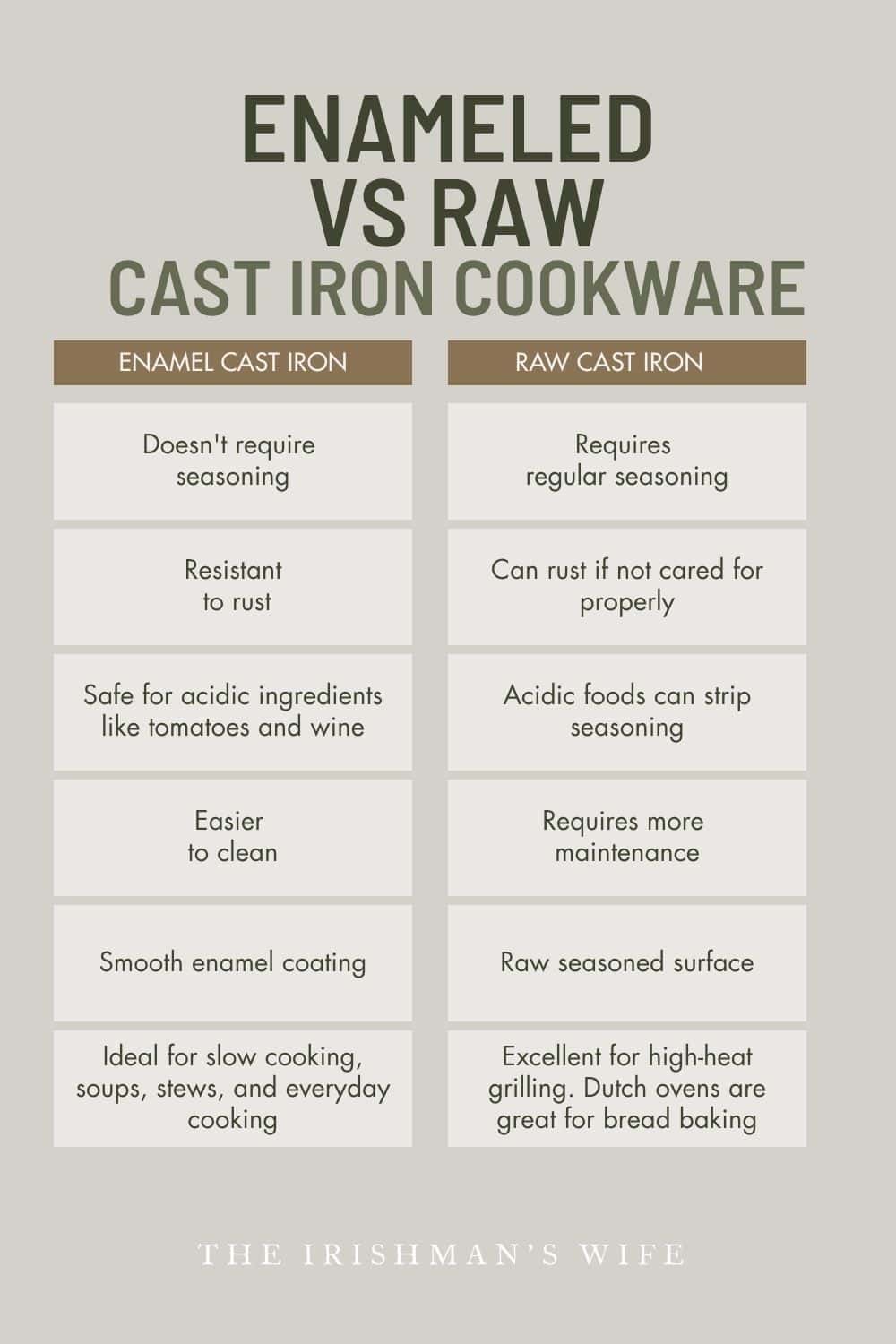
The biggest difference is the enamel coating. Raw or bare cast iron relies on a seasoning process, which is a layer of oil baked onto the surface. This seasoning protects the iron and creates a naturally non-stick cooking surface over time.
Enamel cast iron doesn’t require any seasoning because the enamel coating already protects the cast iron underneath. Because the enamel acts as a barrier between the food and the iron, it doesn’t need seasoning and is much easier to care for. It also means you can confidently cook acidic ingredients like tomatoes, wine, citrus, and vinegar without worrying about them reacting with the cookware. For many home cooks like myself, this is one of the reasons we love it so much. After a day of slow cooking, I never have to worry about maintaining a layer of seasoning, so it doesn’t rust if it gets left in the sink overnight.
Having cooked with both over the years, I still own and use bare cast iron, but if I’m making dinner on a Tuesday night, nine times out of ten I’m reaching for my enameled cast iron. It’s simply much easier to live with.
If you’re trying to decide between the two, neither is better – they are simply better at different things. Bare cast iron is brilliant for high-heat searing and building seasoning over time, while enameled cast iron is a bit more versatile and lower maintenance for everyday cooking.
Why Is Enamel Cast Iron So Popular?
There are so many reasons why enamel cast iron has become this cook’s and so many others’ cookware of choice. Some are practical. Others are harder to explain until you’ve cooked with it yourself. Here are just a few…
The Heat Retention
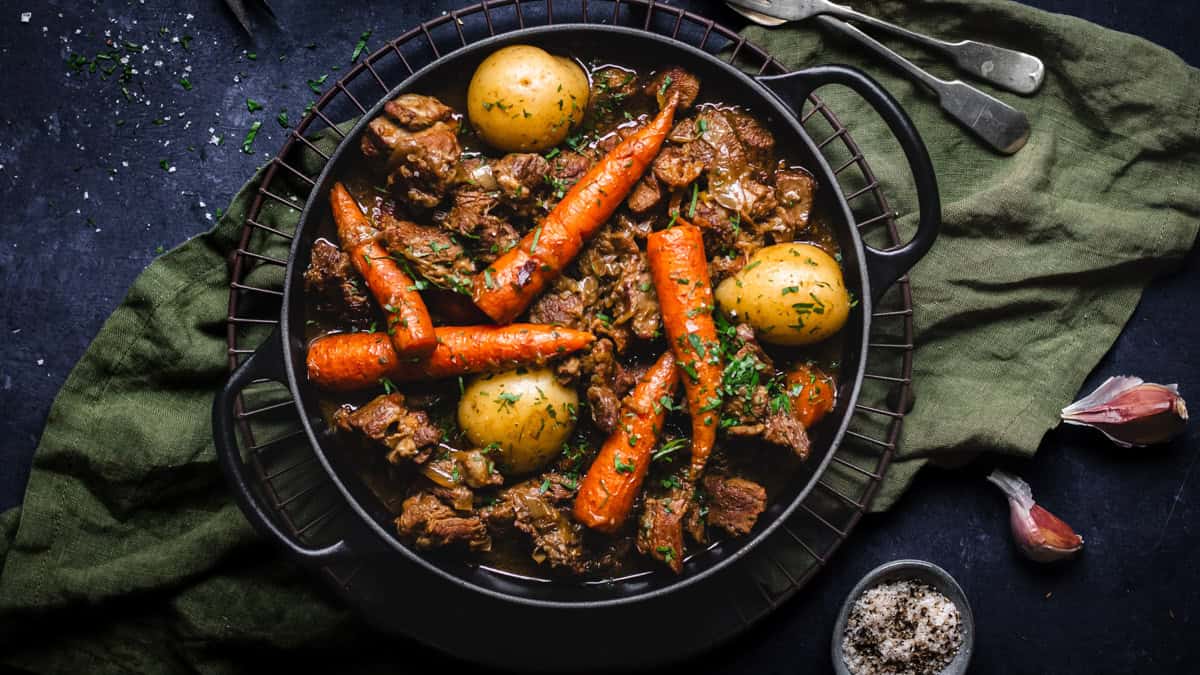
One of the biggest strengths of cast iron is how well it holds heat. Once hot, enamel cast iron stays hot. Like, it keeps cooking hot. Unlike other materials (I’m looking at you, stainless steel!), enamel cookware will keep cooking well after it is removed from the heat. That’s why it’s so good for slow-cooked meals like beef cheeks, Irish stew, and braised lamb shoulder. The steady, even heat helps food cook gently over long periods without hot spots developing. This is cookware that rewards a little patience.
It’s Low Maintenance
One of its biggest selling points is that you don’t need to season your cookware. No seasoning. No special maintenance routine. Just cook, wash, dry, and it’s ready for next time.
Compared to traditional cast iron, it’s incredibly easy to live with, which is one of the reasons I recommend it so often to beginner cooks.
It Doesn’t Rust
Because the enamel protects the cast iron underneath, rust isn’t usually a concern. That’s a major reason many people choose enamel cast iron over traditional cast iron. It’s also a non-reactive surface, meaning you can make all the tomato sauces, jams, and anything else that would normally react with raw cast iron.
It Easily Can Be Moved From Stovetop To The Oven
One of my favourite things about enamel cast iron is how versatile it is.
You can:
- Brown meat on the stovetop
- Add vegetables and liquid
- Transfer the entire pot into the oven
- Bring it straight to the table for serving
All using the same piece of cookware. There’s something wonderfully simple about that.
It’s Beautiful Enough to Leave Out
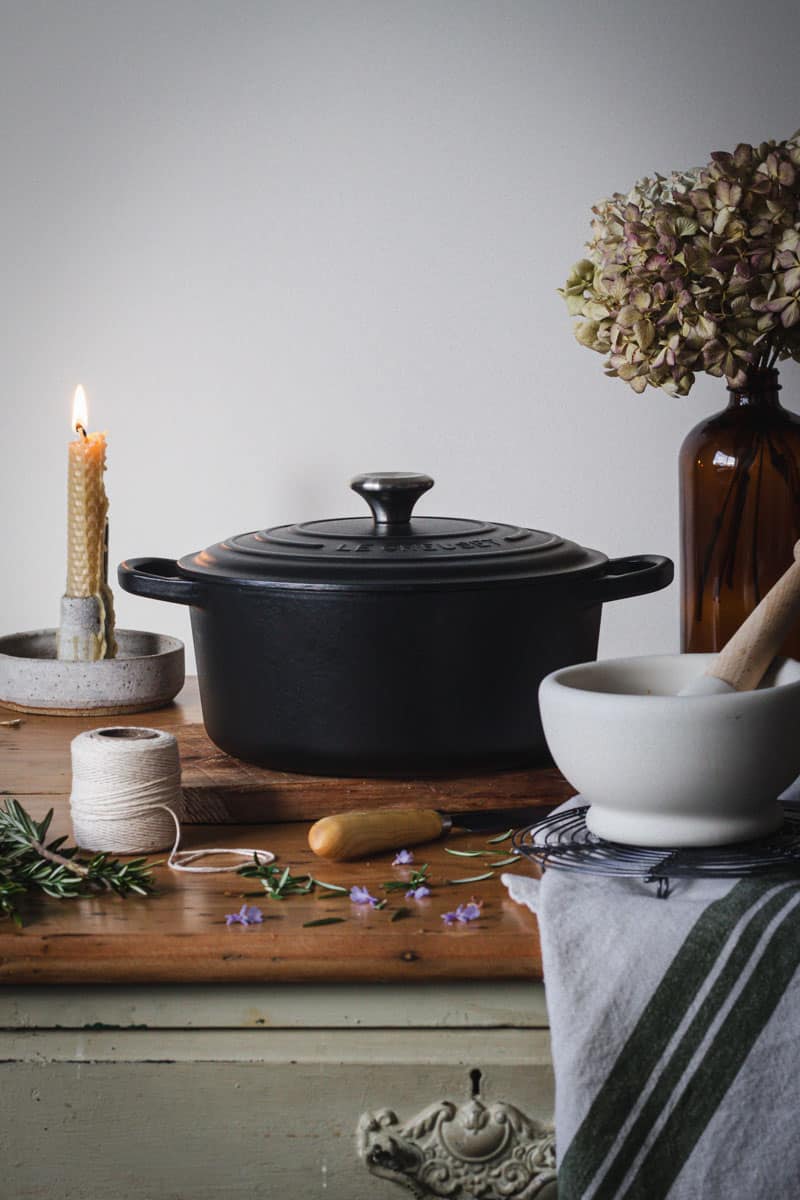
Let’s be honest. It looks good, doesn’t it – it’s part of the appeal. A Dutch oven sitting on the stovetop somehow just makes a country kitchen. It’s functional cookware that also happens to look so very beautiful. I get it!
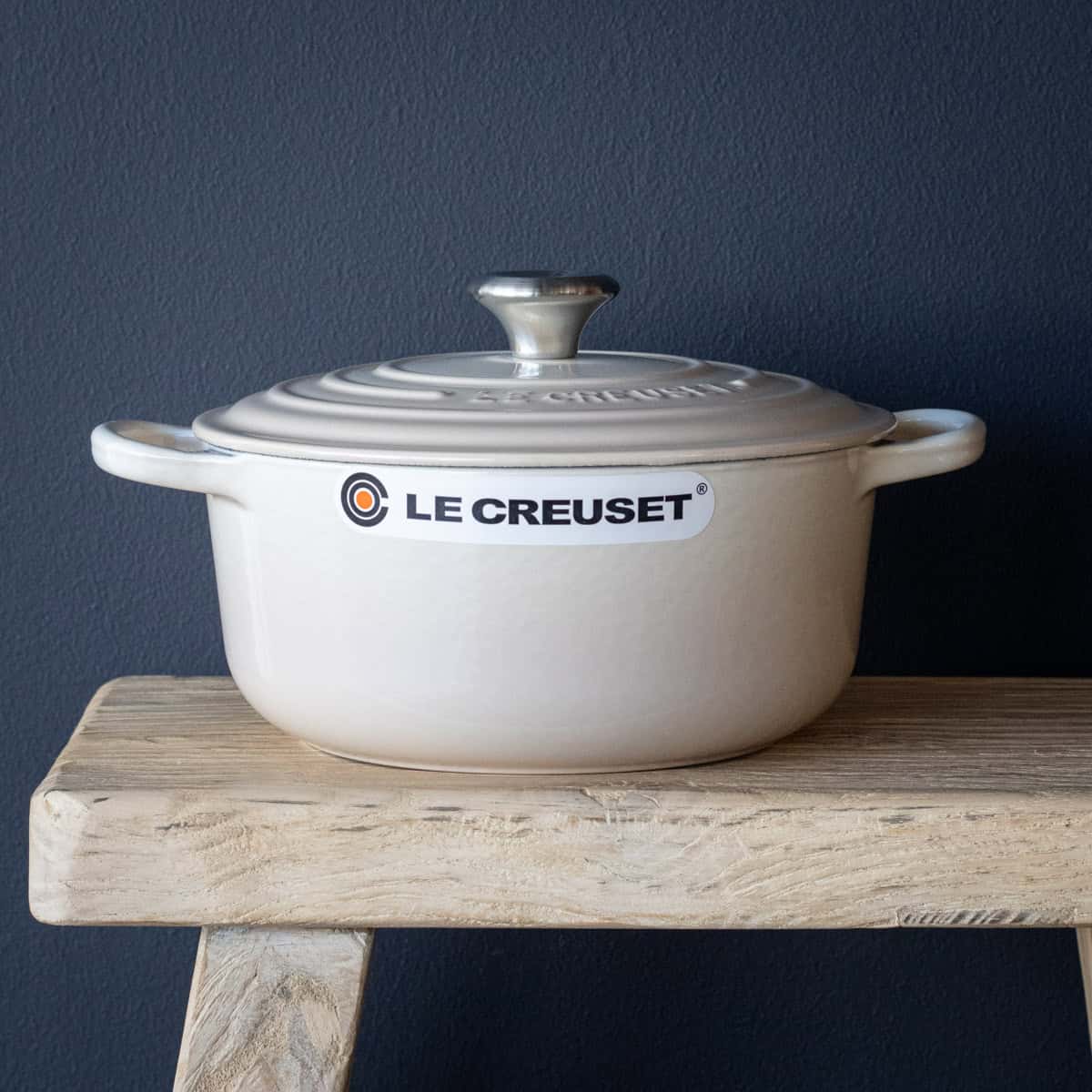
My Go-To Cast Iron Pot
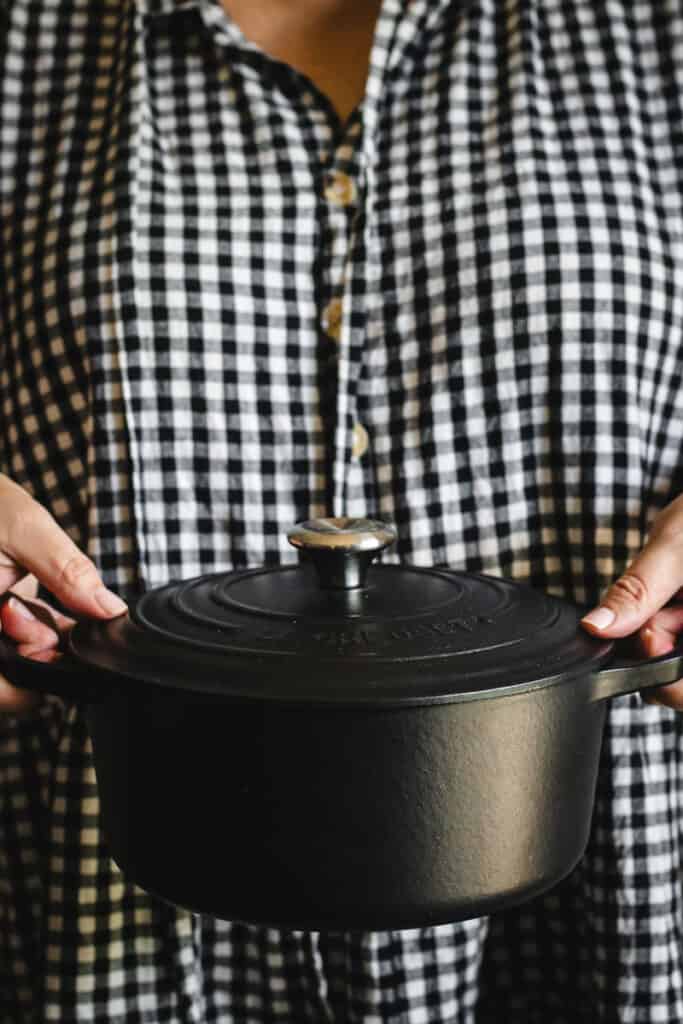
If there’s one piece of kitchen equipment I couldn’t live without, it’s my 24cm Le Creuset enamel Dutch oven. Steady heat, beautiful cooking and it goes from the stovetop straight to the table.
What Can You Cook in Enamel Cast Iron?
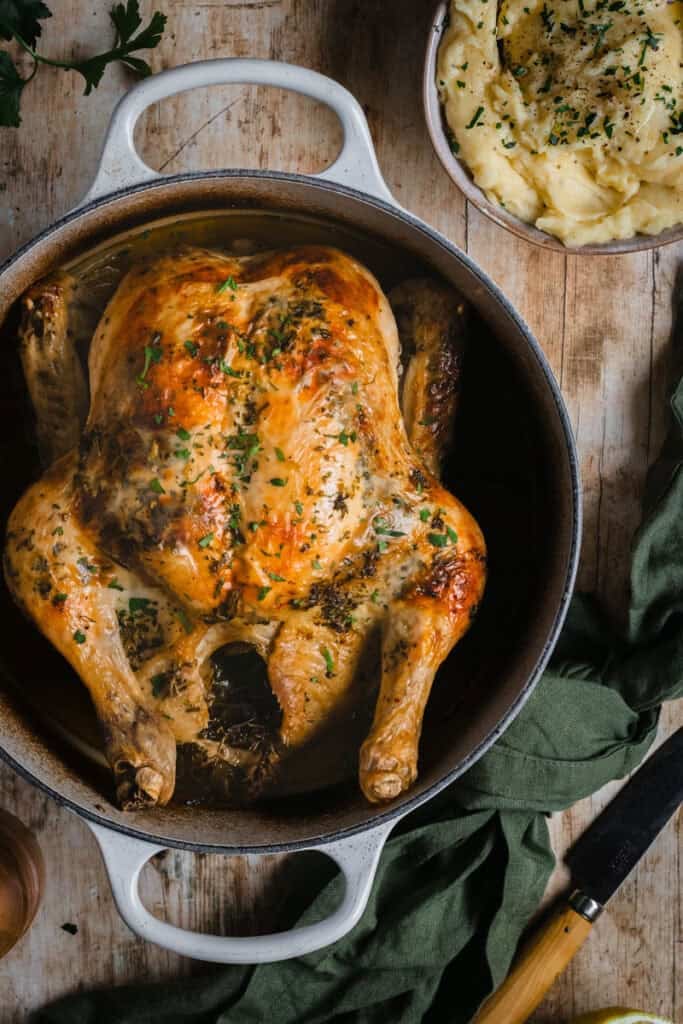
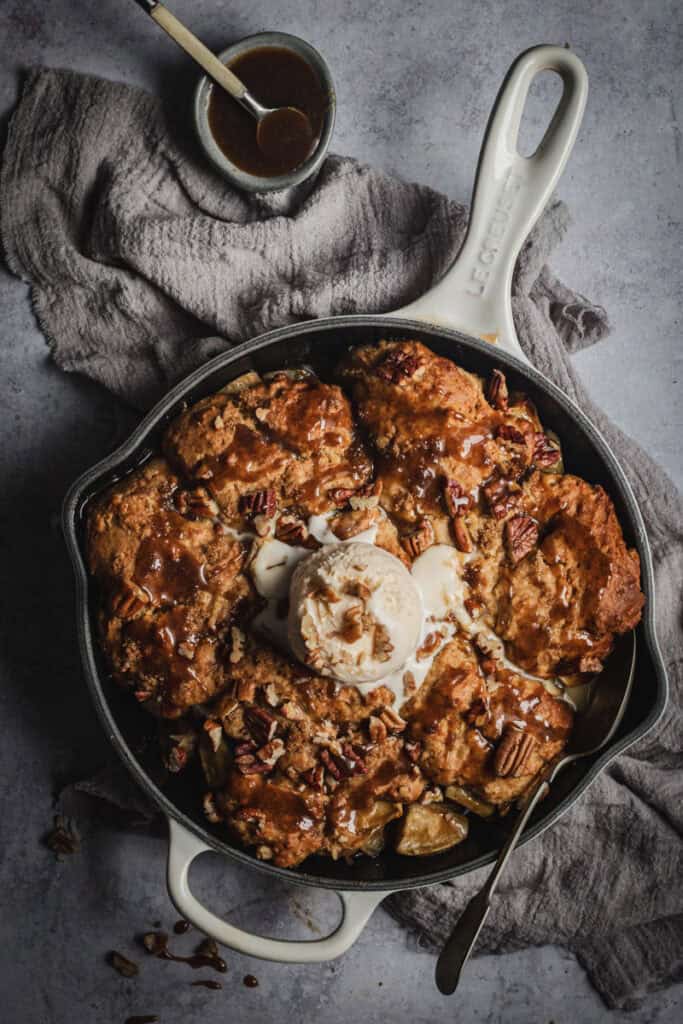
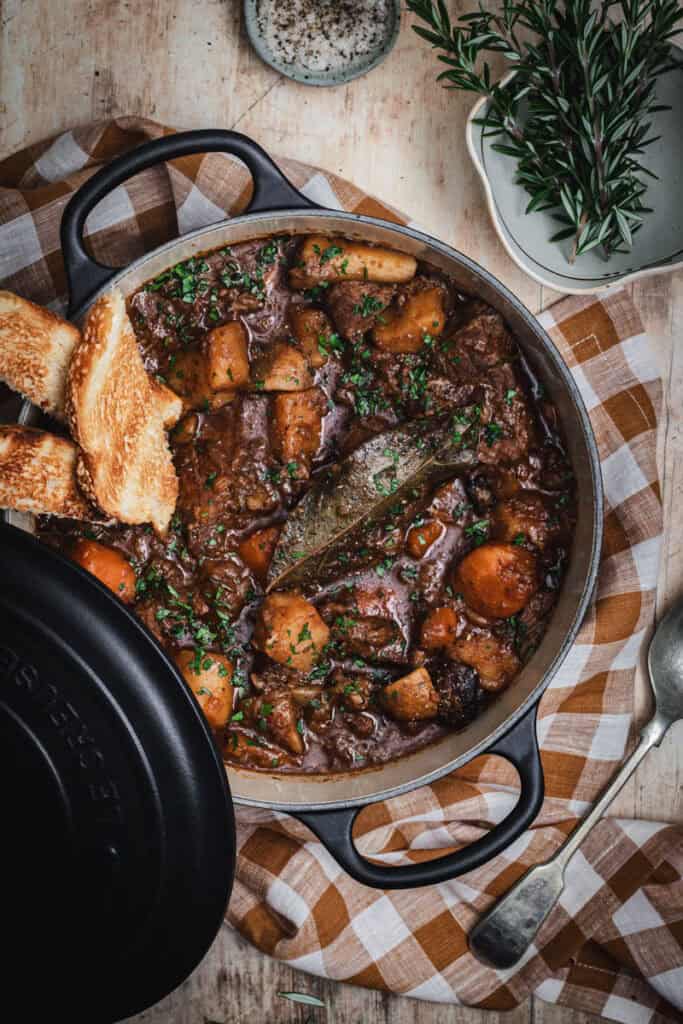
The better question might be: What can’t you cook? In my kitchen, enamel cast iron gets used for:
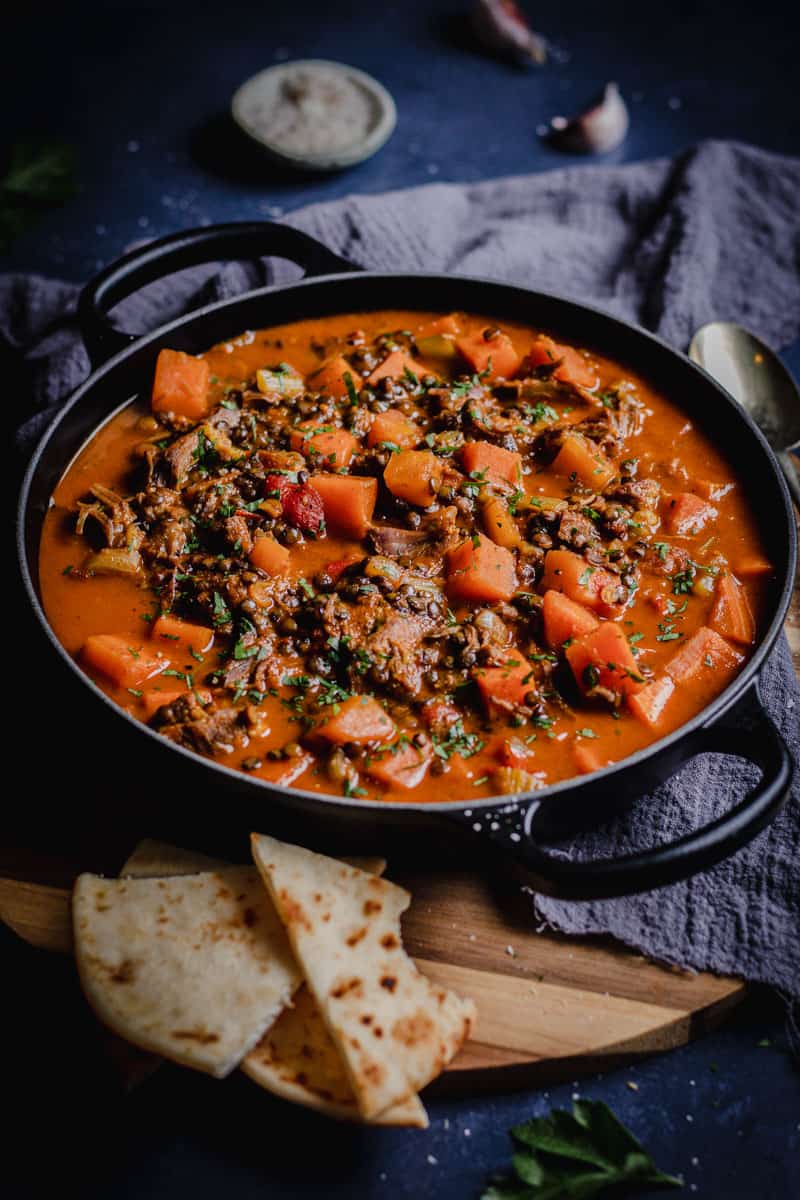
- Slow cooking and braising. Think Irish stew, pulled pork, beef stroganoff, or anything cooking low and slow in liquid for a few hours
- Roast dinners like my Dutch oven Roast chicken, slow-cooked lamb shoulder, or roast veggies.
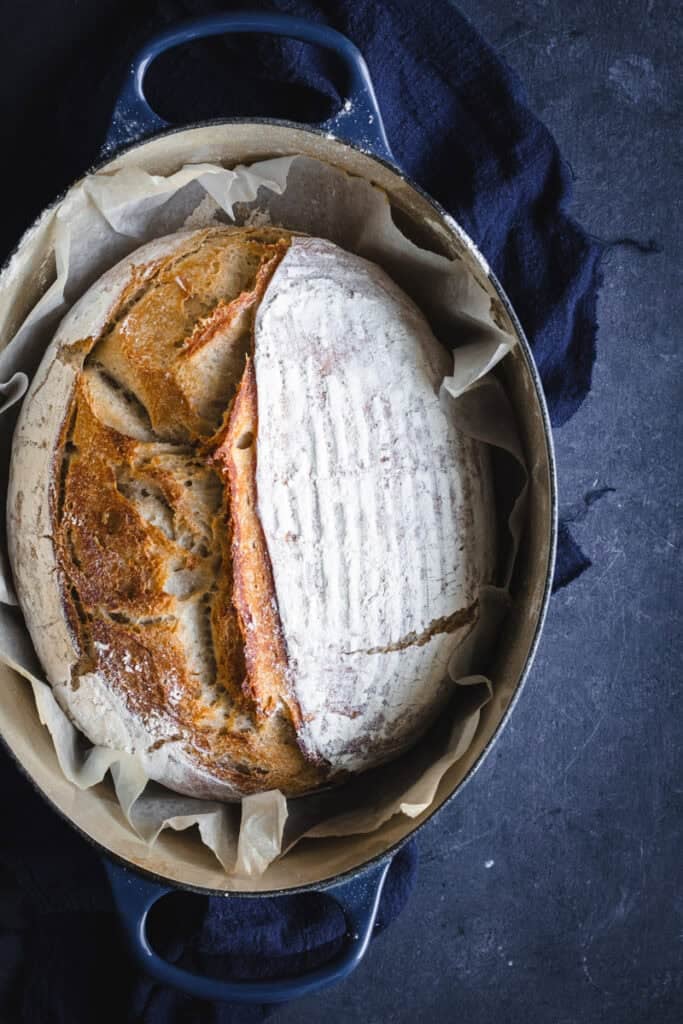
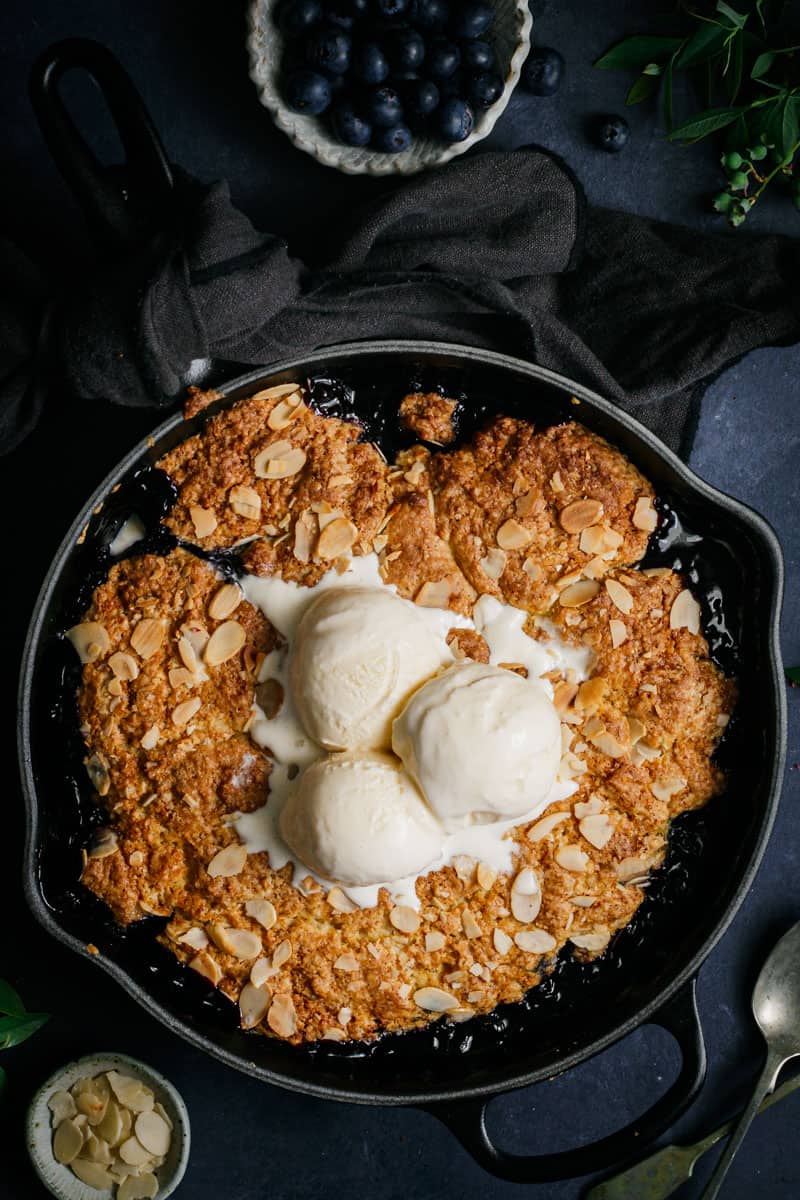
- Baking. Everything from a simple no-knead bread to pasta bakes and even cakes (yes, you read that right!)
- Frying. Yep, this one surprises many. You can use your Dutch oven as a deep fryer. Seafood basket, anyone?
All of the Dutch oven recipes you’ll find here on The Irishman’s Wife are cooked in enamel cast iron. It’s honestly the workhorse of my kitchen.
What Enamel Cast Iron Is Not
One of the reasons people sometimes become disappointed with enamel cast iron is that they expect it to do things it was never designed to do.
It Isn’t Non-Stick
This surprises many first-time owners. Enamel cast iron is not non-stick cookware. Food can stick if the pan isn’t preheated properly or if you don’t use enough oil. That’s completely normal. In fact, one of the most common questions I receive is why food sticks to enamel cast iron. Usually the answer comes down to the heating of the pan (yes, there is a right and wrong way to do it!) rather than the cookware itself.
It’s Kinda Heavy
There is no getting around this. Cast iron is heavy. A quality Dutch oven is built to last for decades, and that weight is part of the package.
It Can Chip
While enamel is incredibly durable, it isn’t indestructible. Dropping heavy utensils into the pot or knocking it against hard surfaces can cause chips over time. Although personally I’ve seen more damage done to a tile floor than the lid when I accidentally dropped it years ago. With normal use and proper care, however, most quality enamel cast iron cookware lasts for many years.
Common Myths About Enamel Cast Iron
Myth #1: Enamel Cast Iron Needs Seasoning
Nope, not at all. One of the biggest benefits of enamel cast iron is that it doesn’t require seasoning.
Myth #2: You Can Only Cook on Low Heat
Also false. Medium heat is ideal for most cooking, but enamel cast iron can absolutely handle oven temperatures and higher-heat cooking when used correctly. I repeat, when used correctly!
Myth #3: It’s Too Fragile for Everyday Use
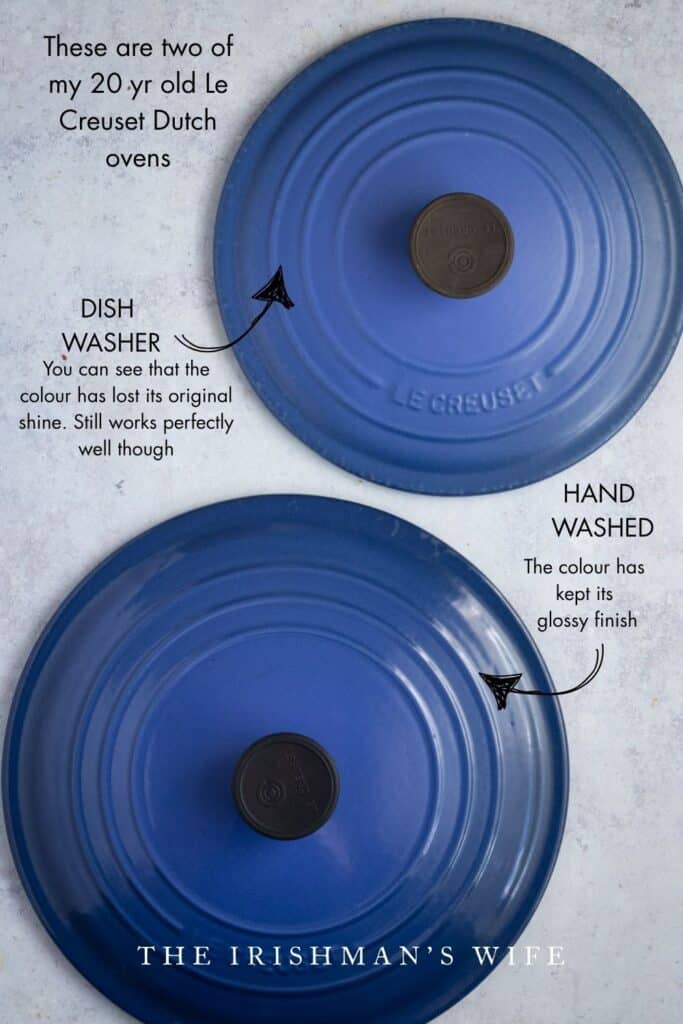
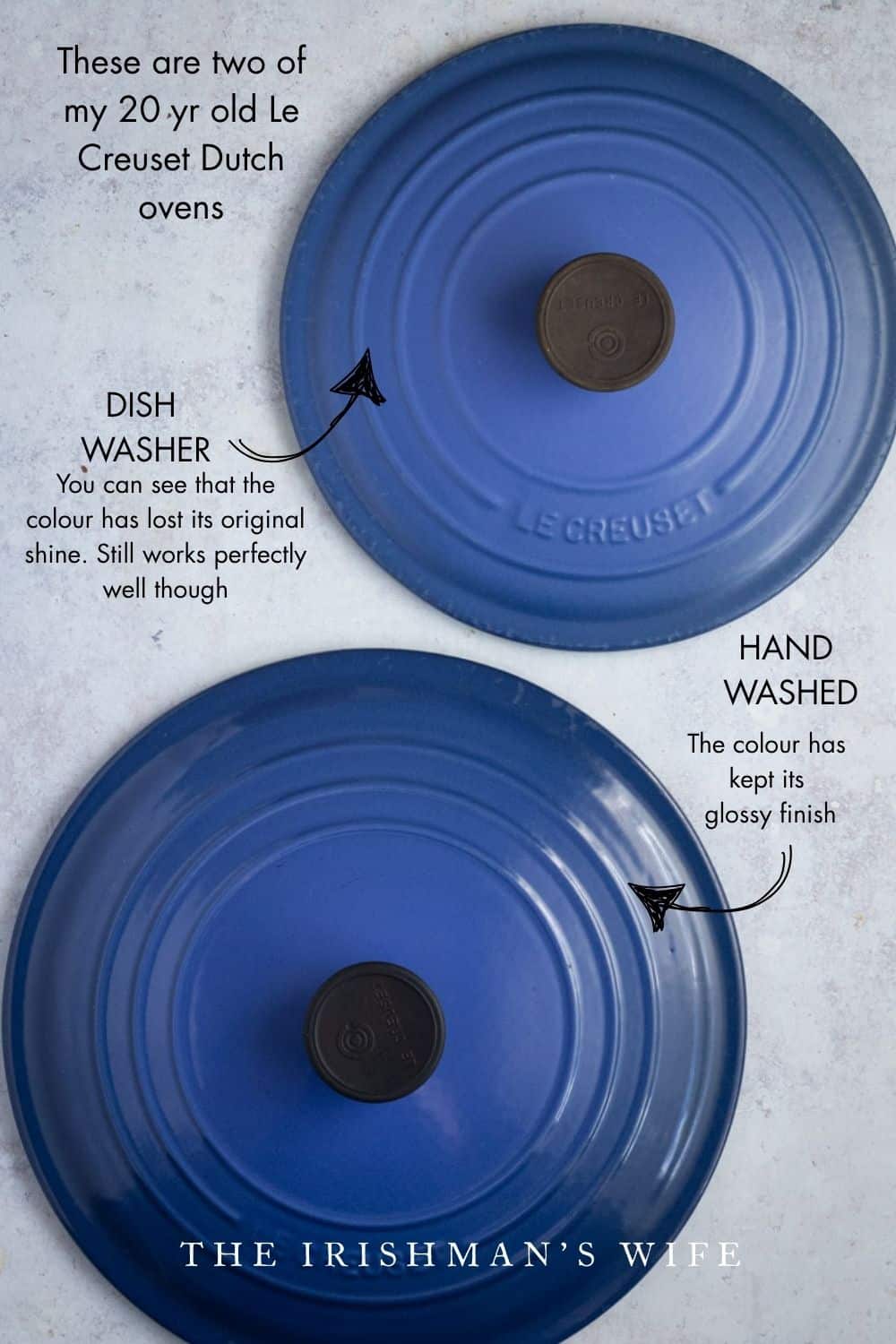
If that were true, my oldest Dutch oven wouldn’t have survived twenty years of regular cooking. Enamel cast iron is designed to be used every day.
Myth #4: It’s Only for Slow Cooking
Slow cooking is where it shines, but it’s also fantastic for baking bread, roasting vegetables, making soups, and countless weeknight dinners. Did you know you can use it as a deep fryer? Yep! Crazy huh?! Here are a few more ways to use an enameled cast iron Dutch oven.
Why I Prefer Enamel Cast Iron
I’ve cooked with all sorts of cookware over the years. I’ve also tested a ridiculous amount to find the best options for our Martha’s customers. Stainless steel. Non-stick. Traditional cast iron. Slow cookers. Pressure cookers. I’ve tried them all.
But if I could only keep one category of cookware in my kitchen, enamel cast iron would be right at the top of the list. It’s incredibly forgiving. It cooks beautifully. It’s super easy to move between the stovetop and oven. And it suits the kind of food I love to cook.
When people ask why so many recipes on this website use Dutch ovens, the answer is simple. Because they work.
Is Enamel Cast Iron Worth It?
For many home cooks, yes. Particularly if your cooking style is…
- Slow cooking
- Bread baking
- One-pot meals
- Soups and stews
- Roast dinners
A good piece of enamel cast iron can last for decades. My first Dutch oven lasted around twenty years before I finally replaced it, and that was after I spent the first few years using it completely incorrectly. When viewed over that kind of lifespan, the cost becomes much easier to justify – although, to be honest, I gave up years ago trying to justify my enameled Cast iron cookware obsession; now I just give in to it!
What Piece Should You Buy First?
This is probably the question I get asked most often. My answer is almost always the same.
Start with a 24cm round Dutch oven.
It’s the piece I use most. It’s the piece most people use the most. And it’s large enough for family meals while still being manageable for everyday cooking. If you’re still deciding between shapes, have a look at my guide to Round vs Oval Dutch Ovens as well as my Dutch Oven Size Guide before making your final decision.
The Questions I Get Asked Most Often at Martha’s
At the end of the day, enamel cast iron isn’t just another piece of cookware. It’s a way to cook, a way to live and a way to eat.
It’s the pot simmering away with soup on a cold winter afternoon while you potter about the house doing chores. The no knead loaf of bread for breakfast on a Sunday morning. The beef stew that somehow turns an ordinary weeknight into something special when it’s popped in the middle of the table surrounded by friends.
So, if you’re looking for versatile cookware that can pretty much cook nearly anything, enamel cast iron is super hard to beat. And once you start cooking with it, I promise, you’ll quickly understand why so many of us become slightly obsessed.
x