Round vs Oval Dutch Oven: Which One Should You Buy?
So, you’re shopping for a cast-iron Dutch oven. You’ve probably come across more options than you want to think about (hello colors!), and then comes the question: round vs oval Dutch oven? Does the shape even matter? It’s a question I hear all the time.
I spend a good portion of my week talking cast iron at Martha’s and cooking in Dutch ovens at home. I’ve watched countless people agonize over this decision. Most assume the oval Dutch oven must be better because it’s larger. Others think the round Dutch oven looks more traditional. Some are simply trying to justify buying both – I get that! As a good Dutch oven is worth its weight in gold, you want to get it right the first time!
If you’re new here, you might not know I also run a small online store where I keep many of the tools I cook with every day, along with a few timeless homewares for good, slow living…
After years of cooking in enamel cast iron, I can tell you there absolutely are differences between a round and oval Dutch oven, and why you would buy either one. But maybe they’re not the differences you think.
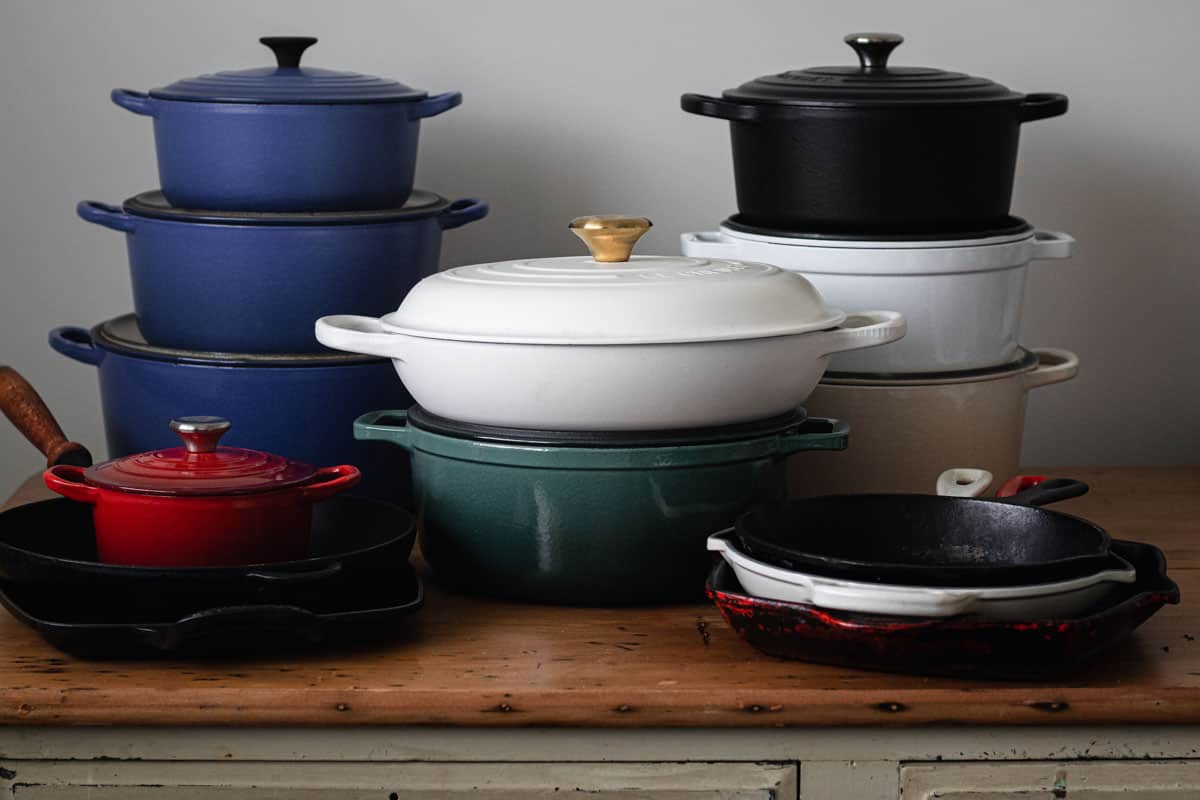
At the time of writing, my collection includes a 14cm, 20cm, 22cm, 24cm, 26cm, and 28cm round Dutch oven, a 29cm oval Dutch oven, and a 30cm shallow casserole. Between them, they’ve cooked everything from Irish stew and beef cheeks to sourdough bread, roast chickens, lamb shoulder, and more pots of curry than I can count.
If you’re trying to decide which Dutch oven shape belongs in your kitchen, here’s what I’ve learned.
Quick answer
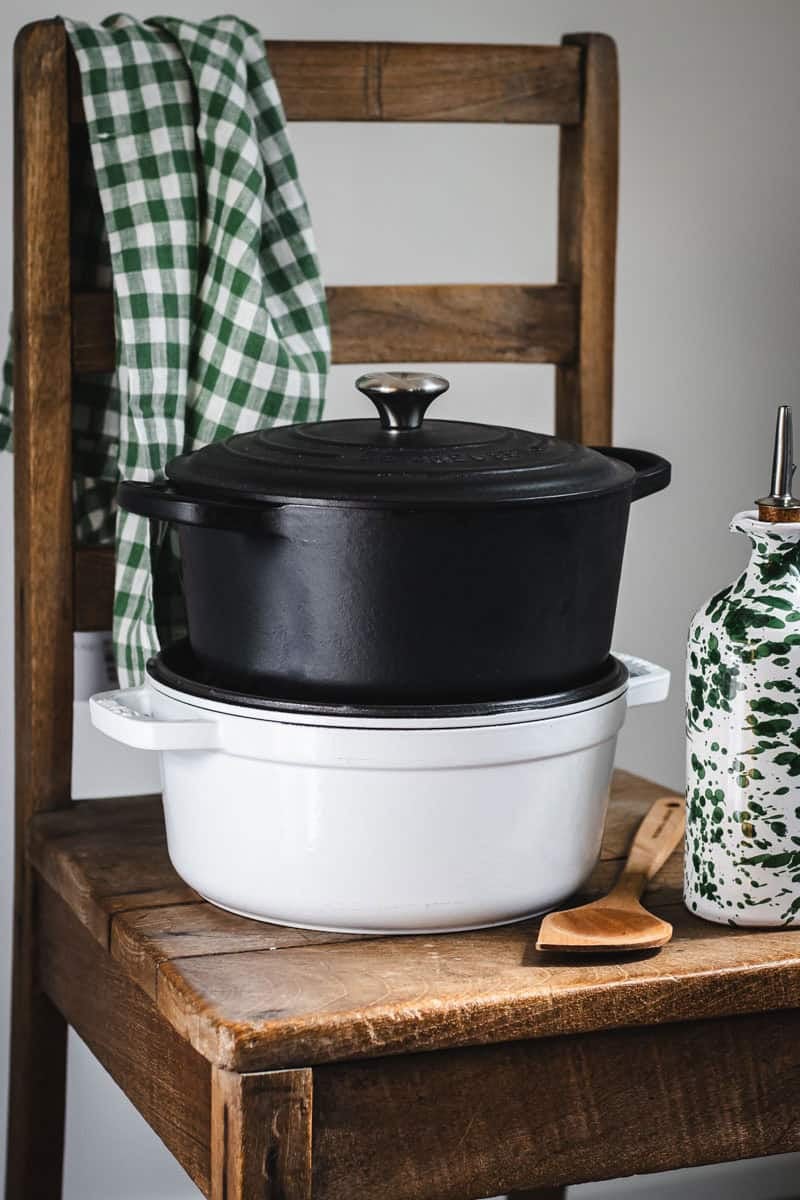
If you’re only buying one cast-iron pot, or this is your first piece, I’m putting it out there: Buy a round Dutch oven.
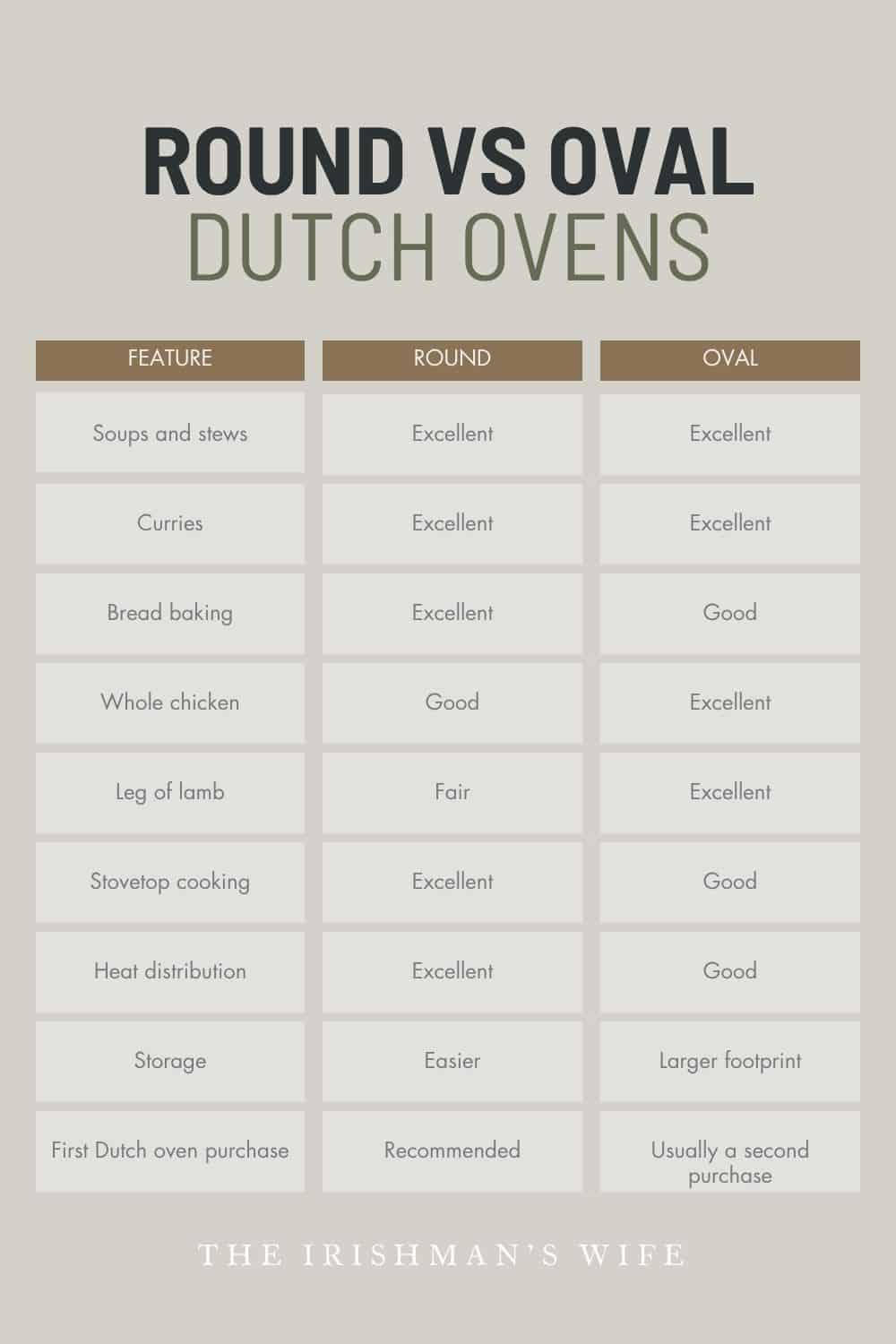
Round Dutch ovens work better on most stovetops, heat more evenly, fit the majority of everyday recipes, and are generally more versatile for soups, stews, curries, bread, and one-pot meals. I always say that there is very little you can’t do in a round Dutch oven.
I generally recommend choosing an oval Dutch oven if you regularly cook whole chickens, large roasts like a leg of lamb, or other long cuts of meat. For most home cooks, a round Dutch oven is far more their cooking style.
If you’re new to cooking with cast iron, you might also enjoy my How to Use a Dutch Oven (A Beginner’s Guide to Enamel Cast Iron Cooking) where I cover everything from preheating and heat control to cleaning and everyday cooking tips.
What’s the Difference Between a Round and Oval Dutch Oven?
Both pots perform the same job. They’re both heavy cast-iron cooking vessels coated with enamel that excel at slow cooking, braising, roasting, baking, and simmering.
The main difference is simply the shape.
- A round Dutch oven has a circular cooking surface that mirrors the shape of most stovetop burners.
- An oval Dutch oven has a longer cooking surface designed to better accommodate larger cuts of meat and poultry.
That may sound like a small detail, but it affects everything from heat distribution to the types of meals you’ll cook most comfortably.
Why I Prefer a Round Dutch Oven for Everyday Cooking
If someone walked into Martha’s tomorrow and asked me which Dutch oven to buy first, I’d recommend a round Dutch oven without hesitation.
Not because oval Dutch ovens aren’t useful. They totally are. But because round Dutch ovens tend to fit the way most of us actually cook. Here’s why…
Better Burner Coverage
One of the biggest advantages of a round Dutch oven is that it matches the shape of your stovetop. Whether you’re cooking on gas, induction, or electric, most burners are round. So the entire base of the Dutch oven sits directly over the heat source.
With oval cast-iron Dutch ovens, the centre of the pot receives the majority of the heat while the ends extend beyond the burner. The enamel cast iron still distributes heat beautifully, but from a pure efficiency standpoint, round pots have the advantage.
Better for Soups, Stews, and Curries
Think about the meals most people cook in a Dutch oven.
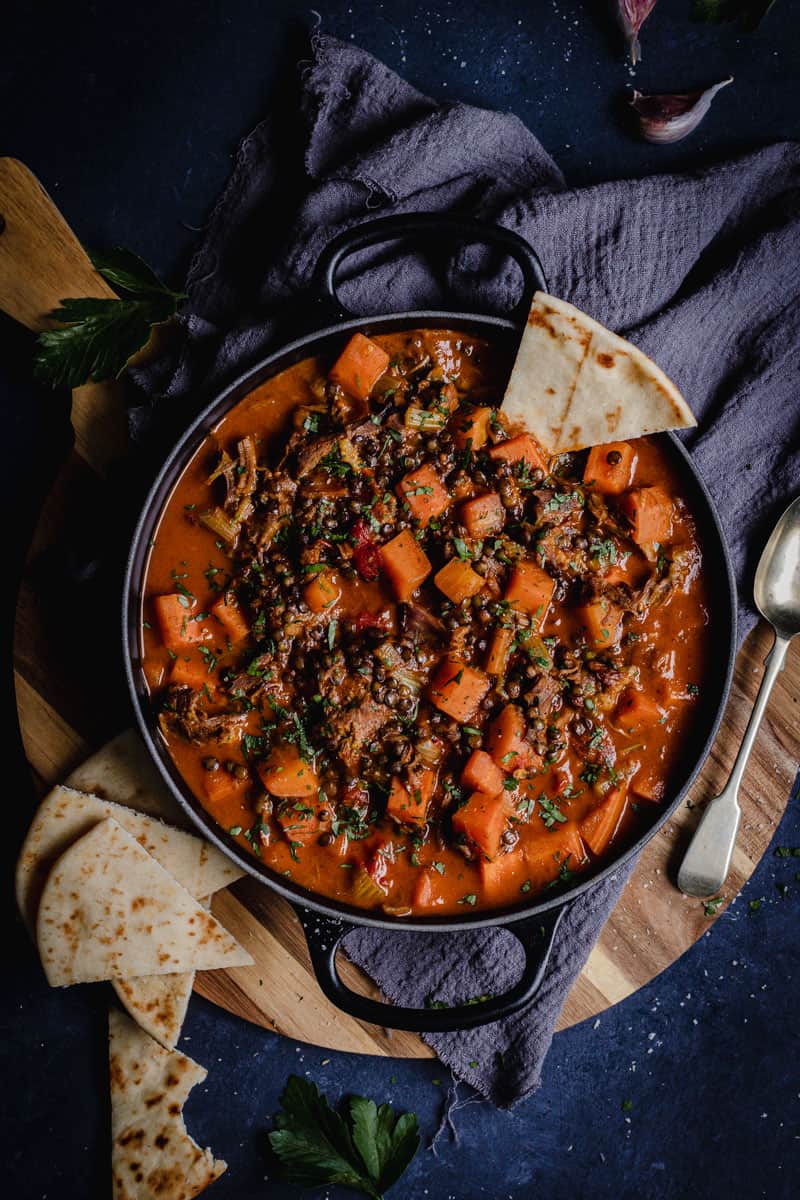
Irish stew. Chicken cacciatore. Beef curry, Pot roast. Pumpkin soup. These dishes don’t require a long cooking surface. My 24cm round Dutch oven spends most of winter bubbling away with stews and curries. It feels like the perfect shape for these kinds of meals.
Better for Bread Baking
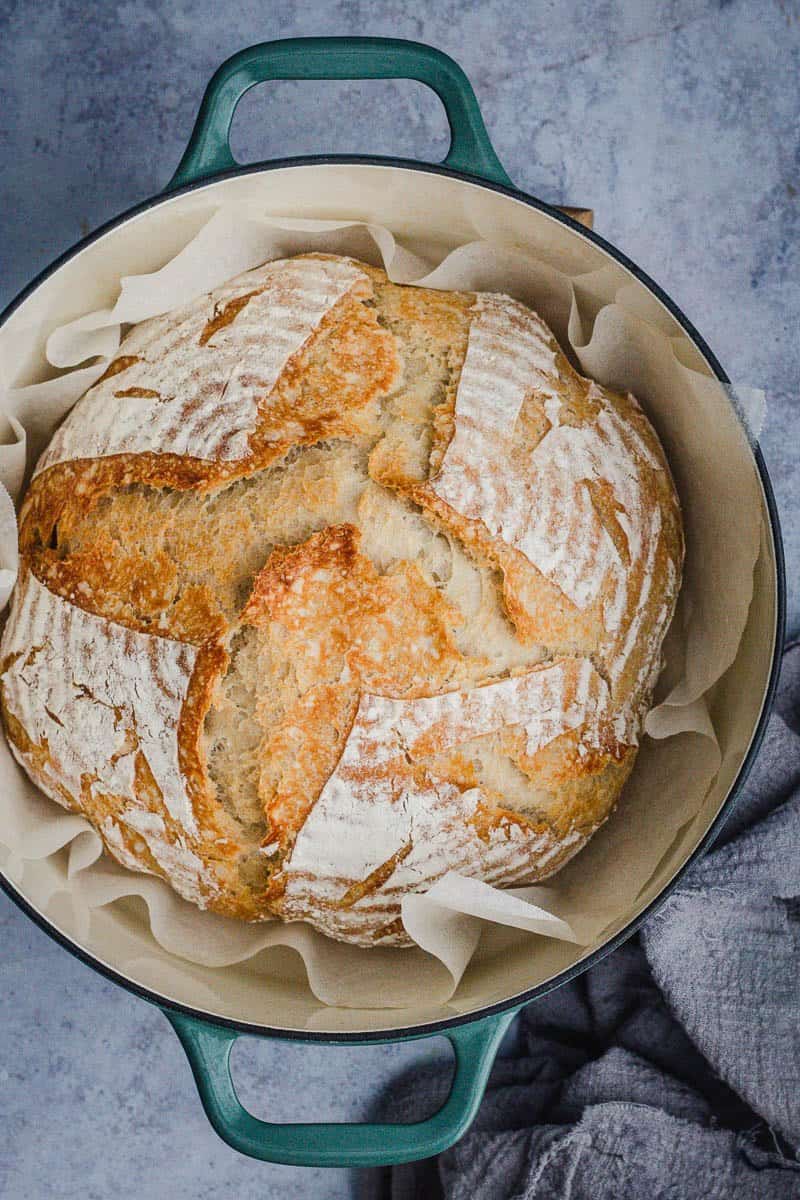
If you’ve spent any time around sourdough bakers, you’ll know that round Dutch ovens are incredibly popular. That’s because many bread recipes are shaped into round boules before baking, like my no-knead Dutch oven bread. The shape naturally supports the dough and encourages a beautiful rise.
But can you bake bread in an oval Dutch oven? Absolutely. But if you’re primarily baking round loaves, a round Dutch oven is usually the better fit.
Easier to Store
Kitchen storage matters. Round Dutch ovens tend to fit more comfortably inside cupboards, on shelves, and in drawers.
An oval Dutch oven isn’t difficult to store, but it does require more space.
When an Oval Dutch Oven Makes More Sense
Now let’s talk about where the oval Dutch oven really shines. Because there are certain jobs where it just is a better option.
Whole Roast Chickens
This is where my 29cm oval Dutch oven earns its keep.
The longer cooking surface comfortably accommodates a whole chicken without crowding. You have enough room for vegetables around the bird, and the shape simply feels more natural for roasting. Could I roast a chicken in my round Dutch oven? Of course. I do it all the time. But if roast chicken is a weekly occurrence in your kitchen, the oval shape has a clear advantage.
Leg of Lamb
This is perhaps the biggest reason I’d choose an oval Dutch oven.
A whole roast leg of lamb can be awkward in many round pots. The oval shape gives the meat room to sit naturally without having to wedge it into place. Growing up in regional NSW on a farm, where lamb was always on the table, this is one of those practical differences that genuinely matters.
Large Roasts and Pork Shoulder
The same logic applies to pork shoulder, brisket, and larger roasting cuts. The longer, oval shape just accommodates longer pieces of meat more comfortably. If you’ve ever tried to get lamb shanks in a round pot, you’ll know where I’m going with this.
Oval Sourdough Loaves
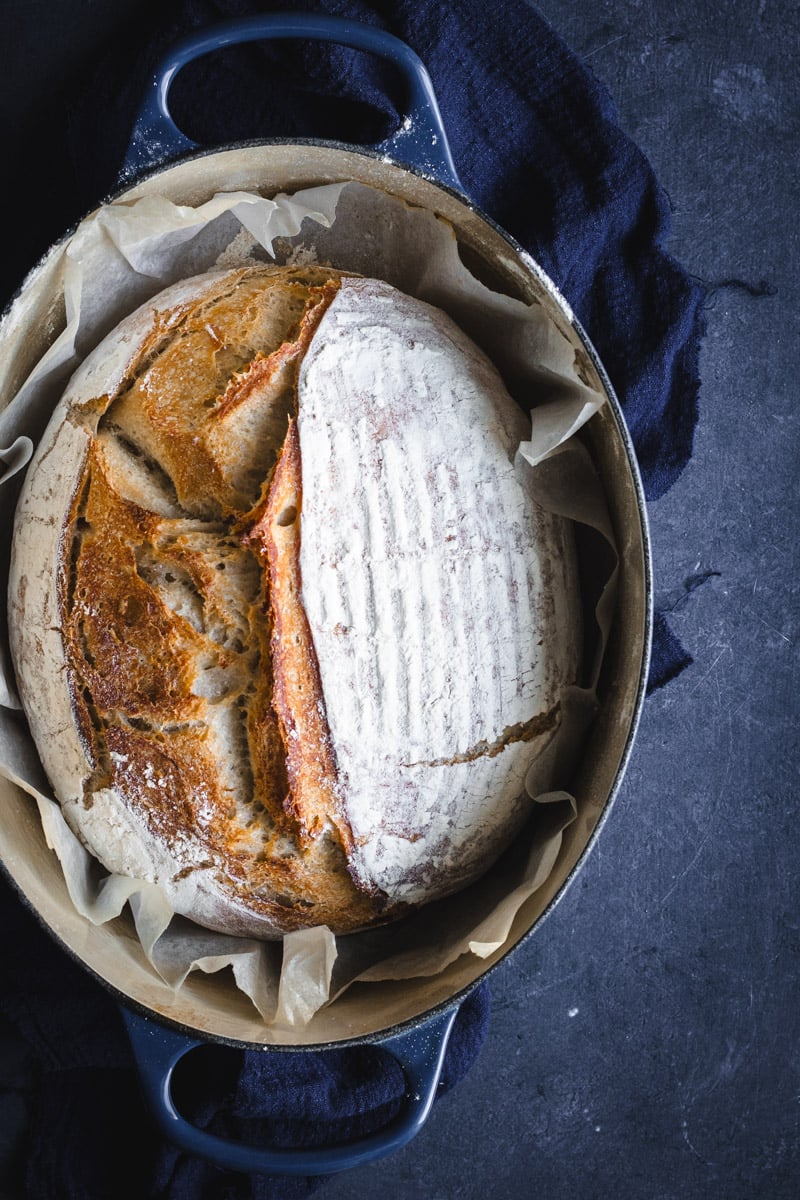
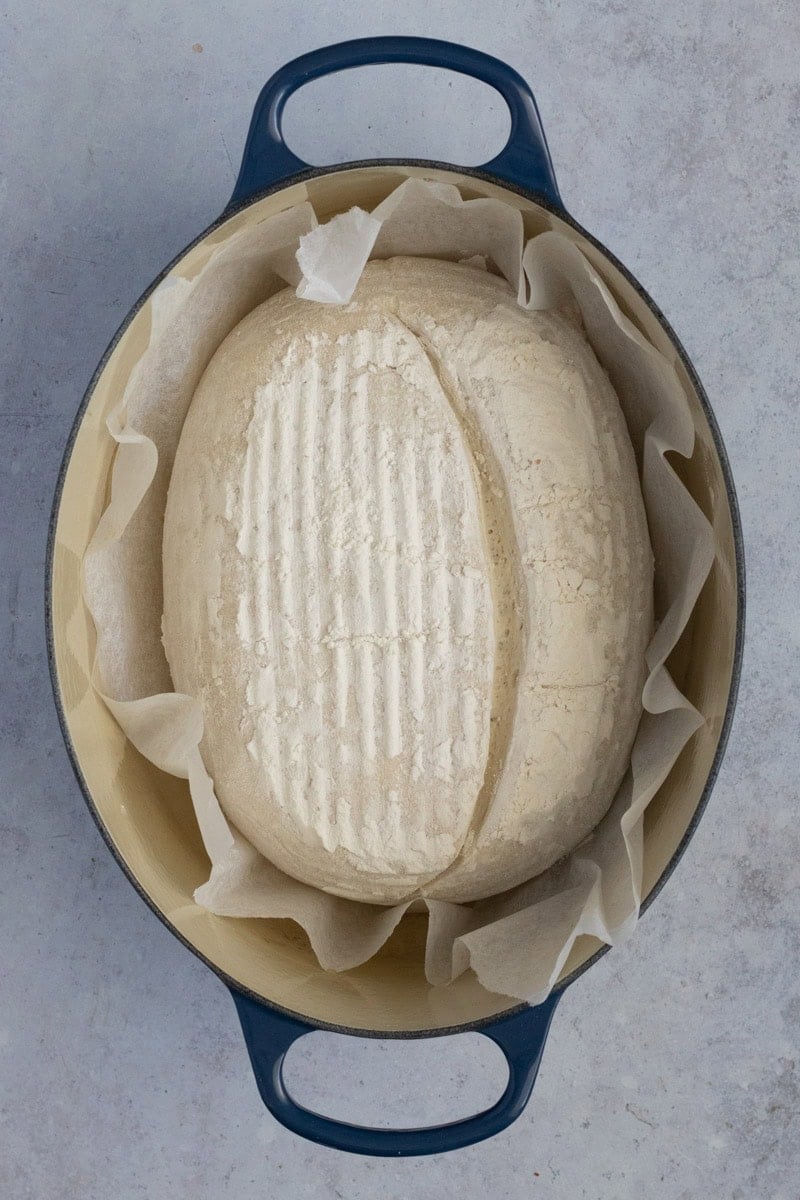
If you regularly bake batards rather than boules, an oval Dutch oven becomes much more appealing. The shape matches the dough and allows it to expand naturally during baking.
The Biggest Mistake People Make When Choosing a Dutch Oven
If there’s one thing I’ve learned after years of selling and cooking with enamel cast iron, it’s this: Most people spend too much time worrying about shape and not enough time thinking about size. I totally get why. It feels like a big decision. But realistically, capacity will often have a greater impact on how useful your Dutch oven is than whether it’s round or oval.
For example, a 24cm round Dutch oven might be the perfect everyday size for a couple or small family. It can handle soups, stews, curries, bread, pasta sauces, roast chicken, and countless one-pot dinners.
A much larger oval Dutch oven may technically fit a leg of lamb more comfortably, but if it’s too large for your everyday cooking, it could spend more time in the cupboard than on the stove.
Before choosing a shape, ask yourself:
- How many people am I usually cooking for?
- What meals do I cook most often?
- Will this be my only Dutch oven?
- Am I mostly making soups and stews or roasting large cuts of meat?
The answers to those questions will often point you toward the right pot much faster than shape alone. In fact, I often think choosing the right Dutch oven size is more important than choosing between a round or oval shape. If you’re still trying to work out what capacity will suit your household, have a look at my guide on Best Dutch Oven Size to Buy before making your final decision.
Cook’s notes
Before choosing between round and oval, compare the actual capacity and price of each pot. In many cookware ranges, you’ll often get more litres for your money with a round Dutch oven, making it a better first purchase for most home cooks.
What I Own and What I Actually Use
While comparison charts are helpful, nothing beats hearing what someone actually reaches for in their own kitchen.
My current Le Creuset Dutch oven collection includes:
- 20cm Round Dutch Oven
- 22cm Round Dutch Oven
- 24cm Round Dutch Oven
- 28cm Round Dutch Oven
- 29cm Oval Dutch Oven
- 30cm Shallow Casserole
I also have a Staub 24cm and a Chasseur 26cm Dutch oven. And while I love them all, some definitely get used more than others.
The Dutch Oven I Use Most
Without a doubt, it’s my 24cm round Dutch oven. If I could only keep one piece of enamel cast iron, this would probably be it. It’s large enough for a family meal but not so large that it feels cumbersome. It’s the pot I use for:
- Irish stew
- Beef curry
- Chicken cacciatore
- Beef stroganoff
- Soups
- No-knead bread
- Pasta sauces
- One-pot dinners
It’s simply the most versatile piece in my collection. When people ask me which Dutch oven to buy first, this is usually the size and shape I point them towards.
The Dutch Oven I Reach for When Roasting
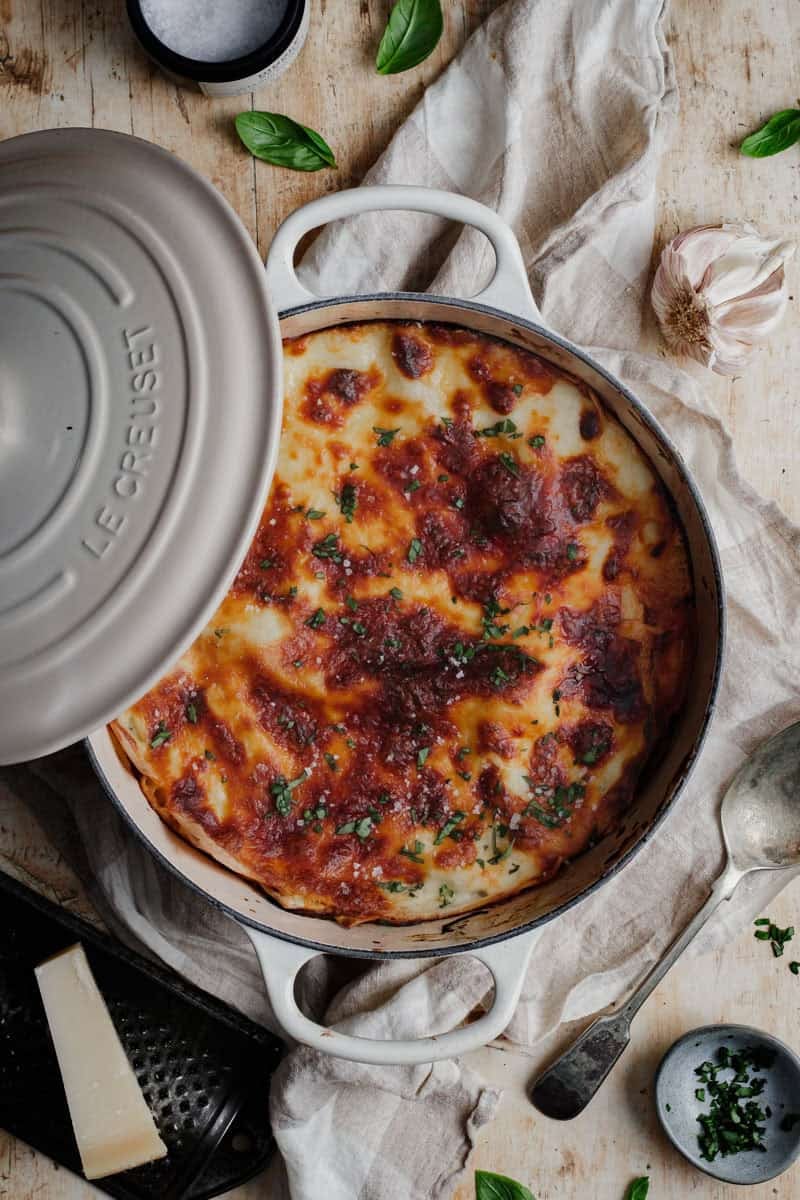
That’s where my 29cm oval Dutch oven comes into its own. Whole chickens fit beautifully. Legs of lamb sit naturally. Pork shoulder has plenty of room. When I’m planning a Sunday roast, the oval Dutch oven is often my first choice.
The One I’d Buy Again First (and have!)
My answer is still the 24cm round Dutch oven. Not because the oval isn’t useful. But because I use the round Dutch oven nearly every day, and the oval more like once a week. I actually wore my first one out (It was 20 years old and I used it wrong for the first 5 years!) and have recently replaced it. Most home cooks prepare more soups, stews, curries, and one-pot meals than whole chickens and large roasts.
That’s the reality of everyday cooking.
My Go-To Cast Iron Pot
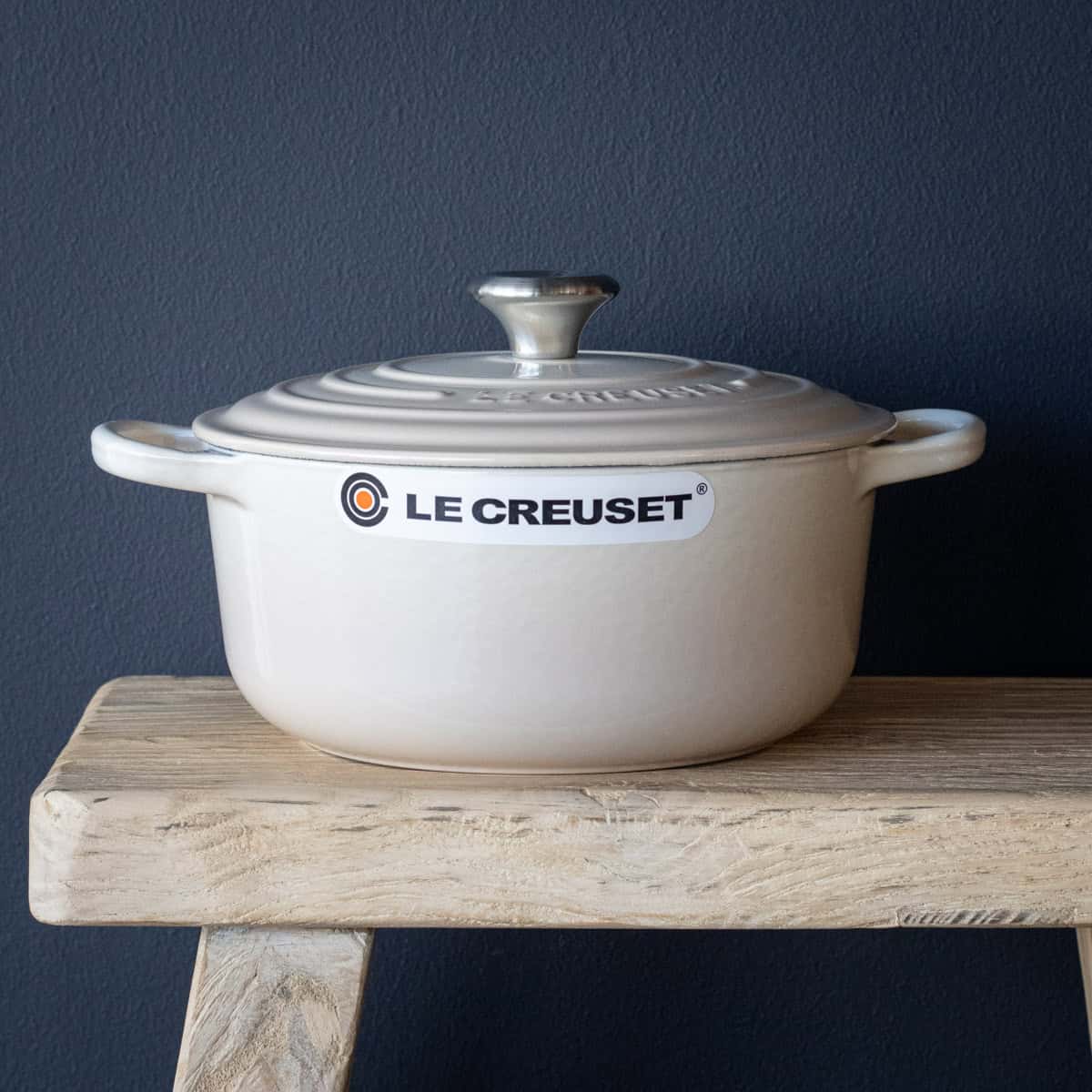
If there’s one piece of kitchen equipment I couldn’t live without, it’s my 24cm Le Creuset enamel Dutch oven. Steady heat, beautiful cooking and it goes from the stovetop straight to the table.
Round vs Oval Dutch Oven for Bread Baking
Bread baking is one area where shape can make a noticeable difference. A round Dutch oven is ideal for:
- Artisan boules
- No-knead bread
- Country loaves
- Beginner sourdough recipes
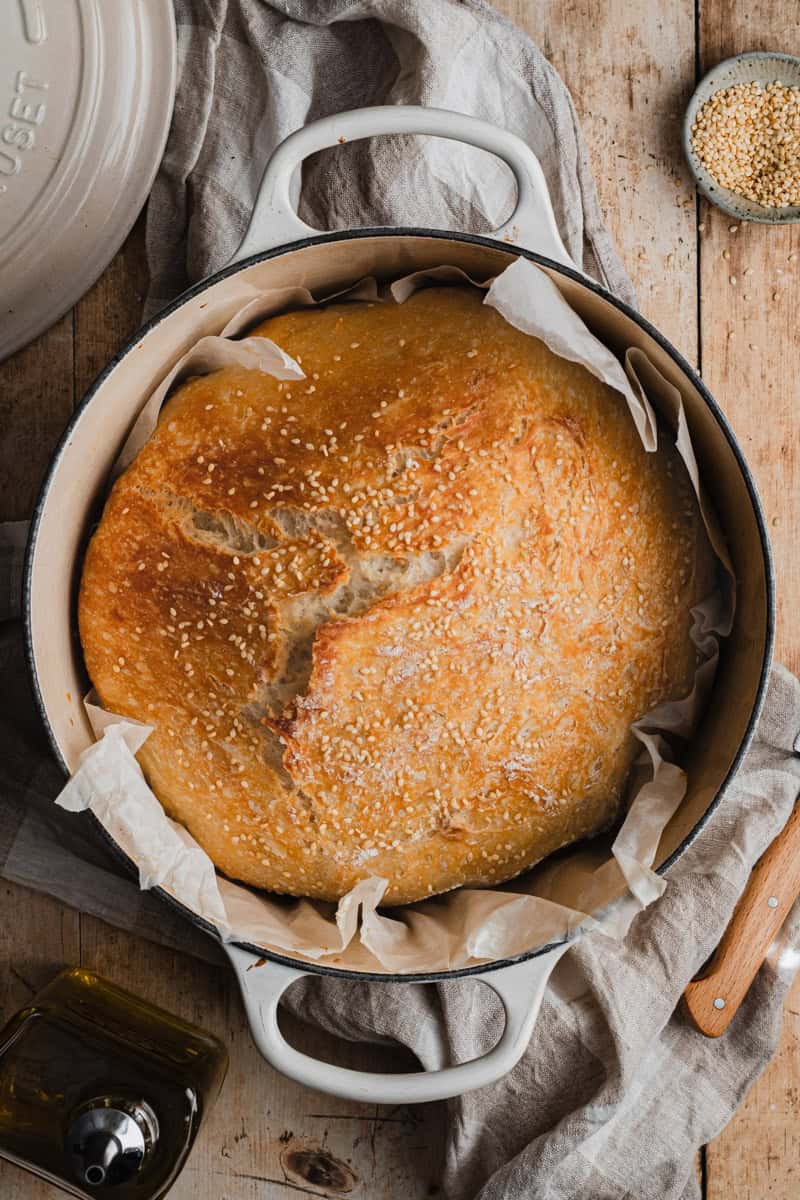
The curved walls help support the dough as it rises, encouraging a lovely, rounded shape. Most of the bread recipes you’ll find on my website are baked in a round Dutch oven because that’s what I use most often.
Whereas an oval Dutch oven works beautifully for:
- Batards
- Oval sourdough loaves
- Sandwich-style artisan breads
If you prefer shaping your dough into longer loaves, an oval Dutch oven may actually be the right shape for you. For most beginner bread bakers, though, I’d still lean towards a round Dutch oven because the majority of beginner recipes are designed around round loaves.
Round vs Oval Dutch Oven for Roast Chicken
If roast chicken is one of your favourite meals, you might be wondering if shape really matters.
The answer is yes, but perhaps not as much as you’d think. A round Dutch oven can absolutely roast a whole chicken. I make my cast-iron roast chicken in my 24cm Dutch oven. For smaller birds, it works beautifully. The chicken sits snugly in the pot, and the high sides help retain moisture throughout cooking.
However, the oval Dutch oven simply gives you more breathing room. The longer shape means there is no squishing a big bird into the pot. You can surround it with potatoes, carrots, and onions.
And nothing feels crowded. If roast chicken is a regular feature on your dinner table, the oval shape has a slight edge over the round.
Round vs Oval Dutch Oven for Soup and Stew
This is where the round Dutch oven shines. Most soups, stews, and braises rely on depth rather than length. You’re not trying to fit a large roast. You’re simmering ingredients together for hours. The round shape is perfect for circulation and is so suited to these types of meals.
That said, an oval Dutch oven can make soup and stew just as successfully. This isn’t a category where the oval shape is at a disadvantage; it’s just different. It’s basically just that the round shape feels slightly more natural.
Round vs Oval Dutch Oven: What Most People Actually Need
Here’s the thing.
I think most home cooks overestimate how often they’ll roast a whole chicken or cook a leg of lamb. And they underestimate how often they’ll make:
- Soup
- Stew
- Curry
- Pasta sauce
- Bread
- Pulled pork
- Chilli
- One-pot dinners
Those are the meals that happen day after day, week after week, in most kitchens. And those meals are exactly where a round Dutch oven excels. When you’re standing in a cookware store trying to decide between the two shapes, it’s easy to imagine yourself preparing cozy Sunday roasts every weekend. But the real question is:
What are you cooking on an ordinary Wednesday night? And, for most people, that’s where the round Dutch oven wins.
So, Should Your First Dutch Oven Be Round or Oval?
If you’re buying your very first Dutch oven, my recommendation is simple. Buy a round Dutch oven. It will handle almost everything you throw at it. It works beautifully on the stovetop. It bakes fantastic bread. It makes wonderful soups and stews. It suits the vast majority of everyday recipes. Could you start with an oval Dutch oven? Absolutely. And if you regularly cook whole chickens, large roasts, or legs of lamb, it may even be the better choice for you.
But if I were helping a customer choose their first Dutch oven tomorrow morning in the store, I’d recommend a round Dutch oven 95 times out of 100. It’s simply the most versatile place to begin.
FAQ’s
So here’s the bottom line…
After years of cooking in both shapes, I don’t think the question is whether round or oval Dutch ovens are better. The real question is which one fits the way you cook. For me, that’s still a round Dutch oven.
It’s the piece I reach for most often. It’s the pot simmering away with Irish stew in winter, baking bread on weekends, and turning out countless family dinners (I’m writing this with a beef stroganoff in the oven) throughout the year. The oval Dutch oven absolutely has its place, especially when roasting meats play a big part in your weekly menu. But if you’re buying your first enamel cast-iron Dutch oven and wondering where to start, I’d still put my money on a round Dutch oven every single time.
Start slow. Cook confidently.
Cast Iron Cooking 101
Cooking with cast iron doesn’t need to feel intimidating.
In this guide, I’ll share the techniques, habits, and everyday recipes that helped me fall in love with slow cooking — from caring for your cookware to creating comforting meals at home.
New to Dutch oven cooking? Read these next:
- How To Care For Enamel Cast Iron Cookware
- How to Use a Cast Iron Dutch Oven
- Dutch Oven Bread
- Dutch Oven Beef Pot Roast
- 15 Easy Dutch Oven Recipes
x