Is Enamel Cast Iron Safe? So… What’s the real story?
So you’re shopping for an enameled cast-iron Dutch oven or researching cookware. And you’ve probably come across questions like, Is enamel cast iron safe?
Does it contain chemicals? Is it non-toxic? Can you cook acidic foods in it? And what happens if the enamel chips? These are all valid questions and ones that I get asked every day in my store, Martha’s. So let’s get started, shall we?
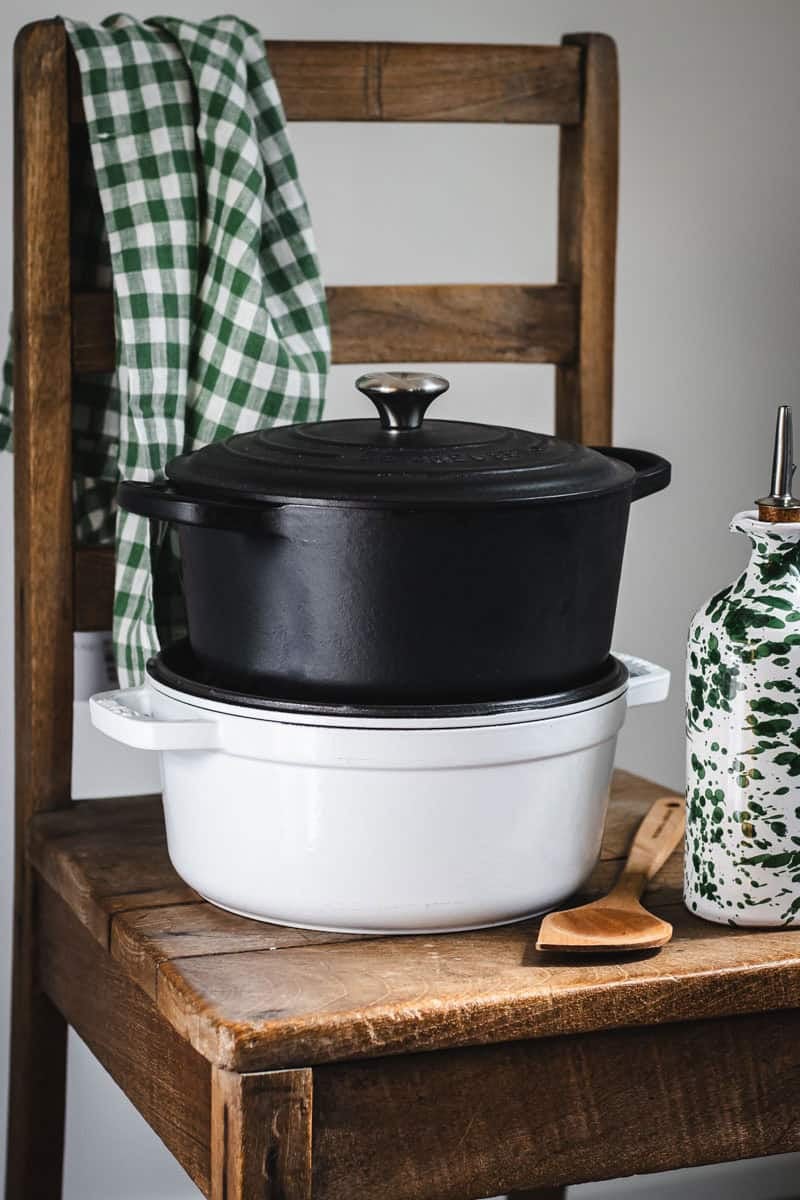
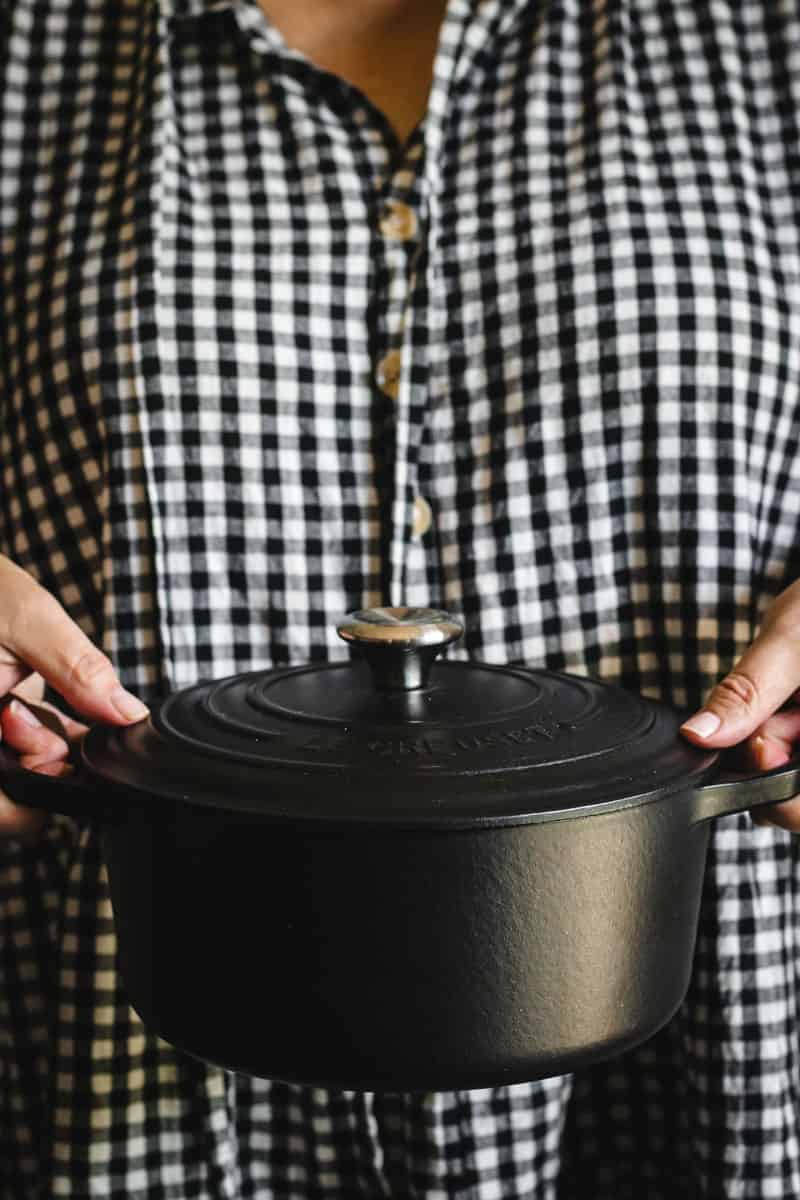
The good news is that high-quality enamel cast iron is considered one of the safest cookware materials available for everyday cooking (Yay, you can now buy that Le Creuset Dutch oven you’ve been eyeing off!) I’ve cooked in enamel cast-iron pans for nearly 20 years, from big pots of Irish stew and beef cheeks to a Dutch oven loaf of bread. It’s the cookware I reach for every day, both at home and when testing recipes, because it’s durable, versatile, and easy to cook with.
Want to know more?
If you’re new here, you might not know I also run a small online store where I keep many of the tools I cook with every day, along with a few timeless homewares for good, slow living…
Quick Answer: Is Enamel Cast Iron Safe?
Yes. High-quality enamel cast iron is considered one of the safest types of cookware available for everyday cooking. It does not contain PFAS, PTFE, or Teflon coatings, has a non-reactive cooking surface, and is safe for cooking acidic foods such as tomatoes, wine-based sauces, and curries. As long as the enamel cooking surface remains intact, enamel cast iron is one of the most durable and safest choices for home cooks.
What Is Enamel Cast Iron?
Enamel cast iron starts with a traditional cast iron pot or skillet. The cookware is then coated with a layer of porcelain enamel and fired at extremely high temperatures.
Despite how it looks, enamel isn’t paint or a chemical non-stick coating. It’s actually a type of powdered glass that is fused to the cast iron during the manufacturing process, creating a hard, durable cooking surface.
So what does that mean? Well, unlike raw cast iron, enamel cast iron:
- Doesn’t require seasoning
- Won’t rust easily
- Has a non-reactive cooking surface
- Won’t give off a metallic taste
- Can be used for acidic foods like tomatoes and wine-based sauces
Is Enamel Cast Iron Safe for Everyday Cooking?
Yes. Good-quality enamel cast iron is safe for everyday cooking.
The enamel coating creates a barrier between the food and the cast iron underneath, preventing reactions with acidic ingredients and making the cookware virtually maintenance-free, unlike raw/seasoned cast iron.
No matter what you’re cooking, whether it’s a slow-cooked soup, braising meat, baking a loaf of bread, or simmering a tomato-based pasta sauce, enamel cast iron is a safe choice for home cooks. Obviously, every type of cookware has do’s and don’ts, (like the fact that high-heat cooking is a no with enamel cast iron), so to get the most out of your cookware, do a little research first, like this guide on how to cook in enamel cast iron pots.
Does Enamel Cast Iron Contain PFAS or Teflon?
No. One of the biggest misconceptions about enamel cast iron is that it contains the same coatings found in traditional non-stick cookware. It doesn’t. Enamel cast iron does not contain Teflon, PTFE, or PFAS coatings, so no nasties! Instead, the cooking surface is made from a glass-like enamel fused directly onto the cast iron. That’s one of the reasons many home cooks like myself choose enamel cast iron over traditional non-stick cookware.
Can Enamel Cast Iron Leach Chemicals Into Food?
No. High-quality enamel cast iron is considered non-reactive and does not leach chemicals into food during normal cooking.
Unlike some cookware materials, the enamel coating creates a barrier between your food and the cast iron underneath. Once fired at high temperatures during manufacturing, the enamel becomes a hard, glass-like surface that is designed for cooking.
This means you can simmer everything from tomato sauce, braised meat in wine, or cook curries without worrying about the cookware reacting with acidic ingredients or affecting the flavour of your food.
As with any cookware, it’s important to purchase from reputable brands that comply with food safety standards and testing requirements. When it comes to cookware, you really do get what you pay for.
New to Cast Iron Cooking?
Fallen down the cast-iron rabbit hole? You’re in good company. Start with my Cast Iron Cooking Hub.
Can You Cook Acidic Foods in Enamel Cast Iron?
Absolutely. This is one of the biggest advantages of enamel cast iron.
Foods such as:
- Tomato sauces
- Beef ragu
- Chili
- Red wine braises
- Curries
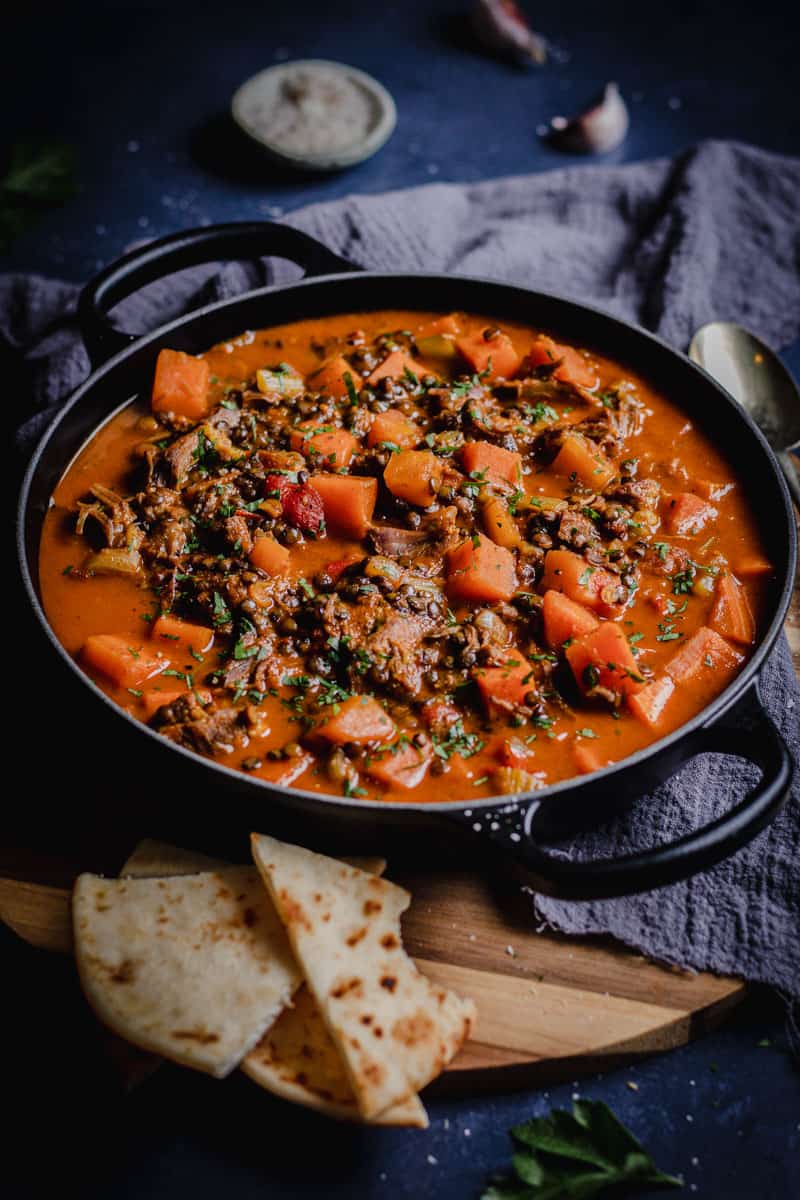
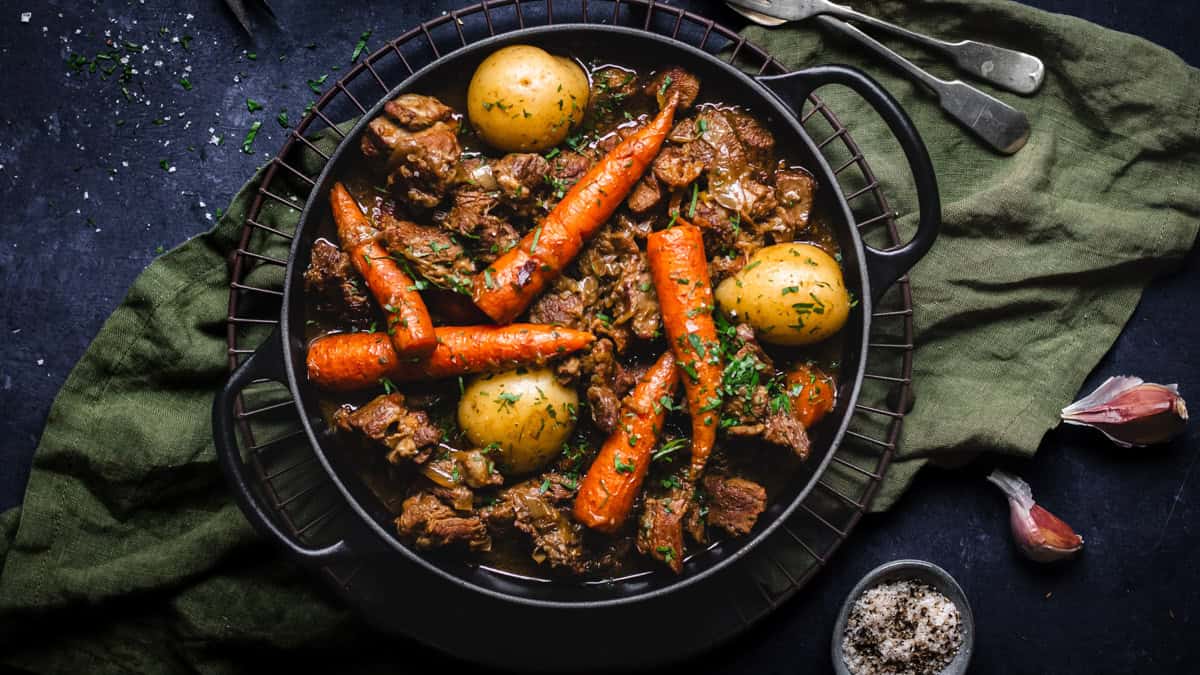
All can all be cooked safely in enamel cast iron. This kind of cooking is my jam. My enamel Dutch oven sees plenty of tomato-based pasta sauces and slow-cooked beef dishes throughout the year, and enamel cookware makes cooking them effortless. I always say that my enameled cast iron cookware simply makes me a better cook!
What I Actually Cook in My Enamel Cast Iron
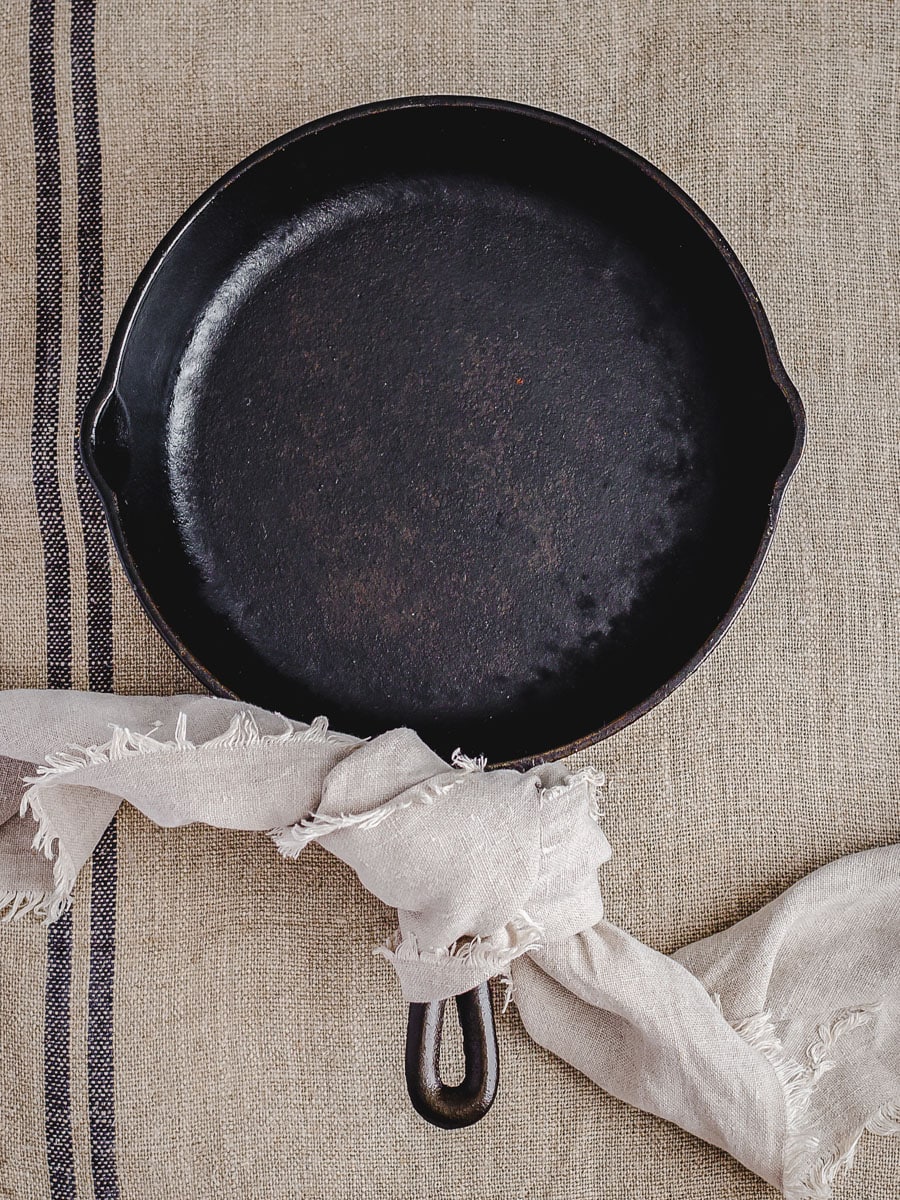
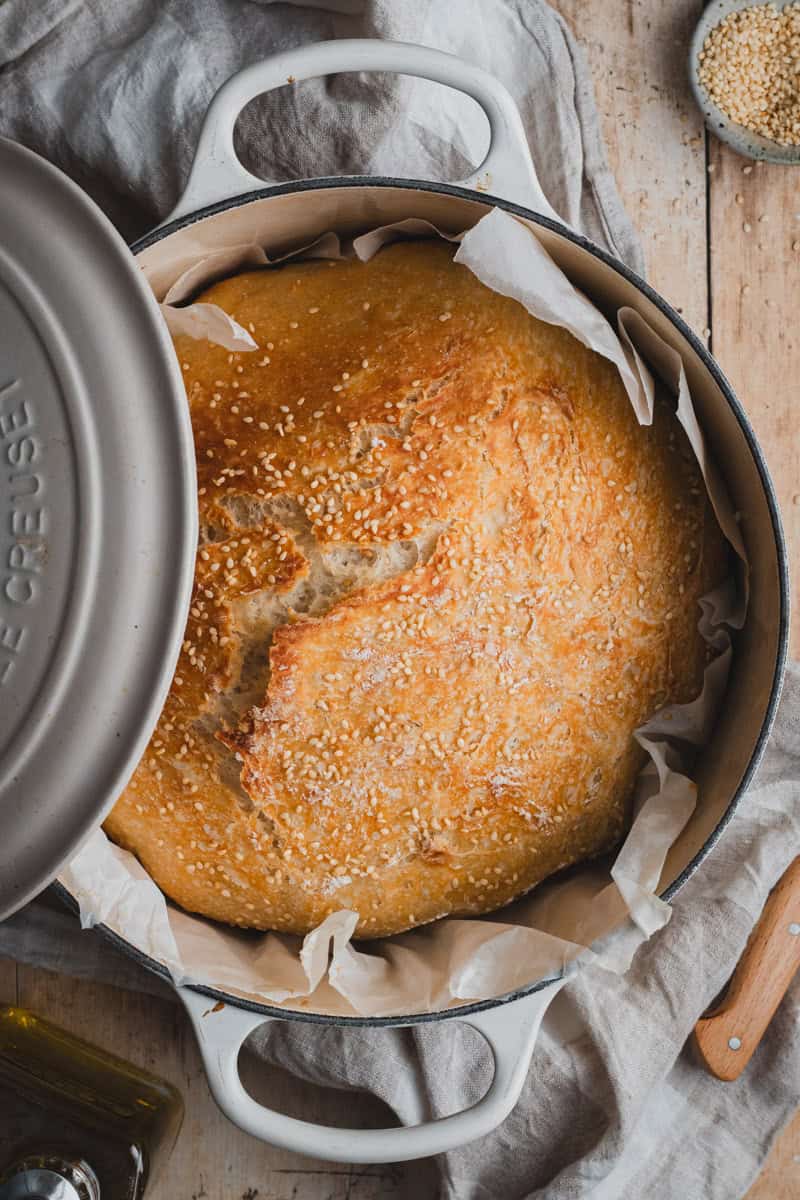
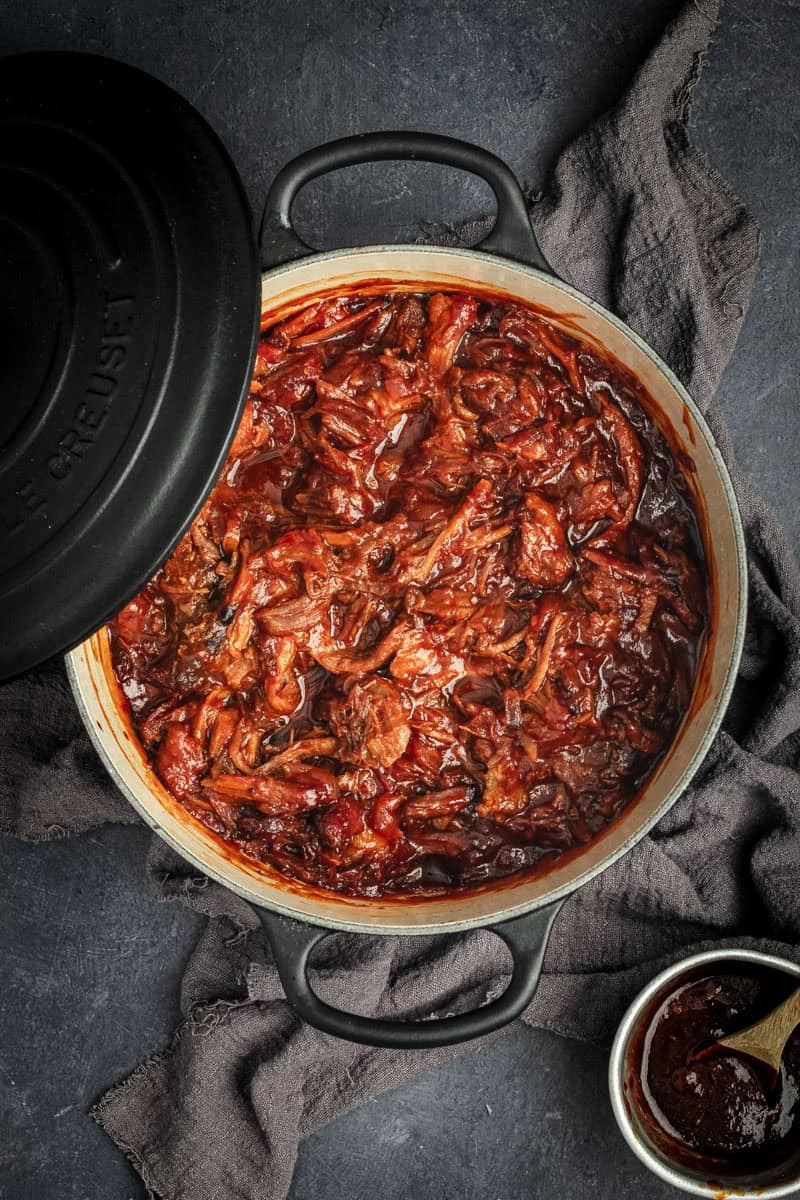
I’ve been cooking in enamel cast iron for nearly 20 years, and it’s easily the most-used cookware in my kitchen. I’m talking daily use here. My enamel cast iron pots, and I have a connection 😉 It’s simple, I love them! On any given week, you’ll find a Dutch oven simmering a beef and red wine stew, slow-cooking a pulled pork shoulder, roasting a chicken. or baking a crusty loaf of no-knead bread. Then there are my cast iron skillets, from which I do everything from my morning egg to grilling steaks to a blueberry cobbler in any given week.
These are exactly the types of dishes that benefit from enamel cast iron’s steady heat and non-reactive cooking surface, so it definitely depends on your cooking style. That said, there isn’t a lot that I don’t cook in my cast iron. I never have to worry about acidic ingredients reacting with the cookware, and the heavy cast-iron construction does the job of maintaining an even cooking temperature.
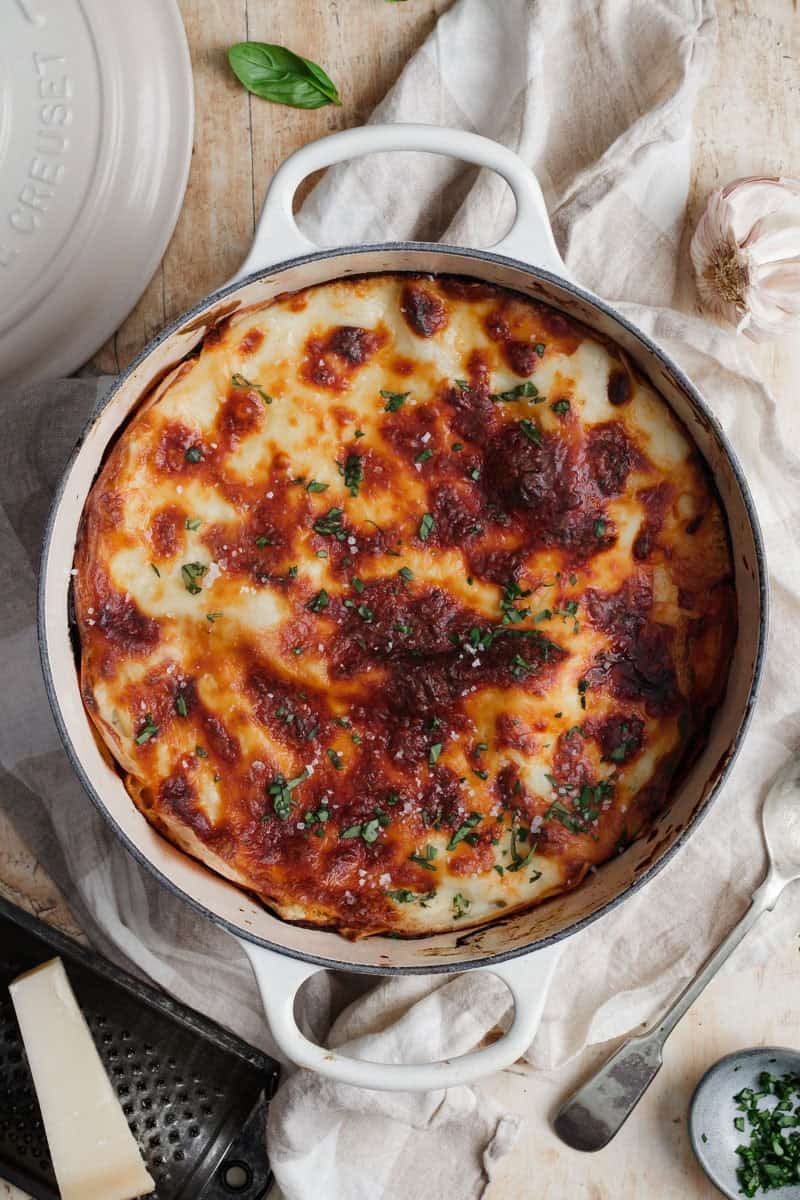
If I’m spending a Sunday afternoon pottering around the kitchen (which I do a lot!), chances are there’s an enamel cast iron Dutch oven (or three!) working away on the stove or in the oven.
What About Lead and Cadmium?
This question comes up often, particularly with brightly coloured cookware.
Reputable cookware manufacturers are required to meet strict food safety standards and testing requirements before their products reach the market.
So, if you’re purchasing enamel cast iron from a trusted brand and an established retailer, there is little reason for concern. Personally, I’d be far more cautious of extremely cheap cookware from unknown manufacturers than cookware from brands with long-standing reputations. When it comes to cast iron, choose well, and it will last you a lifetime.
Is Chipped Enamel Safe?
It depends on where the chip is. If the chip is on the exterior of the pot and doesn’t affect the cooking surface, it’s just cosmetic. One of my small Dutch ovens has had a chip for 10 years after I dropped it while taking it out of the dishwasher. We still use it nearly every day.
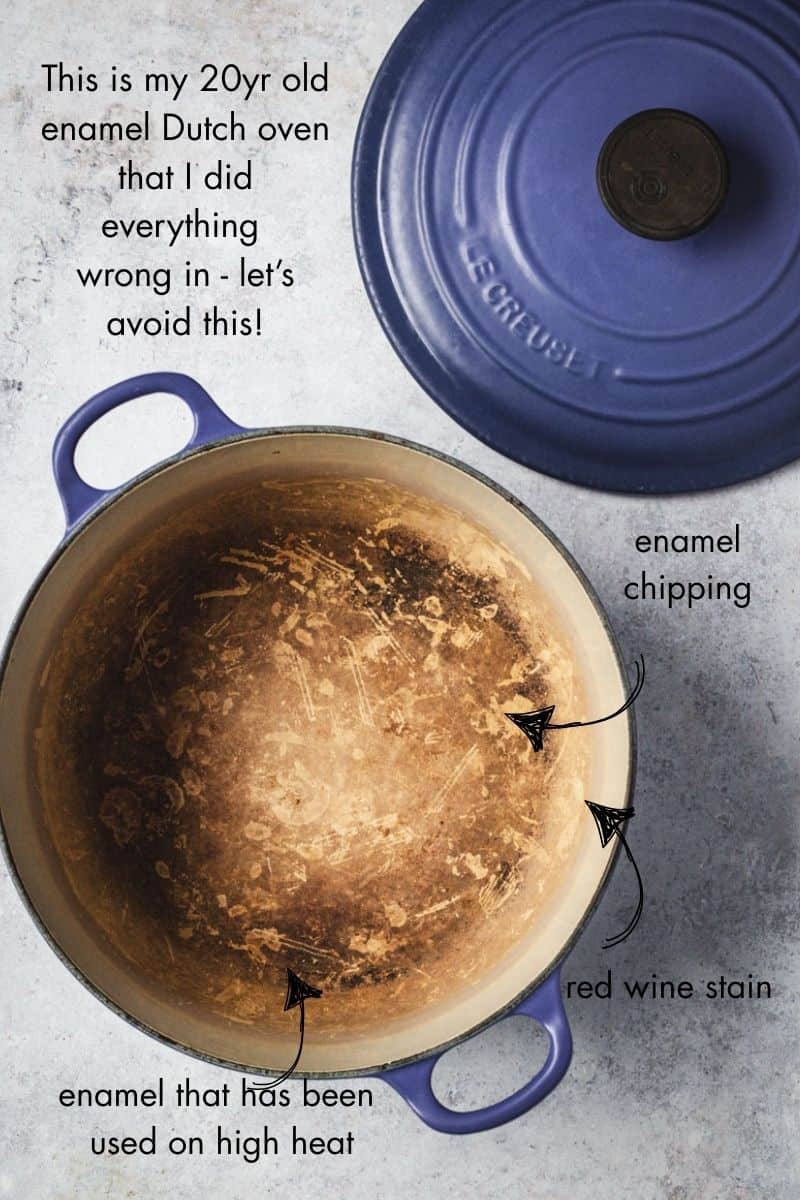
However, if the enamel has chipped on the inside enamel layer of the cooking surface, it’s generally time to replace the cookware.
A damaged cooking surface can continue to deteriorate with use, so it’s best not to take chances. No one wants to eat a piece of chipped enamel with their dinner, do they?
Enamel Cast Iron vs Bare Cast Iron
Both types of cookware are safe when used correctly, but there are a few differences…
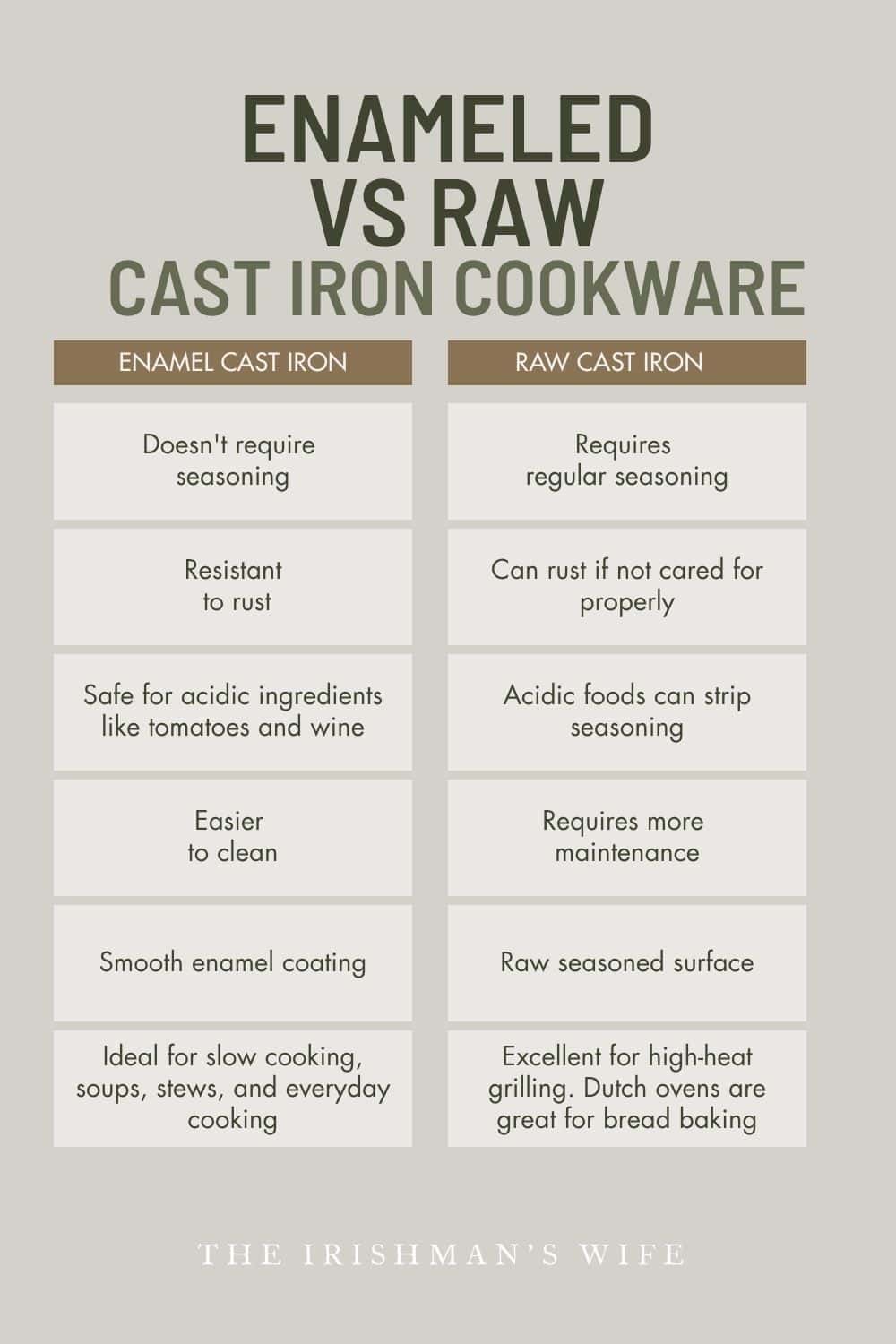
For many home cooks, enamel cast iron offers a simpler, lower-maintenance option.
Common Myths About Enamel Cast Iron Safety
Myth #1: Enamel Cast Iron Contains Teflon
False. Enamel cast iron uses a porcelain, glass-like protective enamel coating, not a non-stick chemical coating.
Myth #2: You Can’t Cook Tomatoes in It
False. Enamel cast iron is specifically designed to handle acidic ingredients. Slow cooking a beef ragu full of tomatoes? No problem!
Myth #3: All Colourful Cookware Contains Lead
False. Reputable manufacturers must comply with food safety regulations and testing standards.
Myth #4: Enamel Cast Iron Is Just Fancy Non-Stick Cookware
Definitely not. Enamel cast iron cookware and non-stick cookware are two completely different types of cookware made from different materials with different cooking properties. Enamel cookware doesn’t have a non-stick surface; it’s a smooth enamel surface made to last decades, not a couple of years like non-stick pans.
FAQ’s
When Should You Replace Enamel Cast Iron?
You should consider replacing your cookware if:
- The interior enamel has chipped
- Large sections of enamel have worn away or broken off
- Deep cracks have developed in the cooking surface
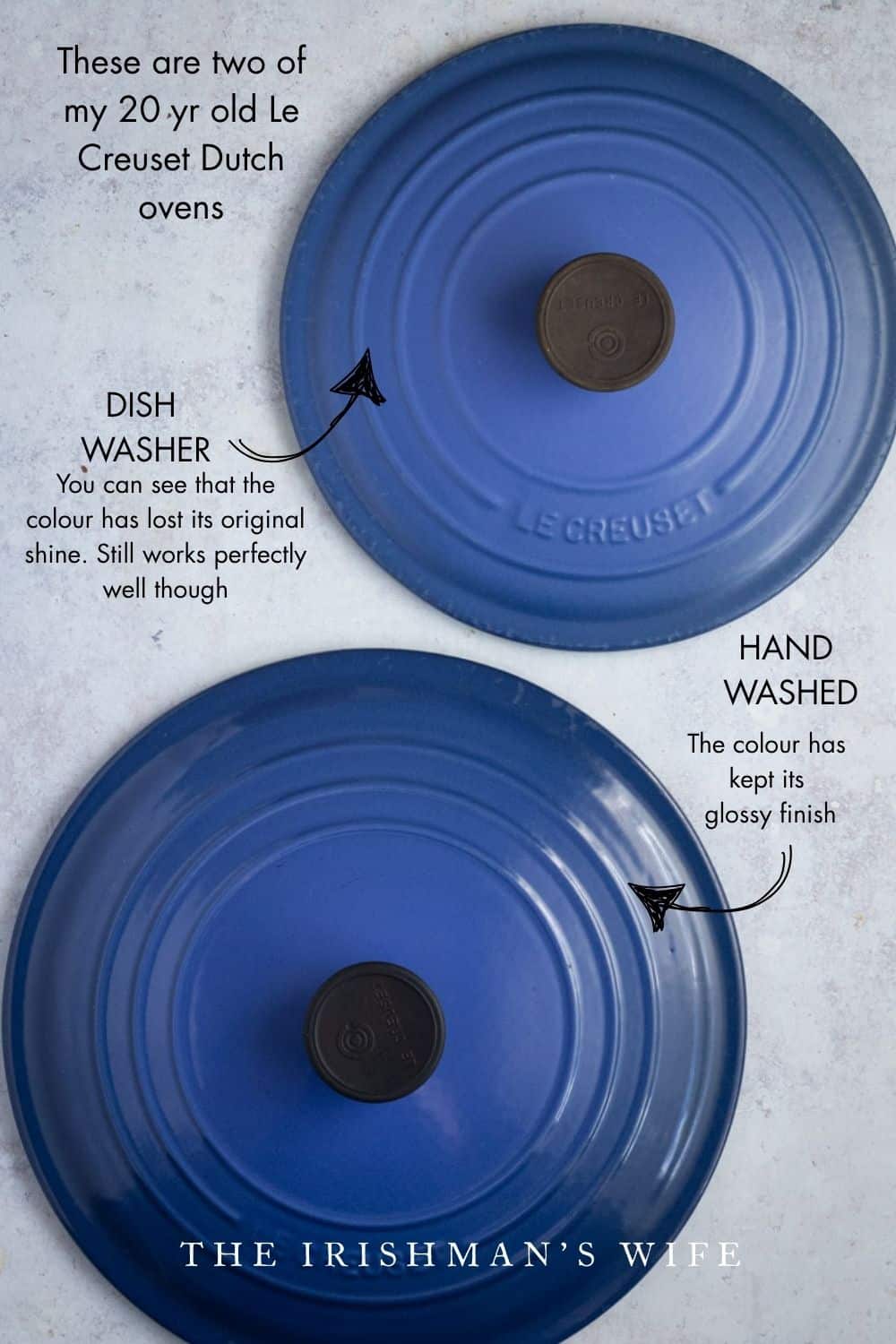
With proper care, however, a quality enamel cast-iron Dutch oven can last for decades. My first Le Creuset Dutch oven (below) is 20 years old, and I’ve just replaced it. If I had known how to use it correctly for the first five years, I’d probably have it for 30+ years – but boy, has that pot been used!
Final Thoughts
So, let’s round this up. Is enamel cast iron safe?
Yes, it totally is. High-quality enamel cast iron is widely considered one of the safest and most versatile cookware options on the market.
After cooking in enamel cast iron for nearly 20 years, it’s still the cookware I reach for more than anything else in my kitchen (even more than my French copper pots!) Aside from the fact that you can cook almost anything in it, quite simply, it’s cookware that just works.
I love that I can cook acidic foods without a second thought, move a pot from stovetop to oven, and not worry about seasoning or rust. It’s durable, reliable, and if you choose a quality piece, there’s every chance you’ll still be cooking in it decades from now.
If you’re still deciding whether enamel cast iron is right for you, my guide to choosing the best Dutch oven size is a good place to start. The hardest part isn’t deciding whether enamel cast iron is safe- it’s deciding which one to buy first.
New to Enamel Cast Iron?
If you’re just getting started, these guides will help:
- Le Creuset vs Staub
- How to Use an Enamel Dutch Oven
- Why Does Food Stick to Enamel Cast Iron?
- Best Cast Iron Skillet Size to Buy
x
Start slow. Cook confidently.
Cast Iron Cooking 101
Cooking with cast iron doesn’t need to feel intimidating.
In this guide, I’ll share the techniques, habits, and everyday recipes that helped me fall in love with slow cooking — from caring for your cookware to creating comforting meals at home.